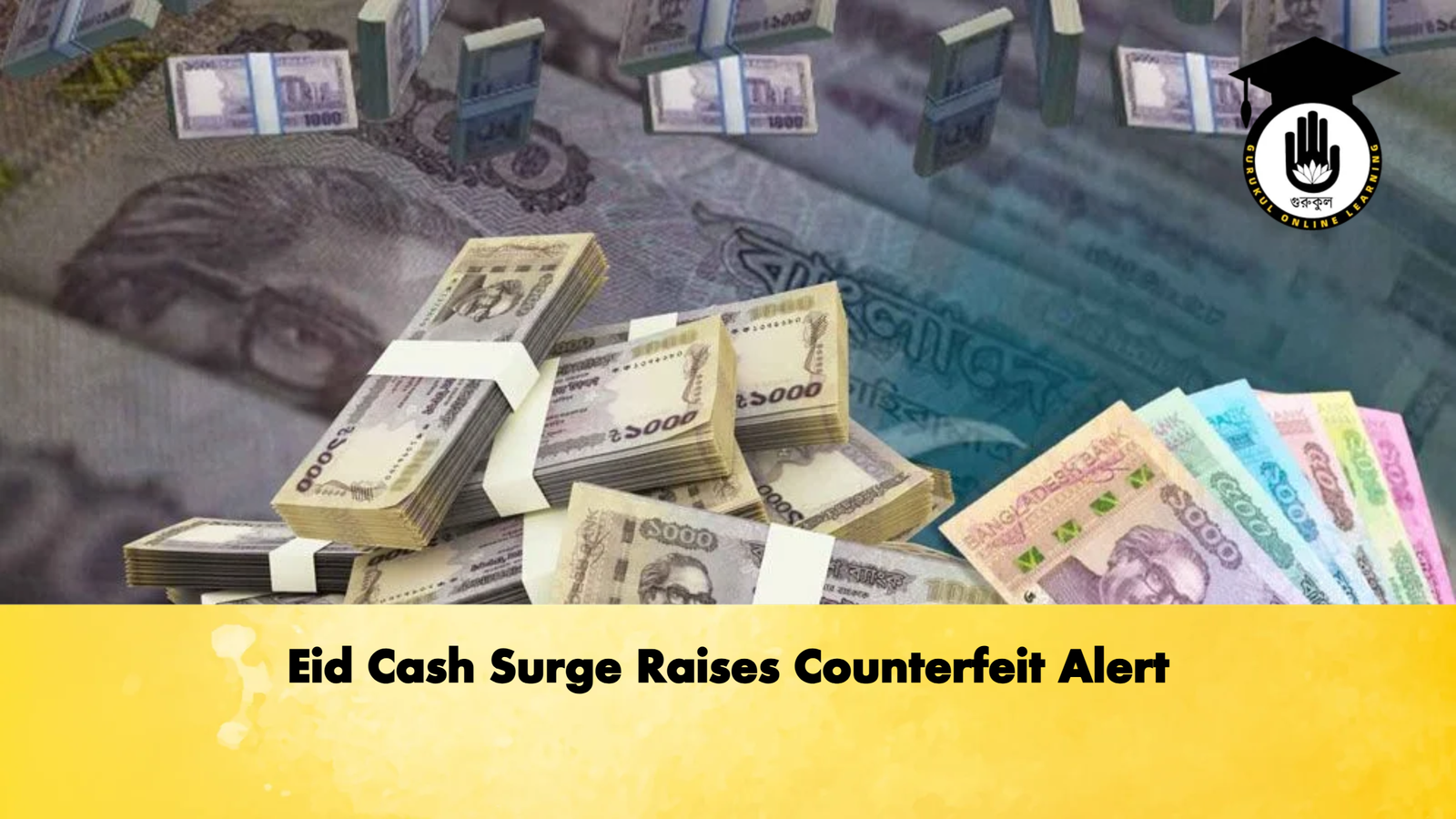
As Eid-ul-Azha approaches, expectations of substantial cash transactions at cattle markets across the country have prompted heightened vigilance from the central bank, following concerns over the possible circulation of counterfeit banknotes. The increased use of higher denomination notes, particularly the 500 and 1000 taka bills, has intensified the risk environment, with authorities warning that organised groups often become active during this period to exploit high-volume cash exchanges.
Every year, temporary livestock markets are established in the capital and other regions ahead of Eid, where transactions worth thousands of crores of taka are completed within a short span of time. A significant proportion of these dealings are conducted in cash. The pressure of rapid transactions, combined with crowded conditions, often leads buyers and sellers to accept banknotes without proper verification, thereby increasing the likelihood of financial loss.
Experts note that even minor negligence in handling large-value currency can result in significant monetary damage. The situation is further complicated by the seasonal surge in demand for cash, which provides an opportunity for counterfeiters to introduce fake notes into circulation.
To address these risks, the central bank has reinforced nationwide precautionary measures and urged citizens to remain vigilant. Authorities emphasise that genuine banknotes are equipped with advanced security features designed to make counterfeiting difficult. Public awareness of these features is considered essential for effective prevention.
Key Security Features of Banknotes
| Security Feature | Method of Identification |
|---|---|
| Watermark | A portrait becomes clearly visible when the note is held up to light |
| Security Thread | A vertical embedded thread is visible within the note |
| Colour-Shifting Ink | Specific elements change colour when the note is tilted |
| Intaglio Printing | Raised texture can be felt when the note is touched |
Officials have advised that all transactions involving 100, 200, 500, and 1000 taka notes should be carefully checked before acceptance. Any suspicious currency should be immediately submitted to the nearest bank branch or temporary banking booth established at cattle markets for verification.
In addition, caution has been urged when dealing with unfamiliar individuals offering large sums of cash. Where possible, financial transactions through formal banking channels or authorised mobile financial services are strongly recommended. Although digital payment systems have expanded significantly in recent years, cash remains dominant in livestock markets, making dual verification particularly important.
Economists argue that the impact of counterfeit currency extends beyond individual losses, posing a broader threat to financial stability. A rise in fake notes circulating in the economy can undermine public trust and contribute to inflationary pressure. Consequently, coordinated action involving public awareness campaigns, law enforcement vigilance, and institutional monitoring is essential.
Authorities have confirmed that ongoing awareness initiatives, including public announcements, on-site guidance, and temporary assistance centres at market locations, will continue throughout the Eid period. They stress that a combination of vigilance and education is the most effective means of reducing counterfeit currency risks during the festive season.