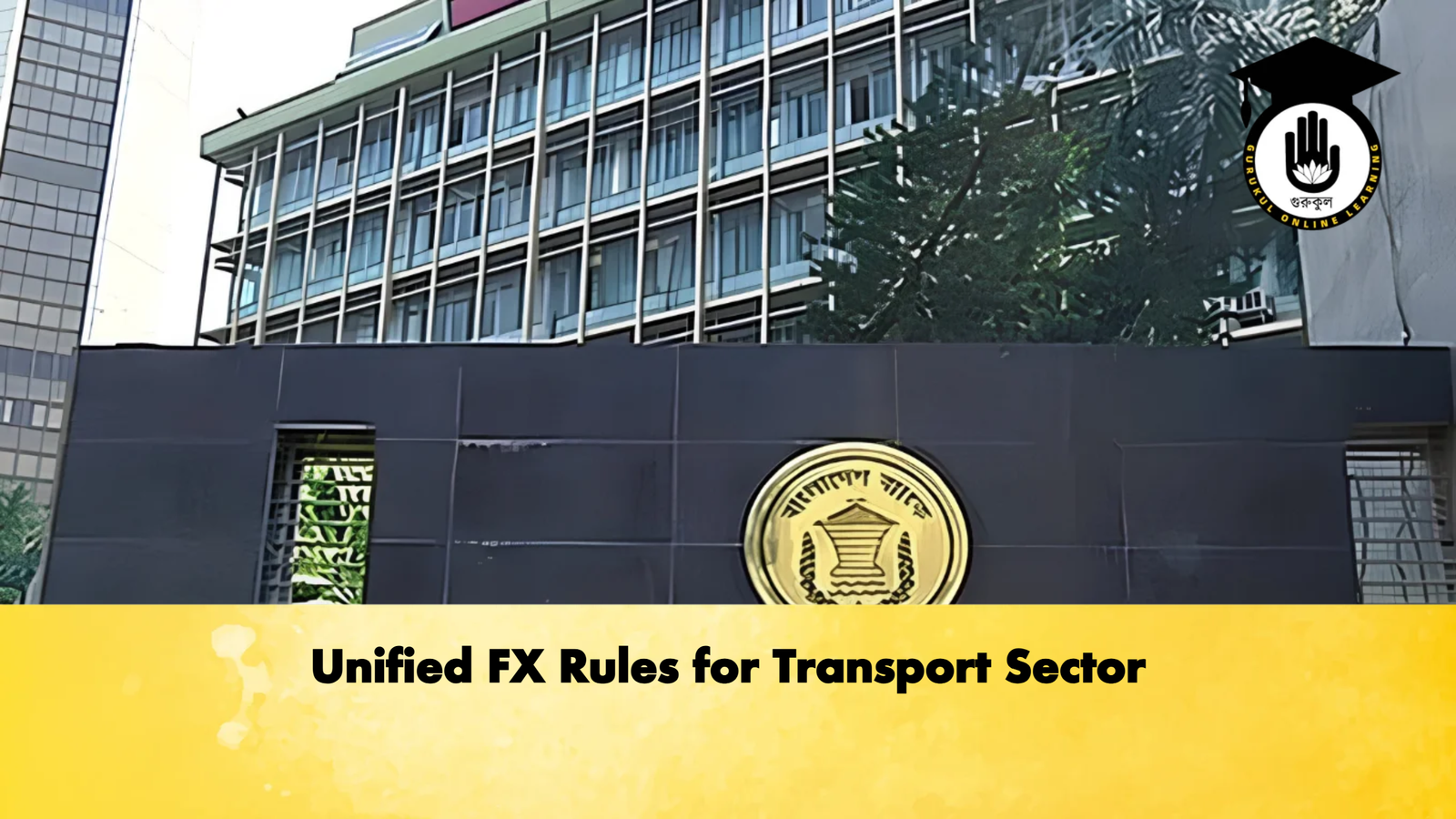
The Bangladesh Bank has issued a consolidated circular introducing a unified framework for the management of foreign exchange in the transport sector, particularly in relation to payments made abroad against transport services. The directive, issued on Thursday, establishes a single set of rules governing ticket issuance and charge collection for international passenger transport, foreign airlines, and shipping companies engaged in cargo services.
The central bank stated that the objective of this measure is to streamline procedures, reduce operational complexity, enhance compliance, and remove ambiguities arising from previously fragmented instructions relating to foreign exchange transactions in the sector. By consolidating earlier directives, the regulator has sought to create a coherent and integrated regulatory structure for relevant institutions.
According to the circular, all activities related to foreign exchange transactions and outward remittances will continue to be governed under the Foreign Exchange Regulation Act, 1947, along with subsequent circulars issued under the legal framework. As part of the consolidation process, all earlier instructions concerning the transport sector have been compiled into a single document, with necessary amendments introduced where required to ensure consistency.
The Bangladesh Bank further clarified that the circular has been issued under Section 20(3) of the Act and will remain effective for a period of one year from the date of issuance. Any new instructions issued within this period will be implemented in alignment with this consolidated framework.
The scope of the unified directive covers a broad range of foreign exchange activities in the transport sector. These include ticket issuance and freight collection for international passenger and cargo services, foreign exchange transactions of foreign airlines and shipping companies, as well as transactions involving state-owned entities such as the Bangladesh Shipping Corporation and Biman Bangladesh Airlines.
In addition, the circular provides specific guidance for private sector stakeholders, including shipping companies, airlines, courier service providers, and freight forwarders. It also outlines rules governing the maintenance and operation of foreign currency accounts held by shipping companies, airlines, and freight forwarding agencies. Foreign currency accounts maintained by Bangladeshi transport companies engaged in international operations are likewise brought under this regulatory framework.
Updated provisions have also been introduced for tour operators, reflecting the growing scope of service-based transactions involving foreign exchange in the travel and tourism sector. These measures are intended to ensure greater transparency and alignment with the broader regulatory regime governing foreign exchange operations.
Key Coverage of the Circular
| Category | Scope of Regulation |
|---|---|
| International passenger transport | Ticket issuance and related charges |
| Cargo and freight services | Freight collection and payments |
| Foreign airlines and shipping companies | Foreign exchange transactions |
| State-owned transport entities | Operational and FX-related dealings |
| Private sector transport operators | FX account management and compliance |
| Courier and freight forwarding agencies | Foreign currency account operations |
| Tour operators | Updated foreign exchange guidelines |
A Bangladesh Bank official, speaking to The Daily Samakal, stated that the consolidated framework is expected to make outward remittance processes in the transport and logistics sector more straightforward, transparent, and efficient. The official added that it would also strengthen compliance with foreign exchange regulations across all relevant entities operating in the sector.