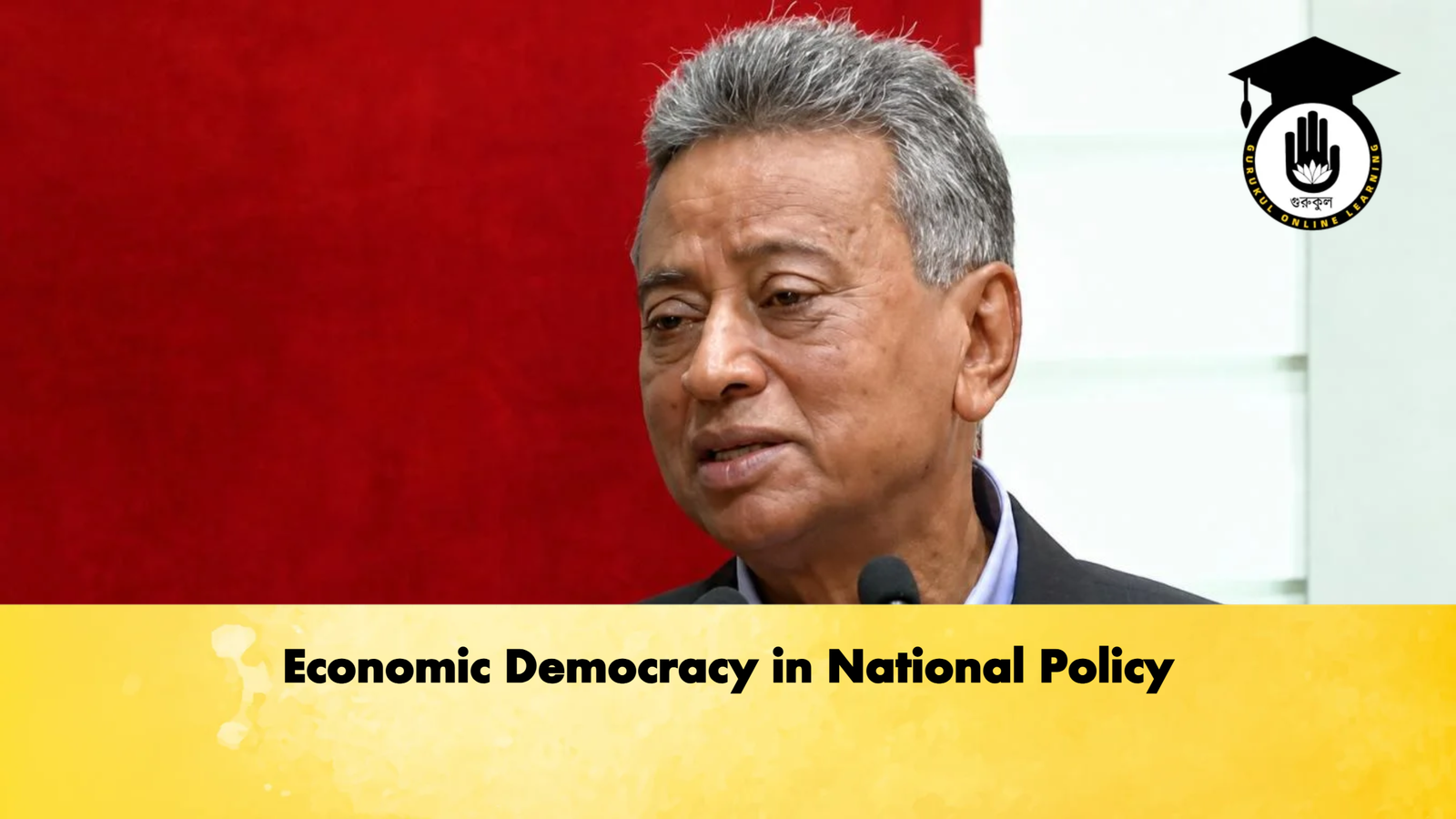
Finance Minister Amir Khosru Mahmud Chowdhury has stressed that establishing democracy within the economic system is just as essential as ensuring it in the political sphere, arguing that sustainable national development depends on the equal participation of all social and occupational groups in economic activity.
He made the remarks on Sunday while speaking as the chief guest at the inauguration of the second phase of the ‘RAISE’ initiative, a joint programme implemented by Palli Karma-Sahayak Foundation and the World Bank, aimed at developing Bangladesh’s informal sector. The event was held in the Agargaon area of the capital.
The minister noted that historical economic structures in the country had disproportionately favoured a small, influential and affluent segment of society. As a result, marginalised and low-income groups remained largely excluded from the mainstream economy. The present administration, he said, is working to correct this imbalance by widening access to economic opportunities and ensuring greater inclusivity.
He further emphasised that economic rights are as fundamental as political rights. According to him, every citizen should have equal access to opportunities that enable participation in productive economic activities, regardless of social or geographic background. The government’s current approach, he added, is centred on building a more participatory and inclusive economic framework.
Highlighting the role of women, he observed that they play a central role in household management and are often more efficient in savings and expenditure decisions. In recognition of this, the government has introduced a ‘Family Card’ initiative designed to provide financial support directly through women, particularly in rural areas. This, he said, is expected to strengthen local economies and increase liquidity in village markets.
He also pointed to the ‘Farmer Card’ scheme as a significant step towards transforming the agricultural sector, noting that it would enhance access to financial support for farmers and improve productivity across rural regions. Both initiatives, he said, are expected to reinforce the resilience of the rural economy.
Key Government Initiatives
| Initiative | Objective | Target Group | Expected Impact |
|---|---|---|---|
| RAISE Project | Skills development and informal sector growth | Informal workers and marginalised communities | Employment generation and income stability |
| Family Card | Direct financial assistance to women | Household women members | Improved financial security and savings |
| Farmer Card | Agricultural financial support | Farming communities | Increased agricultural productivity and market expansion |
The second phase of the RAISE project was outlined as focusing on enhancing skills, expanding financial inclusion, and improving livelihoods for workers in the informal sector. It places particular emphasis on integrating low-income and vulnerable populations into structured economic systems.
Concluding his remarks, the Finance Minister reiterated that inclusive growth, fairness and broad-based participation must remain at the core of future economic policy. Without what he described as “economic democracy,” he warned, comprehensive and sustainable development would remain out of reach.