The domestic foreign exchange market remained broadly stable on Sunday, although underlying volatility persists as the economy continues to adjust to shifting global conditions. Over the past several months, exchange rates have been influenced by a combination of geopolitical tensions in the Middle East, persistent global inflationary pressures, and rising import costs, all of which have contributed to fluctuations across major currencies.
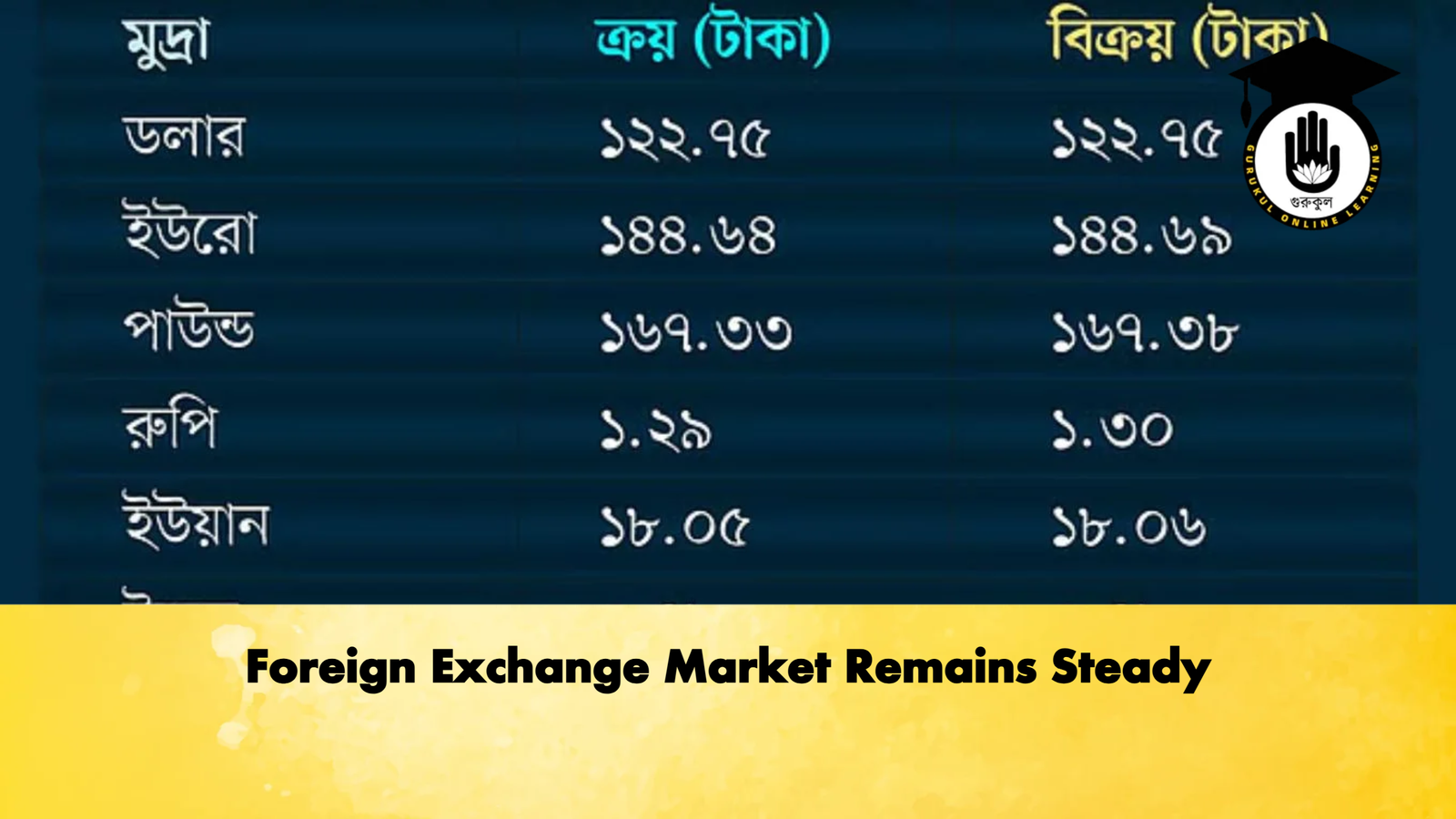
According to the latest data released by the central bank, the average exchange rate of the US dollar remained unchanged at 122.75 taka. Despite this day-to-day stability, recent trends indicate a gradual upward drift in the dollar’s value over the past month. This slow appreciation has placed additional pressure on import-dependent sectors, contributing to higher input costs and, by extension, inflationary concerns within the domestic economy.
Other major currencies, however, showed a mixed pattern. The euro, British pound, Chinese yuan, Australian dollar, Indian rupee, and Singapore dollar all recorded marginal gains against the local currency. In contrast, the Japanese yen remained unchanged, reflecting relatively stable conditions in the yen-dollar pairing in global markets.
Economists suggest that these movements are largely driven by external factors, including the strength of the US dollar in international markets, fluctuations in crude oil prices, and evolving global trade dynamics. In addition, domestic elements such as remittance inflows and the country’s heavy reliance on imports continue to play a decisive role in shaping currency demand and supply conditions.
Market observers also note a persistent gap between official exchange rates and those in the informal or open market, where foreign currencies often trade at a premium. This disparity affects consumers and businesses alike, particularly importers who face higher effective costs. The resulting pressure is gradually transmitted into the broader economy, contributing to inflationary trends in essential goods and services.
Analysts argue that achieving long-term stability in the foreign exchange market will require structural adjustments. Strengthening export performance, expanding remittance inflows through formal channels, and reducing dependence on external borrowing are considered key policy priorities. Without such measures, the currency market is likely to remain vulnerable to external shocks and periodic volatility.
Summary of Key Currency Movements
| Currency | Current Status | Remarks |
|---|---|---|
| US Dollar | Stable (122.75 taka) | Slight upward trend over recent months |
| Euro | Increased | Driven by global market strength |
| British Pound | Increased | Supported by strong international demand |
| Chinese Yuan | Increased | Active trade-related transactions |
| Australian Dollar | Increased | Influenced by regional market trends |
| Indian Rupee | Increased | Reflecting trade balance adjustments |
| Singapore Dollar | Increased | Regional economic fluctuations |
| Japanese Yen | Unchanged | Stable performance in global markets |
Overall, the foreign exchange market appears to be positioned between stability and cautious uncertainty. While no abrupt shocks were recorded today, underlying global and domestic pressures suggest that exchange rates may continue to adjust in the coming weeks, depending on external economic developments and trade dynamics.