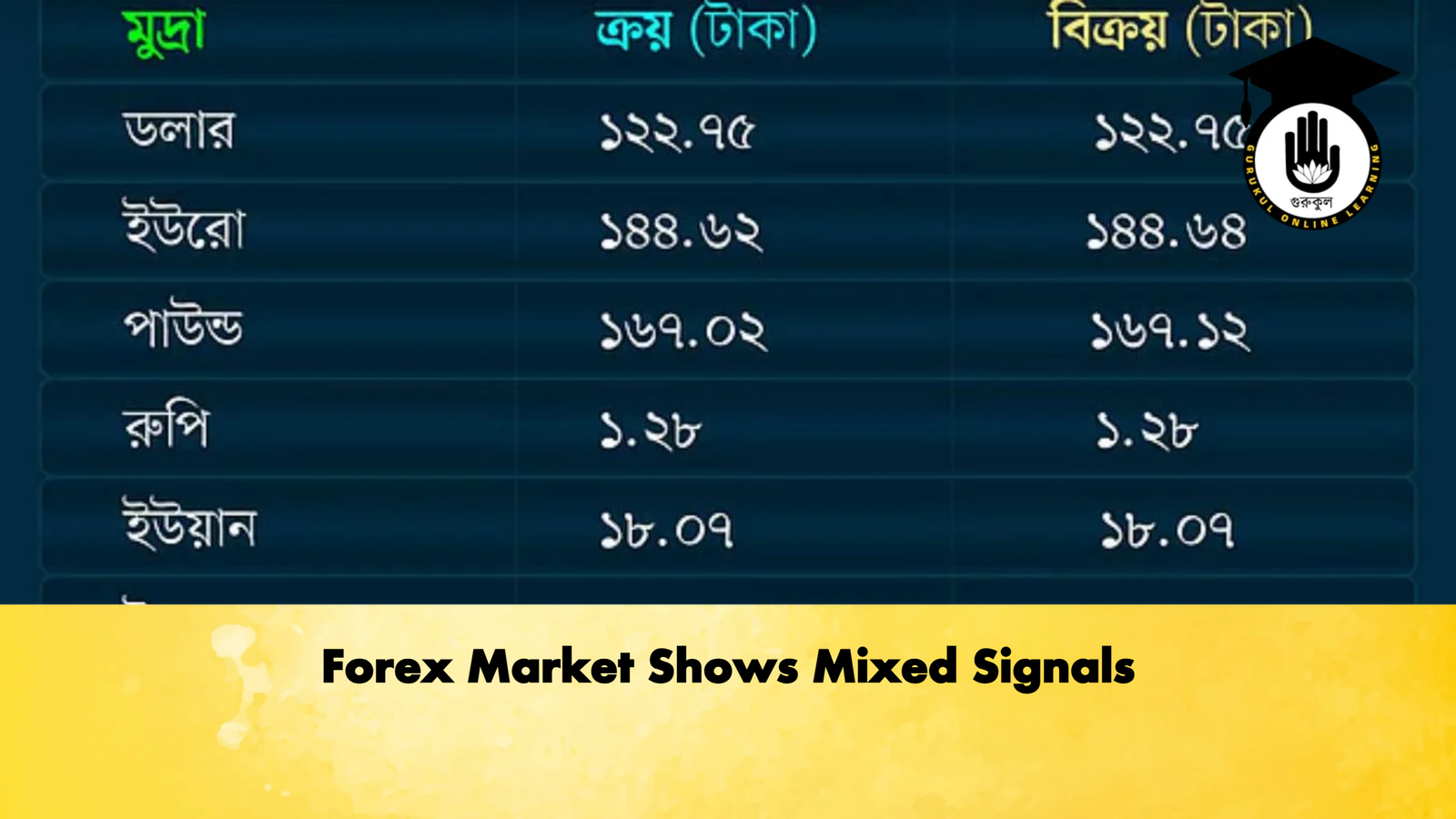
The country’s foreign exchange market witnessed mixed movements on Tuesday, reflecting continued volatility driven by global and regional uncertainties. Over the past two months, exchange rates have remained under pressure due to ongoing geopolitical tensions in the Middle East, fluctuations in the global energy market, and persistent import-related demand pressures. Despite occasional stabilisation, the overall trend continues to lean towards a gradual upward drift in currency prices.
According to the latest data published by the central monetary authority, the average exchange rate of the United States dollar remained unchanged today at Tk 122.75. This stability has persisted for several weeks, offering a degree of predictability for importers and financial planners. However, when viewed over a one-month horizon, the dollar has shown a mild upward trajectory, signalling sustained pressure on import-dependent sectors such as fuel, machinery, and essential commodities.
In contrast, several other major currencies recorded slight declines. The euro, British pound, Indian rupee, and Singapore dollar all experienced marginal depreciation against the local currency. Meanwhile, the Japanese yen and Australian dollar remained broadly stable. The Chinese yuan, however, registered a modest appreciation, a movement that could have implications for trade settlements with China, one of the country’s key import partners.
Economists attribute these fluctuations primarily to global interest rate policies, widening trade imbalances, and shifting geopolitical conditions. While the relative stability of the US dollar offers some relief to market participants, volatility in other major currencies continues to affect both import and export cost structures.
Market observers also note a noticeable gap between official banking channel rates and those in the informal open market, where foreign currencies are trading at slightly higher prices. This divergence is contributing to increased cost pressures for both consumers and businesses, particularly in sectors reliant on imported energy products, food supplies, and industrial raw materials.
Currency movements play a crucial role in shaping the broader macroeconomic environment, influencing inflation trends, external reserves, and overall economic stability. Experts emphasise that maintaining a stable foreign exchange regime will require coordinated policy measures, including prudent reserve management and enhanced market oversight.
Foreign Exchange Snapshot (Tuesday)
| Currency | Movement | Average Rate (Tk) |
|---|---|---|
| US Dollar | Unchanged | 122.75 |
| Euro | Decreased | Not disclosed |
| British Pound | Decreased | Not disclosed |
| Indian Rupee | Decreased | Not disclosed |
| Singapore Dollar | Decreased | Not disclosed |
| Japanese Yen | Stable | Not disclosed |
| Australian Dollar | Stable | Not disclosed |
| Chinese Yuan | Increased | Not disclosed |
Looking ahead, analysts warn that continued instability in global markets may keep exchange rates under pressure. Unless external economic conditions improve and energy markets stabilise, sustained relief in the domestic foreign exchange market may remain limited in the near term.