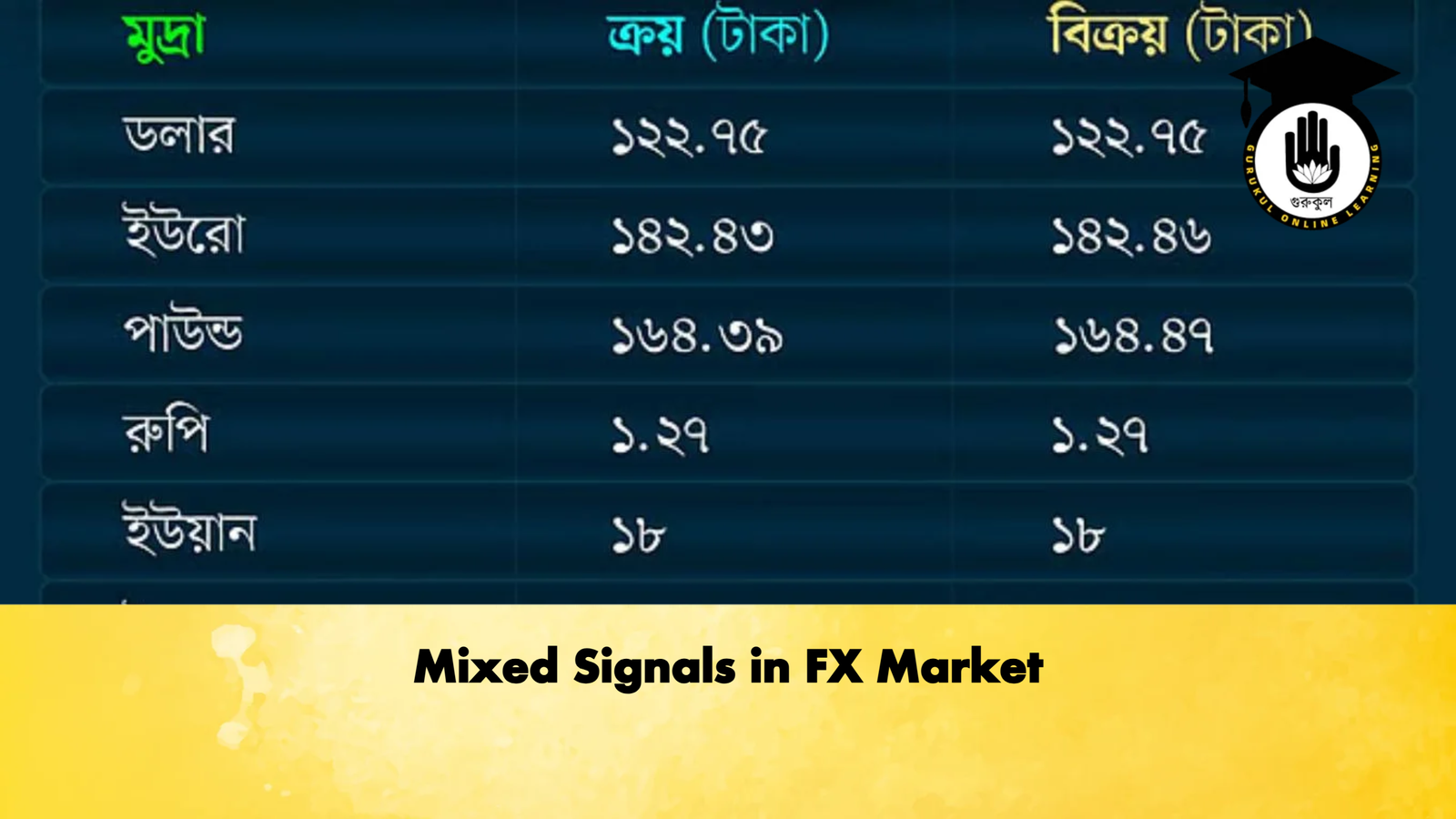
The foreign exchange market in Bangladesh on Wednesday exhibited a mixed but broadly stable tone, as trading activity reflected a combination of steady rates for some major currencies and mild downward pressure on others. Despite ongoing global economic uncertainty, geopolitical tensions in the Middle East, and shifting dynamics in international trade, the local currency market did not experience any significant volatility, suggesting a degree of underlying resilience.
According to the latest data from Bangladesh Bank, the average exchange rate of the United States dollar remained unchanged at Tk 122.75. After a prolonged period of fluctuations, the dollar has recently been moving within a relatively narrow range, offering some relief to market participants. However, analysts caution that this stability has not yet translated into a meaningful reduction in import costs or external payment pressures, which remain elevated due to structural demand for foreign currency.
Other major currencies, including the euro, British pound, Chinese yuan, Australian dollar, and Singapore dollar, registered slight declines against the local currency. Market observers attribute this trend to a combination of global interest rate policies, weaker trade momentum, and fluctuating energy prices, all of which have weighed on international currency valuations. In contrast, the Indian rupee and Japanese yen remained broadly unchanged, reflecting a stable regional currency environment.
Economists emphasise that exchange rate movements in Bangladesh are primarily shaped by three key drivers: export earnings, remittance inflows, and import expenditure. Strong remittance inflows continue to provide crucial support to foreign exchange reserves, helping to stabilise the domestic currency. However, rising import demand, particularly for energy and industrial inputs, sustains pressure on dollar demand in the market.
A distinction also persists between the official exchange rate set by the central bank and rates in the open market, where supply and demand dynamics tend to push foreign currencies slightly higher. This gap fluctuates depending on trade requirements, liquidity conditions, and seasonal demand patterns.
The current exchange rate situation is summarised below:
| Currency | Market Movement | Remarks |
|---|---|---|
| US Dollar | Unchanged | Averaged at Tk 122.75 |
| Euro | Slight decrease | Lower demand and market pressure |
| British Pound | Slight decrease | Moderated international demand |
| Chinese Yuan | Slight decrease | Impact of global trade slowdown |
| Australian Dollar | Slight decrease | Weaker external market conditions |
| Singapore Dollar | Slight decrease | Reduced regional demand |
| Indian Rupee | Unchanged | Stable trading pattern |
| Japanese Yen | Unchanged | No significant fluctuations |
Experts note that such moderate fluctuations are typical in emerging foreign exchange markets. However, maintaining long-term stability depends heavily on sustained export growth, steady remittance inflows, and prudent management of import demand. Adequate foreign exchange reserves, they argue, are essential for maintaining confidence in the market and mitigating the risk of sudden shocks.
Overall, while Wednesday’s trading session did not witness any major disruptions, the mixed movement across currencies highlights the continuing sensitivity of the market to global economic conditions. Economists advise close monitoring of international developments, particularly monetary policy shifts in major economies and geopolitical tensions, which are likely to influence future exchange rate movements.