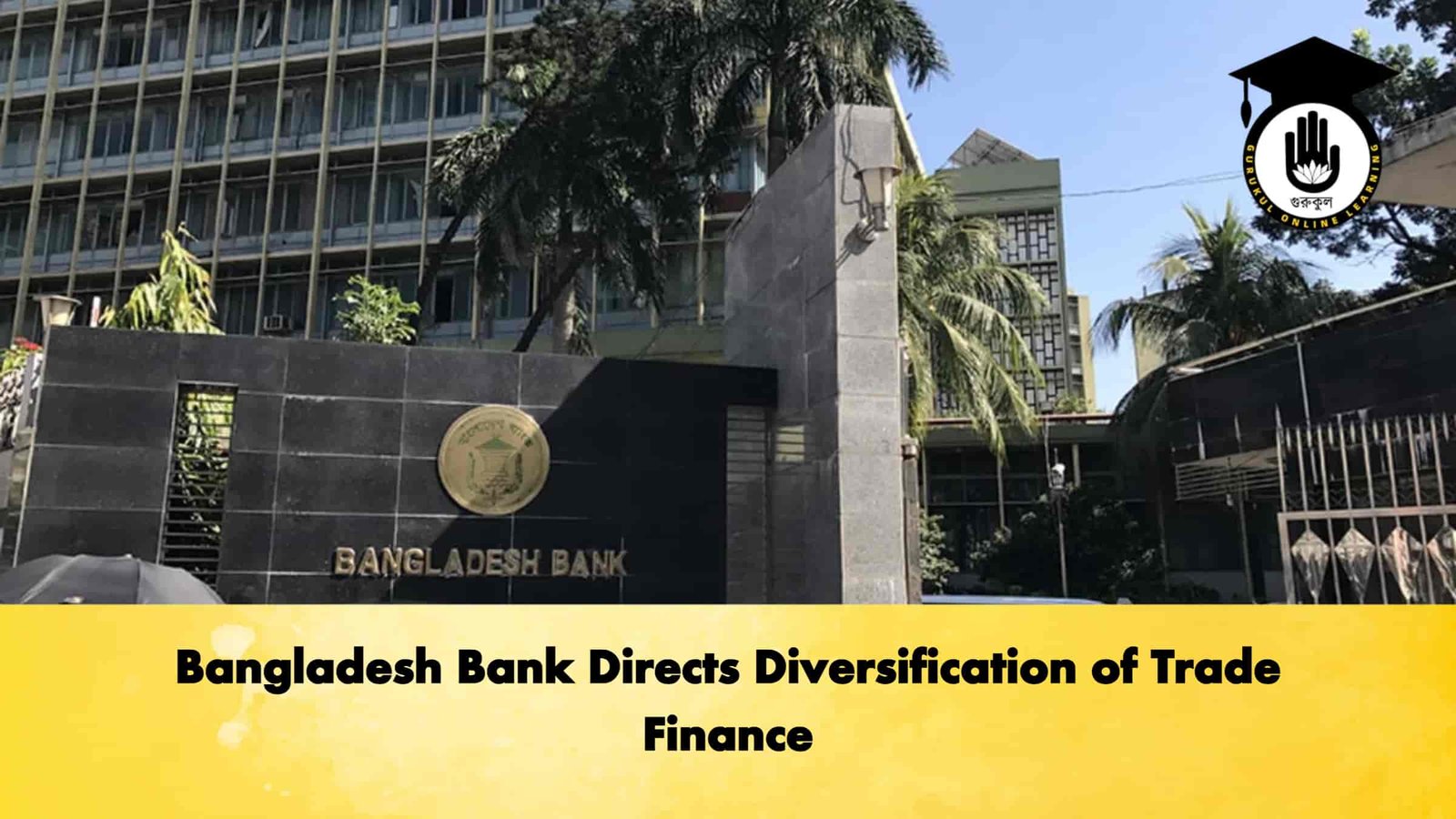
The central bank of Bangladesh has instructed commercial banks to accelerate the adoption of alternative trade finance mechanisms. This directive signals a strategic effort to reduce the country’s traditional, heavy reliance on standard Letter of Credit (LC) arrangements. According to an official notification issued by Bangladesh Bank on Thursday, authorised dealer (AD) banks are now permitted to facilitate a broader array of international trade finance instruments.
Under the newly reinforced regulatory framework, commercial financial institutions have been directed to expand their operational capacity across several alternative mechanisms. These include advance payments, open account exports, and traditional documentary collection methods, specifically Documents against Payment (DP) and Documents against Acceptance (DA).
Integration of Supply Chain Finance and Digital Tools
While Bangladesh Bank explicitly reaffirmed that Letters of Credit remain entirely valid and widely accepted instruments, the central bank acknowledged that the evolving global market necessitates complementary tools. Consequently, the circular places significant emphasis on open account trade, documentary collections, and structured supply chain finance (SCF) models, such as reverse factoring and buyer-supplier financing.
The directive permits import transactions to be executed without an LC under pre-arranged purchase and sales contracts. These transactions remain strictly subject to compliance with existing statutory regulations and do not impose payment obligations on the facilitating banks unless a separate contractual agreement is established.
To optimise cash flow across domestic supply chains, commercial banks are urged to introduce reverse factoring. This mechanism enables suppliers to secure early payments against trade invoices that have been formally approved by creditworthy corporate buyers. Furthermore, the central bank has advocated for the modernization of trade processes through digital documentation. Under the new guidelines, electronic documents—including digital invoices and transport records—may be formally accepted, provided they undergo strict verification, possess legal validity, and clear comprehensive institutional risk assessments.
Comparison of Approved Trade Finance Mechanisms
The following table outlines the alternative trade finance instruments authorised and promoted under the new Bangladesh Bank regulatory framework:
| Mechanism | Payment Timing | Risk Realignment | Bank Obligation |
| Letter of Credit (LC) | Upon compliance with terms | Risk borne primarily by the issuing bank | Mandatory payment obligation upon correct document presentation |
| Advance Payment | Before goods are shipped | Highest risk borne by the importer | No direct payment obligation unless separately contracted |
| Open Account | After delivery of goods | Highest risk borne by the exporter | Facilitation only; no inherent bank payment guarantee |
| Documents against Payment (DP) | After shipping, before document release | Balanced risk via banking intermediaries | Financial institution acts strictly as a collecting agent |
| Documents against Acceptance (DA) | On a specified future maturity date | Risk shifts to exporter post-acceptance | No bank payment liability unless a bank bill is co-signed |
| Reverse Factoring (SCF) | Early payment via invoice discounting | Credit risk aligned with the buyer’s profile | Optional financing structure driven by bank-approved invoices |
Industry insiders and business analysts expect the initiative to enhance transactional efficiency, inject critical liquidity for both exporters and importers, and foster closer integration between Bangladesh and global trading systems while maintaining robust regulatory oversight.