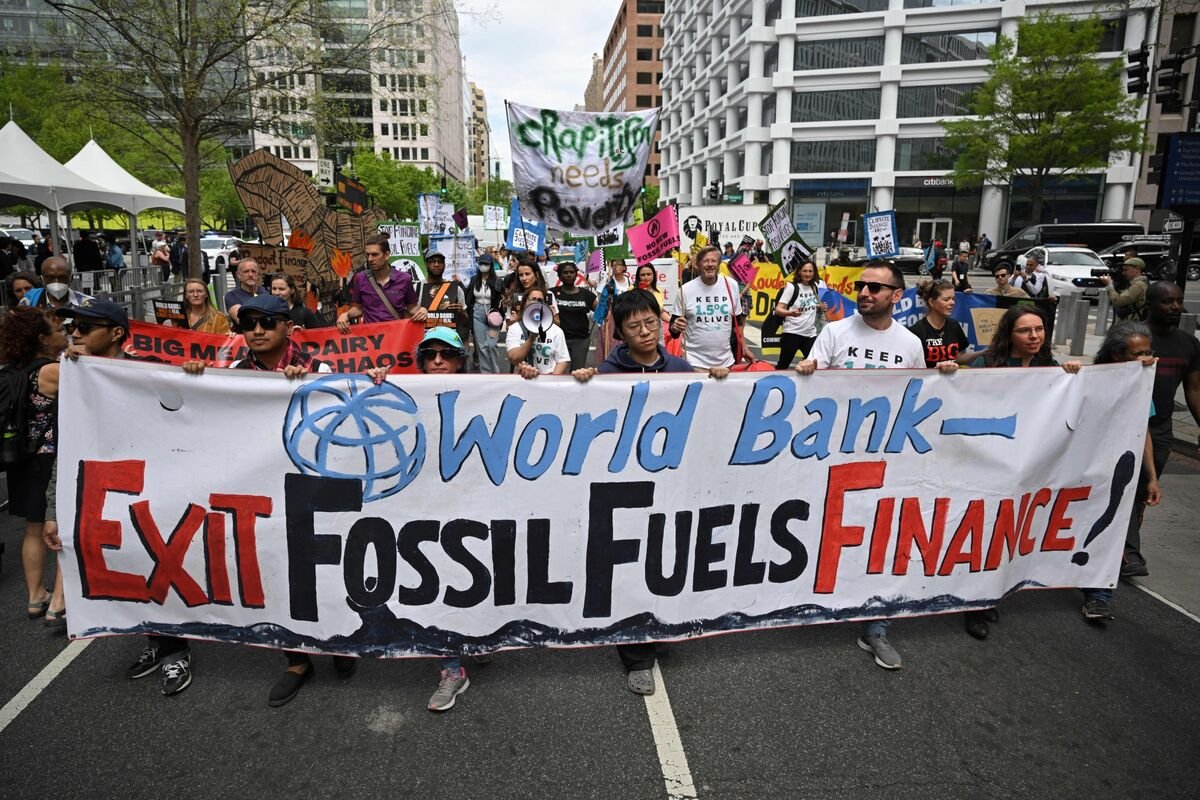
The United States has urged the World Bank to refocus on its core mission of eradicating poverty, rather than dedicating 45% of its resources to climate-related projects. US Treasury Secretary Scott Bessent recently called on the bank to abandon its climate agenda and instead invest in initiatives that increase access to affordable energy, reduce poverty, and foster economic growth.
Saudi Arabia is also reportedly aligned with the US in questioning the bank’s high climate spending. There is considerable evidence to support this stance.
Founded at the close of the Second World War to aid Europe’s reconstruction, the World Bank has since pivoted to focus on alleviating global poverty. However, following the 2015 Paris Climate Agreement, it began prioritising climate change, committing billions to climate financing. Last year alone, the bank invested $42.6 billion in climate initiatives — funds that could otherwise be used to address the world’s most urgent developmental needs.
Research consistently shows that core development projects, such as improving maternal health, advancing education, and enhancing agricultural productivity, yield far greater and more immediate benefits than climate-focused spending. In comparison, efforts to help poor nations reduce emissions have minimal impact on both development and climate change metrics. Adaptation measures, such as flood defences, offer some improvement but are still far less effective than proven development strategies.
World Bank President Ajay Banga has defended the bank’s climate commitments, suggesting that poverty and climate challenges should be tackled simultaneously. However, this assertion does not stand up to scrutiny. Addressing poverty through direct investments in health, education, and nutrition can have an immediate, significant impact, improving the lives of millions at a relatively low cost. In contrast, climate measures will have little effect by 2030 and only modest benefits by the end of the century.
The cost of climate policies, often running into the trillions, risks further impoverishing the world’s poorest by driving up energy and fertiliser costs. As Bessent pointed out, developing nations urgently need cheap, reliable energy to industrialise, create jobs, and grow — just as wealthy nations did in the past, and as China has done in recent decades.
Most of Africa remains extremely poor, with limited access to energy, relying largely on wood and hydropower. The average African uses as much fossil fuel in a year as an American consumes in just nine days. The World Bank’s Mission 300 initiative aims to connect 300 million Africans to electricity by 2030, a goal that could be jeopardised by an excessive focus on renewable energy.
The Rockefeller Foundation, a partner in the Mission 300 project, champions renewables as the “most cost-effective and rapid route to prosperity.” This view, however, is unrealistic. While solar and wind energy can be cheaper under ideal conditions, they require expensive backup systems to ensure reliability when the sun doesn’t shine or the wind doesn’t blow. As a result, countries with high levels of solar and wind power tend to have much higher electricity costs. This is why even wealthy nations, despite their green rhetoric, still rely on fossil fuels for over three-quarters of their energy needs.
Surveys conducted by the World Bank show that people in poorer nations rank climate change low on their list of priorities. African leaders may publicly endorse green energy projects, but in practice, their countries are turning to fossil fuels for their energy needs. In 2023, Africa added just 5 kilowatt-hours per person from solar and wind sources, while adding nearly five times more from fossil fuels, which are cheaper and more reliable. Overall, while Africa increased its renewable energy consumption slightly, its fossil fuel consumption surged 22 times more.
While climate change is an urgent global issue, it should not come at the expense of efforts to reduce poverty. Wealthy governments should focus on funding long-overdue research and development into affordable, reliable green technologies that can be adopted worldwide. This would allow us to address climate challenges without neglecting the vulnerable.
There is a growing need for more countries to support the US and Saudi Arabia’s call for the World Bank to return to its focus on poverty alleviation. Diverting essential development funds for climate initiatives is not only misguided but also an affront to those suffering the most.