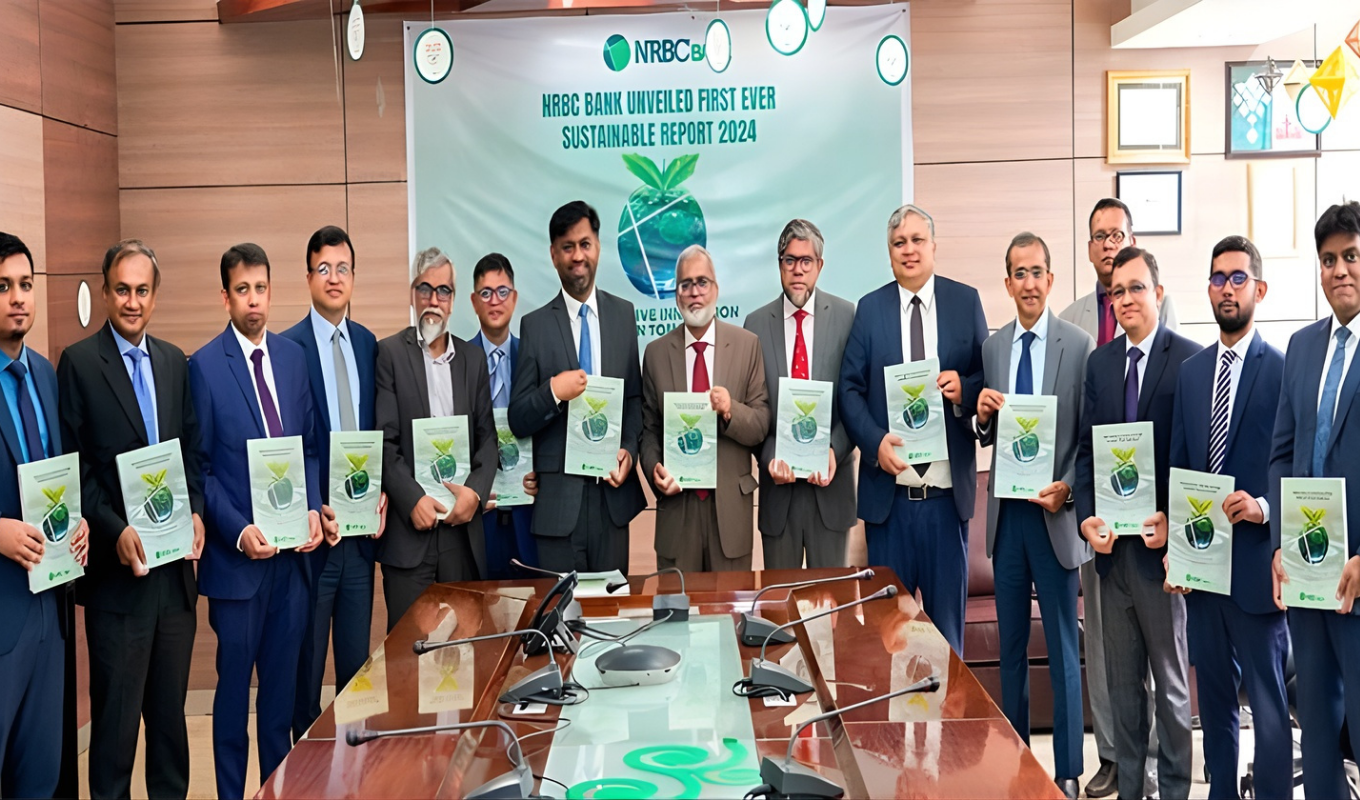
NRB Commercial Bank has released its inaugural Sustainability Report for 2024, highlighting its commitment to sustainable development, social responsibility, and environmentally friendly financing. Prepared following the Global Reporting Initiative (GRI) standards, the report’s central theme is ‘Inclusive Financing for a Green Future’. The official unveiling took place on Wednesday, 5 November 2025, at the bank’s headquarters, with the Managing Director and CEO, Dr Mohammad Touhidul Alam Khan, inaugurating the report.
Also present were the bank’s Deputy Managing Director and CFO Harunur Rashid, Deputy Managing Director and COO Mohammad Abdul Kaiyum Khan, along with members of the Sustainability Reporting Committee.
Dr Touhidul Alam Khan stated that publishing the sustainability report in accordance with GRI guidelines reflects NRB Commercial Bank’s long-term dedication to financial stability, environmental responsibility, and social justice. He pledged to increase support and financing in green banking, renewable energy, social welfare micro-sectors, and environmentally friendly initiatives. The bank remains committed to building a liveable Bangladesh and a beautiful planet for future generations.
The report outlines that NRB Commercial Bank conducts its banking operations with a strong focus on environmental, social development, and good governance. In 2024, the bank made significant advances in green and sustainable financing. By providing funding for renewable energy projects, energy-efficient technologies, sustainable waste management, green buildings, and climate-resilient agriculture, the bank contributes directly to farmers, national food security, and sustainable development.
It further emphasises that sustainable banking means robust and effective banking. Customers, borrowers, and shareholders will benefit from the bank’s environmentally friendly initiatives. Transparent and responsible banking practices will enhance the importance of green financing projects, reducing long-term costs for entrepreneurs while increasing profits. Depositors and shareholders can be assured that their savings and investments are not directed towards environmentally risky sectors.