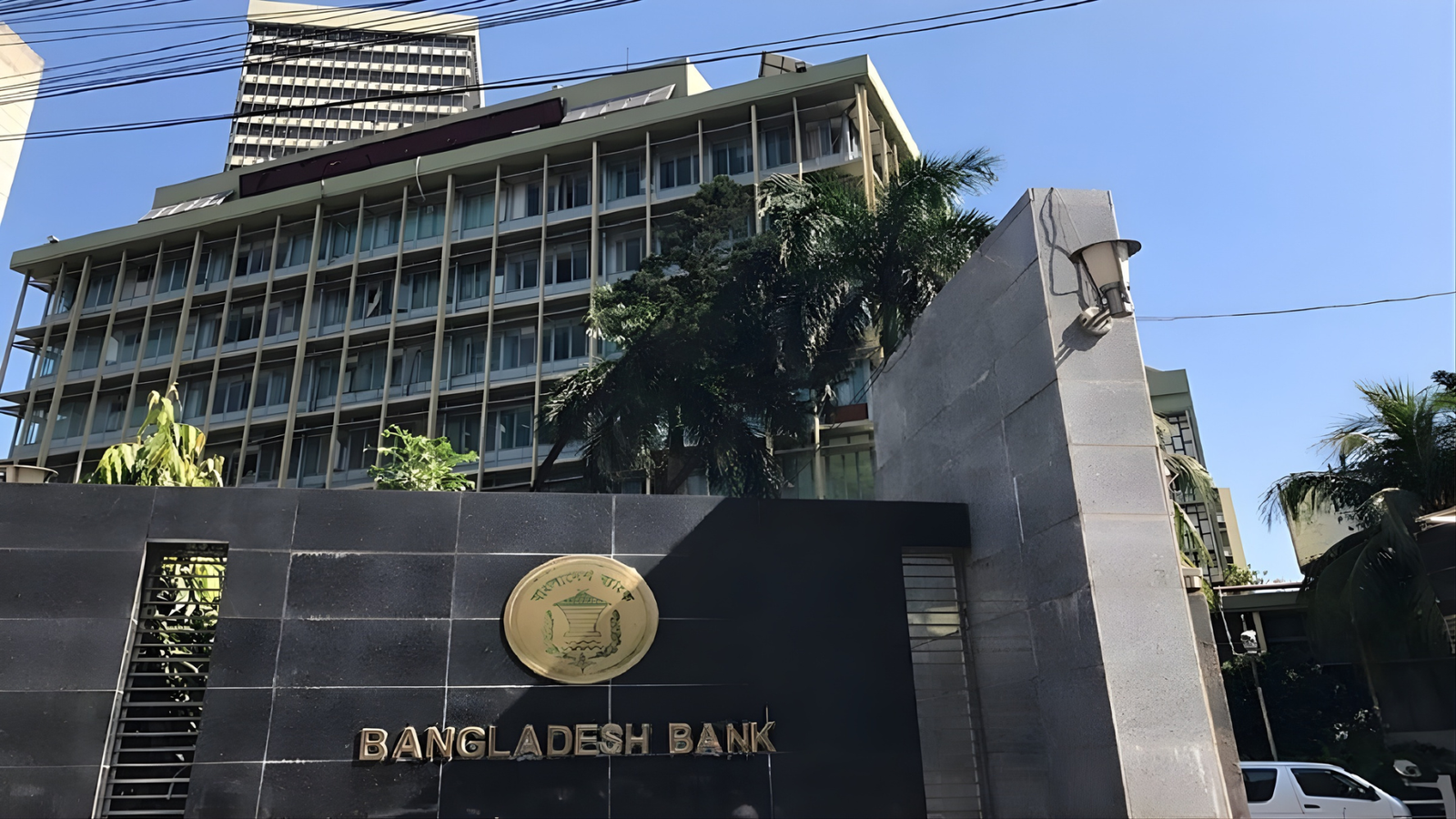
Bangladesh Bank has decided to further reduce the size of the Export Development Fund (EDF) to $2 billion by December this year, in line with the conditions set by the International Monetary Fund (IMF). This move is part of the country’s broader efforts to meet the terms of a $4.7 billion loan agreement with the IMF.
Under the agreement, the central bank has committed to keeping the EDF capped at $2 billion until December 2026, with no plans to expand the fund during that period. As of now, the EDF’s size is slightly above this threshold.
The EDF has historically been a crucial source of low-cost foreign currency loans for exporters. However, economists and senior Bangladesh Bank officials have acknowledged that the fund’s size must be reduced to comply with IMF-imposed conditions. These reforms are part of broader financial and structural changes the government is undertaking to manage the country’s economic situation.
Since mid-2022, the central bank has been gradually scaling back the EDF in response to dwindling foreign exchange reserves and ongoing dollar shortages. During the Covid-19 pandemic, the EDF was expanded to as much as $7 billion to assist exporters facing challenges from the global economic downturn. However, as reserves began to shrink and foreign currency constraints worsened, the central bank began to reduce the size of the fund, which also allowed it to bolster reserves on paper.
A senior Bangladesh Bank official explained, “According to our agreement with the IMF, Bangladesh Bank plans to keep the EDF within $2 billion. The larger the fund, the more credit exporters can access, but we had to reduce it to meet IMF conditions.”
Exporters Struggling to Access Funds
Many exporters have voiced concerns about the shrinking EDF, stating that it has become increasingly difficult to access low-interest loans. Mohammad Hatem, president of the Bangladesh Knitwear Manufacturers and Exporters Association (BKMEA), commented, “When the EDF was large, funds were readily available and loans could be taken easily. Now, with the fund reduced, getting a loan has become very difficult. After taking a loan, repayment takes time, so funds are not always available. I personally no longer apply for EDF loans.”
Economists Question the Impact of EDF Reduction
Economists have pointed out that while the EDF has long helped exporters, it has done little to diversify Bangladesh’s export base. Professor Mustafizur Rahman, a distinguished fellow at the Centre for Policy Dialogue (CPD), said, “Exporters mainly use the EDF for trading, and it has certainly helped them. But the drastic reduction began when the reserves situation deteriorated and the IMF required more transparent accounting. It was working well, but the EDF failed to contribute meaningfully to export diversification. The government should now explore how such funds can be used to promote diversification more effectively.”
Rahman suggested that while the fund’s size should be reduced for reserve management reasons, it should eventually be expanded again, possibly to a level closer to the previous $7 billion.
Dr Zahid Hussain, a former lead economist for the World Bank in Dhaka, echoed similar concerns. “The main purpose of the EDF was to promote export diversification, but we have not seen visible results. Our export dependence on garments remains unchanged. Despite such a large financial support mechanism, diversification has not occurred,” he said. “Even within garments, the idea was to diversify beyond traditional items like jeans, sweaters, shirts, and t-shirts into higher-value products – but that hasn’t happened.”
EDF Misuse and the Rise of Forced Loans
Investigations by Bangladesh Bank have revealed significant misuse of EDF loans by some exporters. Some borrowers have failed to repay their loans on time, turning EDF credits—funded from the country’s foreign exchange reserves—into large “forced loans.” This occurs when buyers abroad fail to make payments, resulting in no export proceeds and increasing debts for exporters.
For instance, a state-owned bank’s forced loans linked to EDF credits rose by 410% in 2021, from Tk1,400 crore the previous year to Tk7,141 crore. These loans occur when local banks must still pay foreign banks even if borrowers fail to settle letters of credit by the maturity date, creating forced loans in the borrowers’ names.
As Bangladesh continues to navigate its economic challenges, the reduction in the EDF represents a difficult but necessary step in securing the IMF’s financial assistance. However, the long-term effects on the country’s export diversification goals remain uncertain.