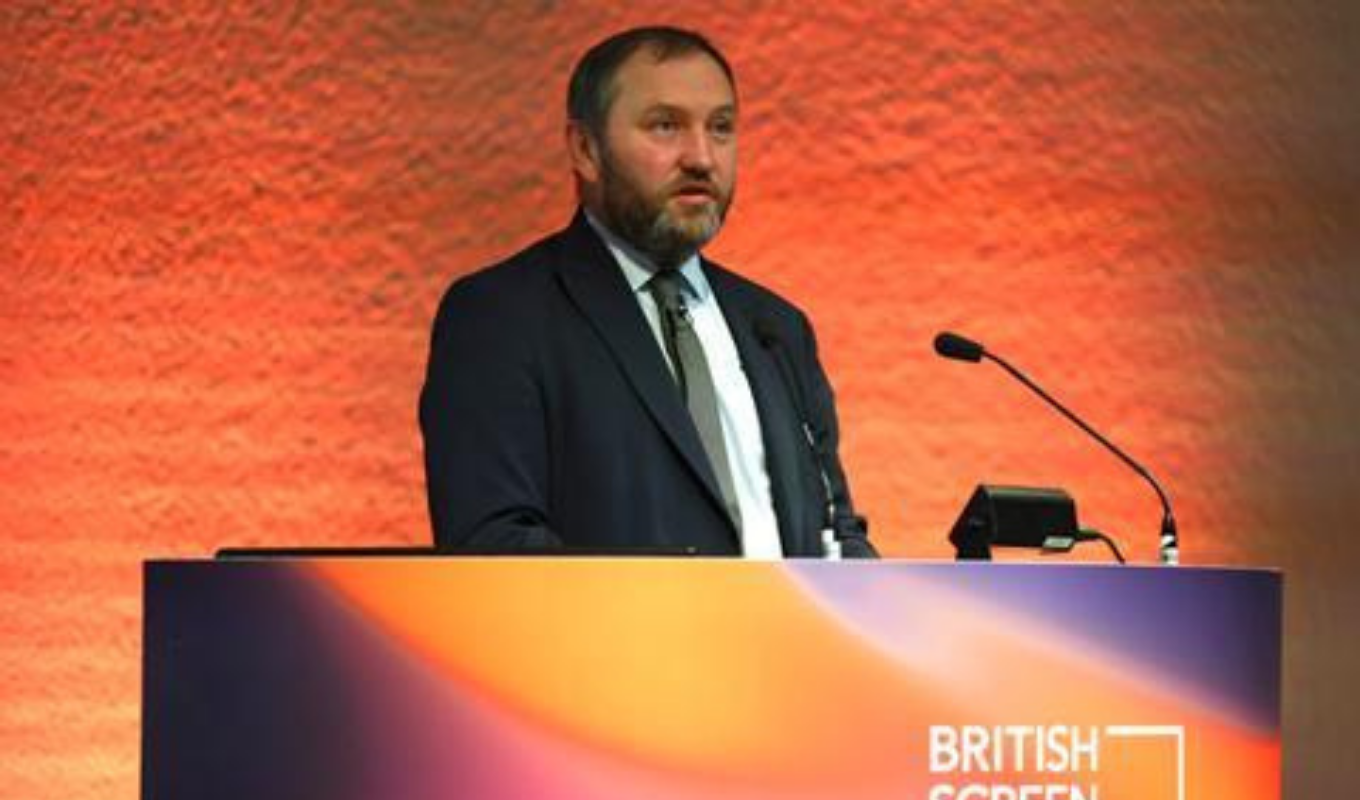
Ian Murray, the UK’s Minister for Creative Industries, has pledged to enhance access to finance for the creative sector, particularly for film producers, through a series of measures aimed at boosting the profile of creative technologies, or createch, alongside fintech.
Murray, who took over the role from Chris Bryant in a government reshuffle in September, made the commitment during his address at the British Screen Forum’s annual conference in London on November 19.
Speaking to delegates, Murray stressed the importance of providing long-term financial support to the sector. “We understand that supporting the sector’s growth means improving access to finance for creative businesses and intellectual property (IP) owners,” he said. “That’s why we are increasing support for the British Business Bank, establishing a working group to support IP-backed lending, and collaborating with the industry to create a single entry point for investment.”
Earlier this year, the British Business Bank allocated an additional £4bn to support growth across the UK’s eight key sectors, including the creative industries. However, how this funding will be distributed across the sectors, which also include defence, clean energy, financial services, life sciences, digital technologies, advanced manufacturing, and professional services, is still to be determined.
Founded in 2014, the British Business Bank is a government-owned development bank designed to help businesses in the UK access financial support.
Murray acknowledged the challenges faced by many producers, some of whom have had to offer personal assets, such as homes, as collateral to secure financing. “Many producers I’ve spoken to say they have only been able to succeed by putting up assets like homes,” he noted.
He went on to explain that part of the government’s creative industries plan is to shift away from requiring creators to put up personal assets for financial backing. Instead, the focus is on encouraging the financial services sector to view the creative industries as a viable investment opportunity. “The financial services sector doesn’t yet fully understand the creative industries in the same way they do bricks and mortar or manufacturing,” he said. “But if the British Business Bank can start backing creatives based on their IP rather than taking their homes as collateral, I believe this will de-risk the sector and help the overall ecosystem.”
Support for the BBC
Murray also voiced strong support for the BBC, following a turbulent week marked by the resignation of BBC Director-General Tim Davie and CEO of BBC News, Deborah Turness. The resignations followed controversy over misleading edits in a Panorama documentary on US President Donald Trump, which aired in October 2024, just before Trump’s re-election. Trump has since threatened legal action against the BBC, claiming damages of up to $5bn.
Murray reiterated the government’s commitment to safeguarding the BBC’s independence and editorial standards, saying, “Events over the last year have reminded us of the BBC’s responsibility to uphold the highest editorial standards. The public and parliamentarians have shown strong support for a fiercely independent BBC that provides trusted news in an age of misinformation.”
He stressed that the government would use the upcoming charter review to ensure the BBC’s continued independence while fostering growth and creativity across the UK. “We have to save the BBC,” Murray said. “The whole industry needs the BBC, particularly in this age, to be at the heart of the ecosystem, developing the sector in ways that the commercial industry cannot. The BBC is crucial to public life and has been for 100 years. Losing it would be a serious mistake.”
Murray also pointed out that other broadcasters, streaming services, and independent production companies had shown strong backing for the BBC’s role in supporting the UK’s broader production ecosystem. “If we go down the route of replacing the BBC with something like Fox News, our national story will never be told properly.”
Murray joined the Department for Digital, Culture, Media and Sport (DCMS) from his previous role as Scotland Secretary. His predecessor, Chris Bryant, now serves as Minister for International Trade and Economic Security at the Department for Business and Trade. Lisa Nandy remains Culture Secretary.