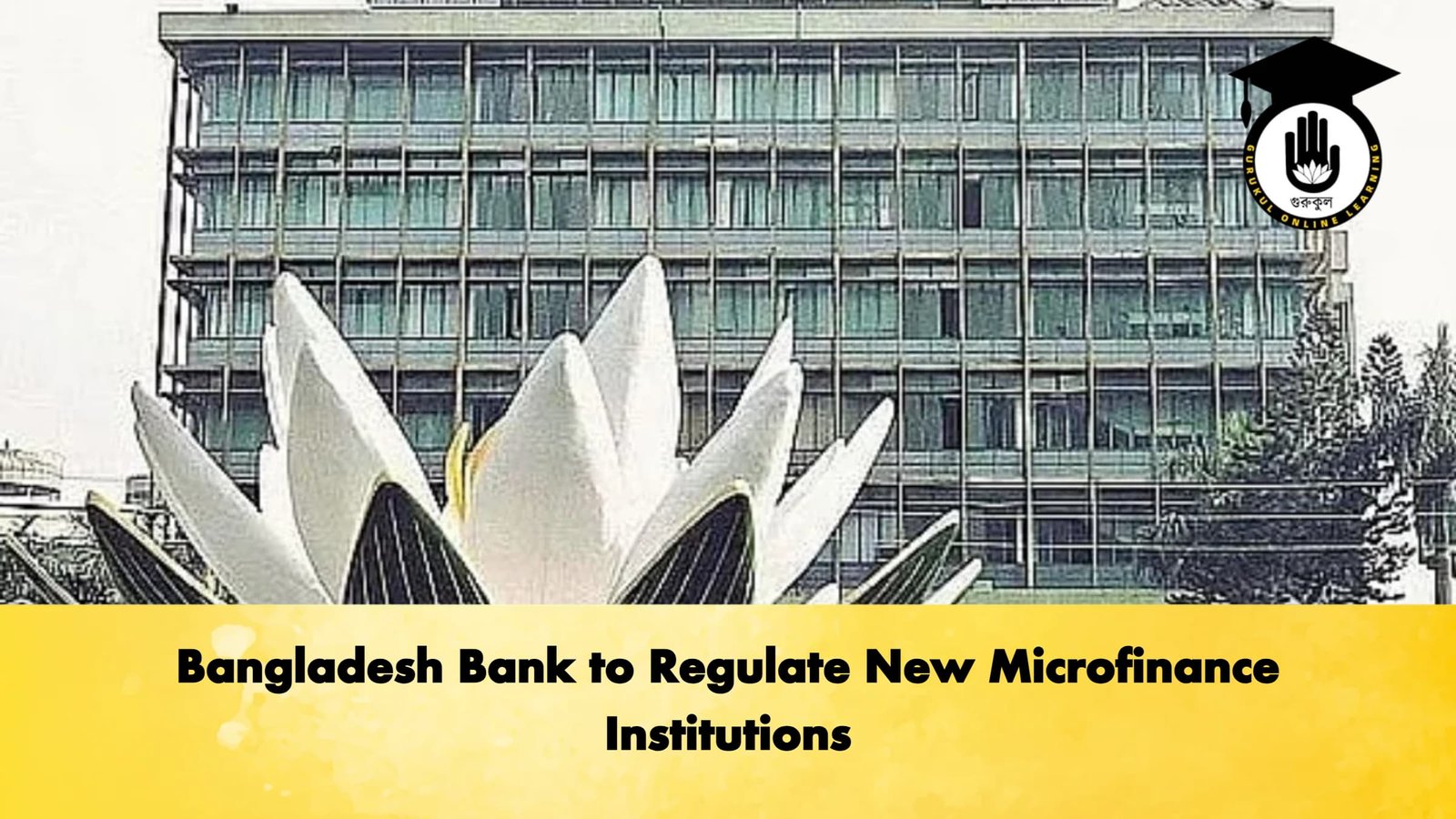
In a transformative move for the nation’s financial landscape, the interim government has finalised a framework to establish specialised Microfinance Banks. Departing from previous deliberations that suggested a separate licensing body under the Microcredit Regulatory Authority (MRA), the government has formally granted Bangladesh Bank full authority over the licensing and supervision of these new entities.
The “Microfinance Bank Ordinance 2025” was finalised on Monday during a high-level meeting at the Secretariat, chaired by Saied Kutub, Additional Secretary of the Financial Institutions Division. This initiative aligns with the vision of Chief Advisor Professor Muhammad Yunus, who has consistently championed the concept of “social business” and collateral-free lending based on mutual trust.
Capital and Ownership Structure
The finalised draft significantly raises the financial bar for entry compared to earlier versions. To ensure these institutions possess the resilience to withstand economic shocks, the authorised and paid-up capital requirements have been bolstered.
| Financial Parameter | Initial Draft (BDT) | Finalised Ordinance (BDT) |
| Authorised Capital | 300 Crore | 500 Crore |
| Paid-up Capital | 100 Crore | 200 Crore |
| Borrower Stake | 60% | 60% |
| Sponsor Stake | 40% | 40% |
A defining characteristic of these banks is that they will operate as social businesses. Crucially, they are prohibited from being listed on the stock market, ensuring that shares remain within the community of borrowers and founders rather than being traded for speculative profit.
Governance and Operations
The proposed institutions will be governed by a 10-member Board of Directors, structured to ensure a voice for the marginalised:
Four Directors will be elected from the borrower-shareholders.
Three Directors will represent the founding sponsors.
Two Independent Directors will be nominated by Bangladesh Bank.
One Managing Director will serve as a non-voting member.
The ordinance allows these banks to operate across varied geographical scopes, ranging from a single district to a nationwide presence.
Industry Concerns and Market Context
Bangladesh currently hosts a massive microfinance sector, with 683 NGOs serving over 32 million members. As of mid-2024, these institutions managed a combined loan portfolio of 2.64 lakh crore BDT, with women comprising 91% of the borrower base.
However, the new ordinance has met with resistance from industry giants. On 4 January 2026, seventeen leading organisations, including BRAC, ASA, and Bureau Bangladesh, issued a joint statement claiming the draft is “not microfinance-friendly.” Their primary grievance lies in the 200 crore BDT capital requirement, which they argue is prohibitively high for most existing NGOs to transition into a formal banking structure.
Next Steps
Financial Institutions Division Secretary Nazma Mobarek has confirmed that the draft has been forwarded to the Cabinet for final approval. Once signed by the Advisory Council, it will be promulgated as an ordinance, marking a new era in the country’s fight against poverty through structured, regulated, and trust-based banking.