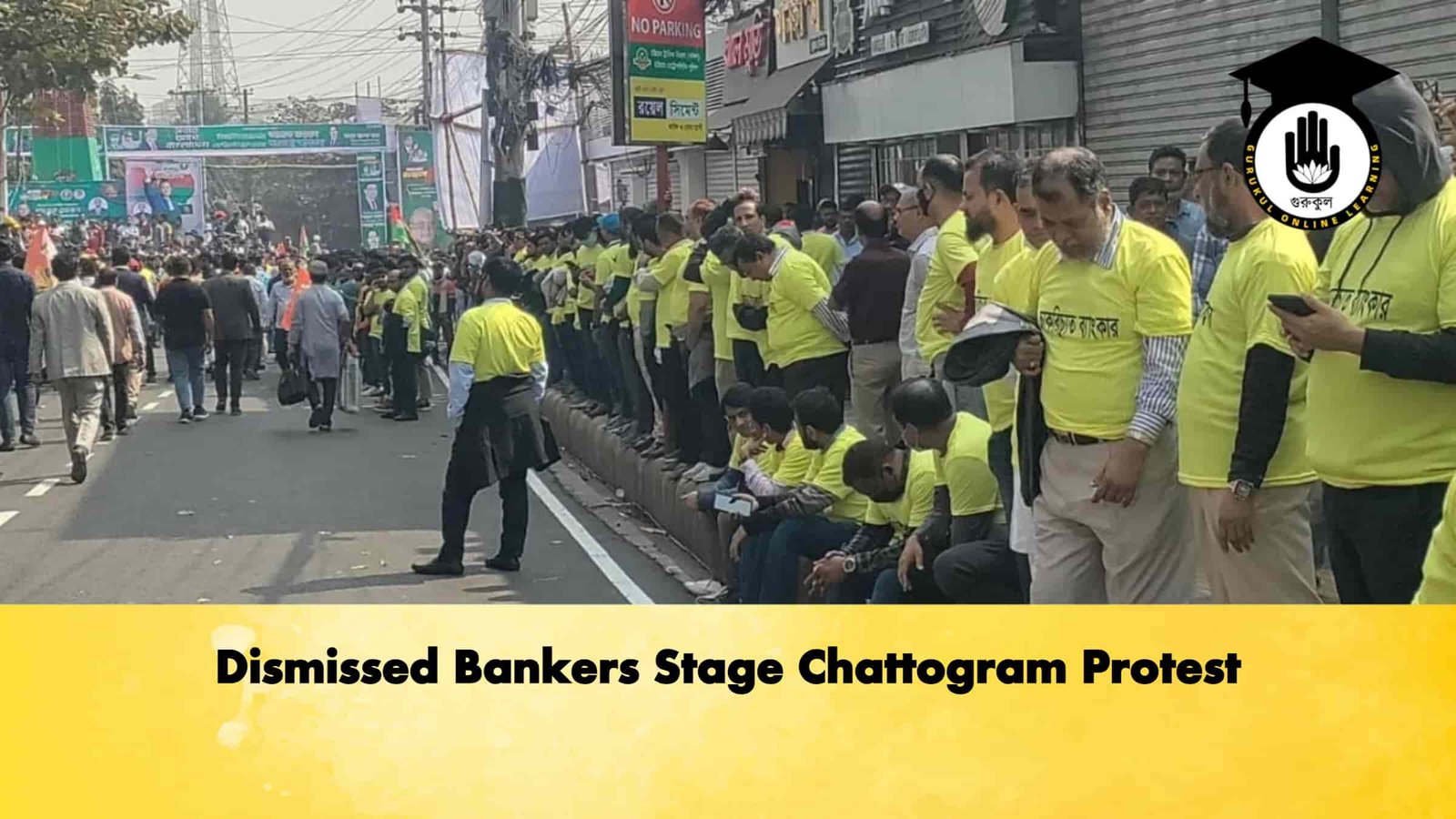
Dismissed officers and employees from a range of public and private banks staged a sit-in protest in Chattogram, demanding reinstatement to their former positions and drawing political attention to what they describe as long-standing injustices in the banking sector. The demonstrators said their primary objective was to bring their grievances to the notice of BNP Acting Chairman Tarique Rahman and to seek political and policy-level intervention in cases of dismissal that, they argue, have remained unresolved for years.
The programme began on Sunday morning in front of a five-star hotel in the port city, where Tarique Rahman was staying at the time. From early hours, more than a hundred former bankers gathered at the venue. Many wore T-shirts bearing the words “Dismissed Bankers”, turning their attire into a visible symbol of collective protest and shared hardship.
Throughout the sit-in, participants chanted slogans articulating both professional and political demands, including “We want justice, we want rights”, “Restore democracy, restore our jobs”, and “Establish the right to vote”. The protesters emphasised that the demonstration was entirely peaceful. They claimed that many of them had been dismissed as a punitive measure for their political beliefs, involvement in trade union activities, or for raising what they described as legitimate workplace concerns.
At around 11:30 a.m., as Tarique Rahman left the hotel to attend a public meeting, the protesters attempted to draw his direct attention. Several demonstrators said they hoped that, in the context of anticipated political change, their cases would finally receive priority consideration from national leadership.
One dismissed banker, Elias Hossain, told reporters that most of those affected had been removed from service without specific allegations or due departmental inquiries. According to him, the absence of transparent procedures has pushed many families into acute financial uncertainty. He said the protesters had taken to the streets with the expectation that, after elections, responsible political leadership would take steps to remedy what they consider clear injustices.
The demonstrators further argued that over the past decade, restrictions on discipline and freedom of expression within the banking sector have intensified, leading to a rise in dismissals. They stressed that the issue extends beyond individual hardship, framing it instead as a broader question of institutional justice, labour rights, and professional security within the financial system.
The main demands raised during the programme are summarised below:
| Demand | Description |
|---|---|
| Reinstatement | Restoration of unjustly dismissed bankers to their previous posts |
| Impartial investigation | Formation of an independent commission to probe dismissal cases |
| Financial compensation | Payment of arrears, salaries, and withheld benefits |
| Policy reform | Clear, fair, and transparent rules governing dismissals in banking |
At the conclusion of the sit-in, protest leaders warned that if their demands are ignored, they will announce larger, nationwide programmes. They maintained that without justice for dismissed employees, long-term stability, morale, and accountability in the banking sector cannot be ensured.