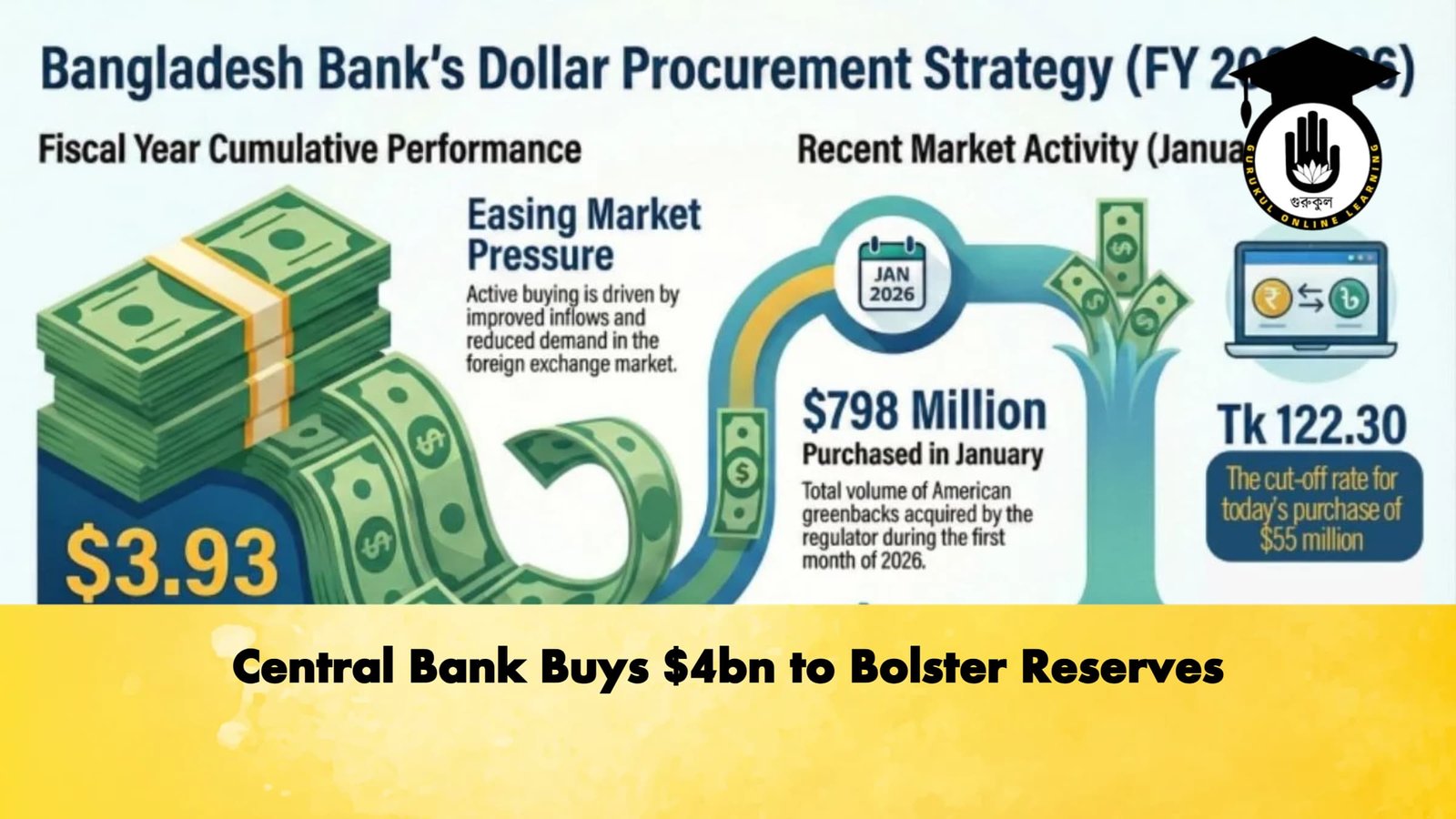
The Bangladesh Bank (BB) has undertaken a significant shift in its monetary strategy, purchasing a staggering $3.93 billion from the interbank foreign exchange market during the first seven months of the 2025–26 fiscal year (FY26). This proactive intervention marks a definitive end to the years-long trend of dollar selling and signals a period of stabilising liquidity and growing confidence in the national currency.
A Strategic Pivot in Currency Management
In a notable transaction on Thursday, the central bank acquired a further $55 million from five commercial banks. The transaction was executed at a cut-off exchange rate of 122.30 BDT per US dollar. This latest acquisition brings the total dollar purchases for January 2026 alone to $798 million, underscoring the regulator’s commitment to mopping up excess greenbacks to bolster the nation’s sovereign coffers.
This trend is a sharp reversal from the period between FY21 and FY25, during which the central bank was forced to liquidate more than $25 billion of its reserves. Those sales were essential to facilitate the import of critical commodities such as fuel, fertiliser, and food staples amidst global supply chain disruptions.
Recovery Driven by Remittances and Exports
The transition from a “dollar seller” to a “dollar buyer” has been facilitated by a robust recovery in foreign currency inflows. Improved export earnings and a surge in formal-channel remittances have eased the previous pressure on the foreign exchange market. Consequently, the Bangladeshi taka has shown remarkable resilience, actually gaining ground against the dollar since early July 2025.
| Reserve Metric (as of 22 January 2026) | Value (USD) |
| Gross Foreign Exchange Reserves | $32.66 Billion |
| Reserves under IMF BPM6 Standards | $28.06 Billion |
| Total FY26 Purchases (To Date) | $3.93 Billion |
| Total January 2026 Purchases | $798 Million |
Compliance and Growth
While the gross reserves have climbed to a healthy $32.66 billion, the central bank remains transparent regarding the International Monetary Fund’s (IMF) BPM6 accounting standards. Under this manual, which excludes certain encumbered assets, the reserves sit at a solid $28.06 billion.
Market analysts suggest that the consistent intervention by the Bangladesh Bank serves a dual purpose: it prevents the taka from appreciating too rapidly—which could harm export competitiveness—while simultaneously building a “war chest” to shield the economy from future external shocks. With five months remaining in the current fiscal year, the central bank appears well on its way to exceeding its initial reserve accumulation targets.