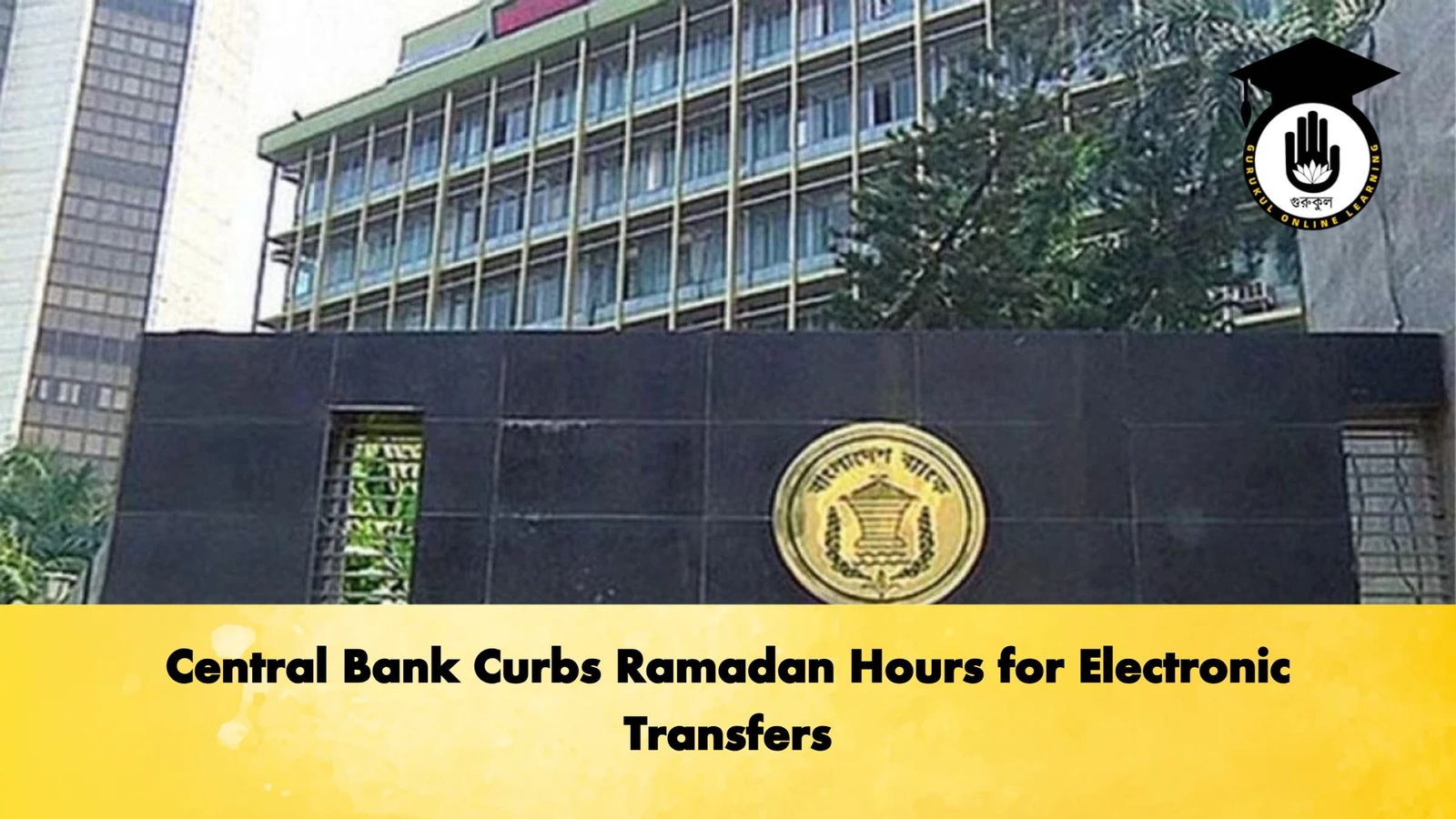
In observance of the holy month of Ramadan, Bangladesh Bank has announced a temporary adjustment to the operational windows for its primary interbank electronic fund transfer systems. The central bank issued a formal circular on Monday, 16 February 2026, mandating all scheduled banks to implement revised timings for the Bangladesh Electronic Funds Transfer Network (BEFTN) and Real-Time Gross Settlement (RTGS).
The directive aims to harmonise high-value and retail electronic transactions with the shortened banking hours typically observed during this period of religious reflection. These changes are expected to impact corporate payrolls, vendor settlements, and large-scale individual transfers across the national financial grid.
Revised Operational Windows
The modifications represent a significant contraction of the daily processing window, particularly for the BEFTN system, which is the backbone of credit and debit transactions in the country.
| Transaction System | Regular Schedule | Revised Ramadan Schedule | Total Reduction |
| BEFTN | 11:30 am – 3:00 pm | 11:30 am – 1:30 pm | 1.5 Hours |
| RTGS | 10:00 am – 4:30 pm | 9:00 am – 3:00 pm | 30 Minutes |
Understanding the Systems
The central bank’s decision carries significant weight for the business community, as these two systems serve distinct but vital roles in the economy:
BEFTN (Bangladesh Electronic Funds Transfer Network): This is a “batch processing” system primarily used for high-volume, low-value transactions. It is the standard vehicle for the distribution of civil servant salaries, corporate dividends, vendor payments, and monthly loan instalments. The two-hour window during Ramadan means businesses must ensure their transaction files are uploaded significantly earlier than usual to avoid processing delays.
RTGS (Real-Time Gross Settlement): Designed for high-value or time-critical payments, RTGS settles transactions individually and instantaneously. It is typically used for transactions exceeding 100,000 BDT. While the start time has been moved an hour earlier to 9:00 am, the 3:00 pm cut-off remains earlier than the standard 4:30 pm close, necessitating swifter action for treasury managers and high-net-worth clients.
Operational Impact and Compliance
Bankers have noted that the condensed BEFTN window may lead to a “bottleneck” effect, as the volume of transactions generally does not decrease during Ramadan. Financial institutions are advised to encourage clients to initiate transfers during the morning hours to ensure settlements are completed within the central bank’s updated clearing cycles.
The Bangladesh Bank has clarified that these hours will remain in effect until the conclusion of Ramadan, after which the regular schedule will be reinstated. All scheduled banks have been instructed to display these new timings prominently in their branches and on digital banking portals to minimise customer inconvenience.