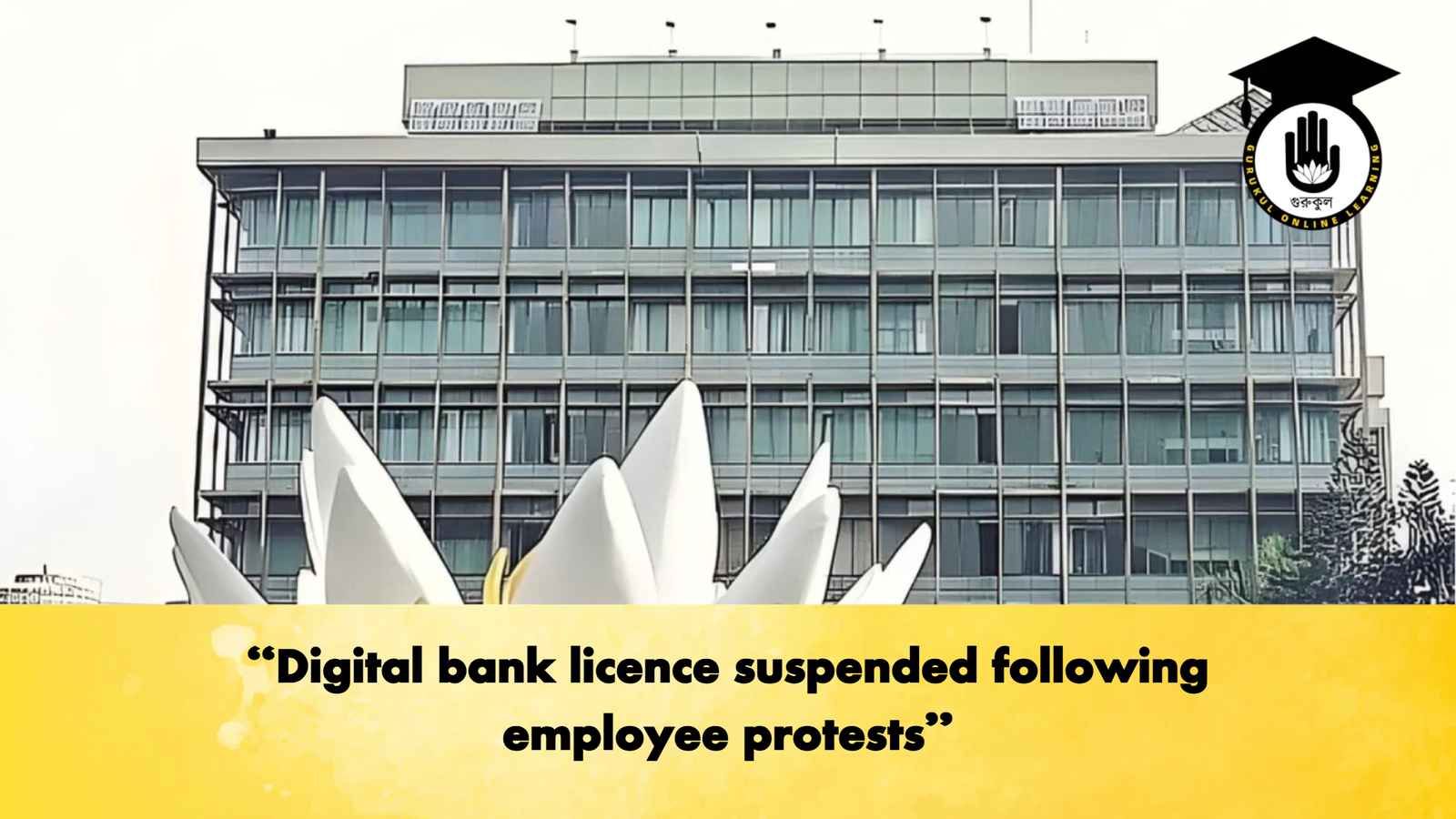
The issuance of a digital bank licence in Bangladesh has been halted following strong objections from senior officials of the central bank. The Bangladesh Bank Officers’ Welfare Council (BBOWC) expressed concern over the hastily convened initiative, which was scheduled just a day before the formation of a new government.
On Monday morning, the Council demanded the postponement of the board meeting in protest against the move, citing risks to the central bank’s transparency and professionalism. Although the board convened in the afternoon, no approval for digital bank licences was granted. Instead, the meeting revealed the scoring of applicant institutions, leaving the licence process effectively suspended.
Tensions persisted throughout the day at Bangladesh Bank. Following the Council’s morning press conference, the bank issued a directive prohibiting employees from making any public statements on bank policies or matters without official authorisation.
Speaking to the press, Bangladesh Bank spokesperson Arif Hossain Khan confirmed that the board’s emergency session had reviewed progress reports on digital banking applications but had not reached any decision.
During the press conference, BBOWC leaders criticised the timing and process of the proposed licence approval. They noted that an emergency board meeting was called on 16 February with only one day’s notice, coinciding with the post-election government formation process. The Council expressed concern that the initiative could compromise the impartiality of the central bank and favour specific groups.
The Council further alleged that the current Governor previously chaired a bank linked to one of the applicant groups, raising questions of conflict of interest. Concerns were also raised about the involvement of unqualified advisors and outsiders in sensitive decision-making and card issuance processes without board approval—practices described as unprecedented.
According to the Council, the move violates both the Banking Companies Act and established government procedures, especially in an interim political period. It warned that hasty approvals could risk creating monopolistic conditions in the financial sector.
With 61 scheduled banks operating in Bangladesh and non-performing loan rates exceeding 36% as of September 2025, the Council stressed that any new digital bank licence should undergo thorough scrutiny.
The BBOWC demanded: immediate suspension of the licence process, postponement of the 16 February board meeting, an impartial investigation into conflicts of interest, restoration of central bank autonomy, and, if necessary, leadership changes to rebuild trust.
Digital Bank Applicants
| Applicant Institution | Promoters / Background |
|---|---|
| British Bangla Digital Bank PLC | Bangladesh-based promoters |
| Digital Banking of Bhutan | DK Bank, Bhutan |
| Amar Digital Bank | 22 microfinance institutions |
| 36 Digital Bank PLC | 16 private individuals |
| Boost | Robi Axiata Limited |
| Amar Bank | Private companies |
| App Bank | UK-based individuals |
| Nova Digital Bank | ViON & Square |
| Maitree Digital Bank PLC | Microfinance organisation Asha |
| Japan-Bangla Digital Bank | DBL Group |
| Munafa Islami Digital Bank | Akij Resources |
| bKash Digital Bank | bKash shareholders |
| Upokari Digital Bank | IT Solution Limited |
During the board meeting chaired by Governor Ahsan H. Mansur, the initial agenda for approving digital banks was changed at the last moment, adding to officials’ frustration. While progress reports were presented, no approvals were issued.
The future of digital banking licences in Bangladesh remains uncertain as the central bank navigates protests, governance concerns, and the need for transparent evaluation.