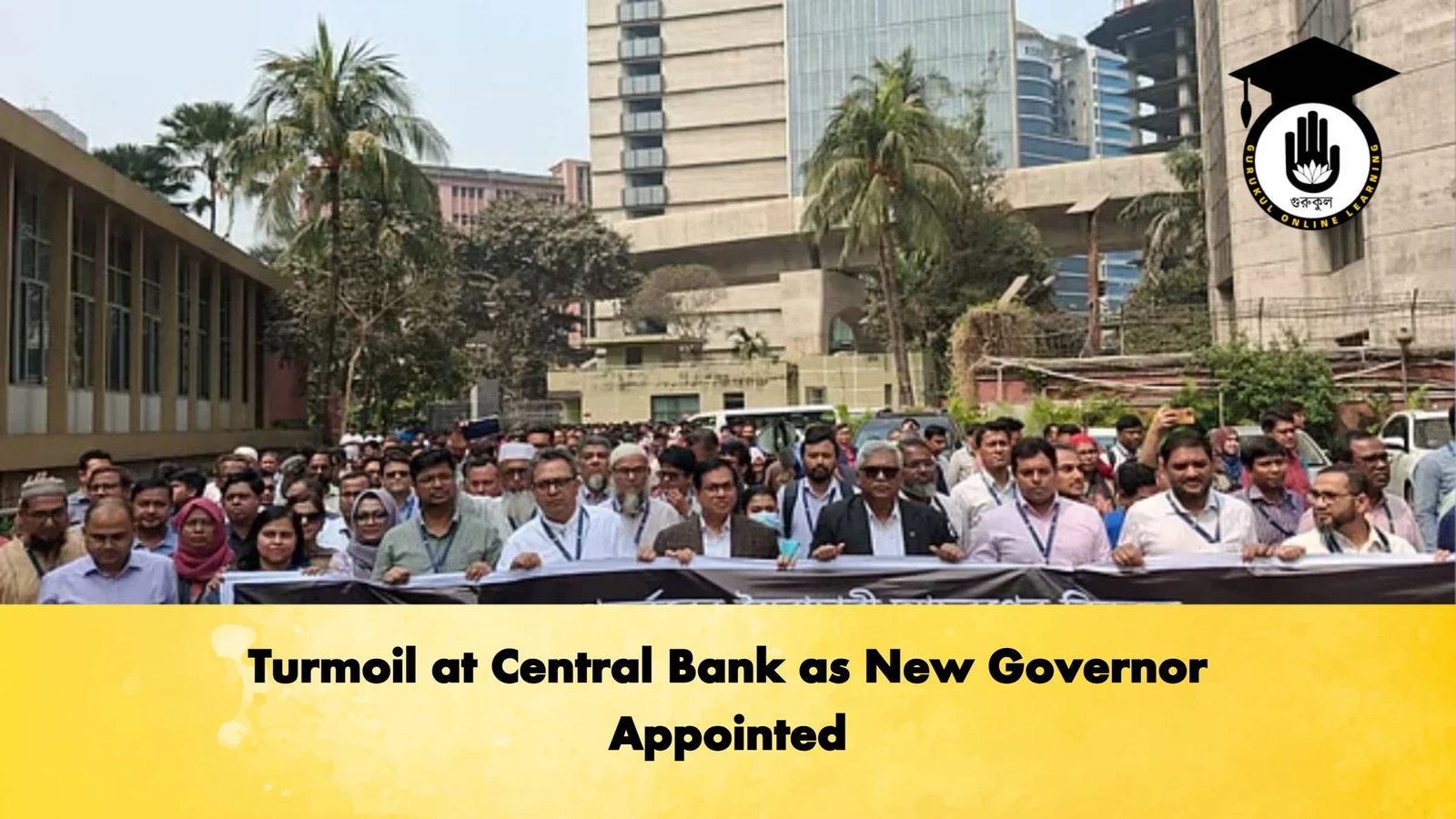
The tenure of Ahsan H. Mansur as the Governor of Bangladesh Bank reached a turbulent conclusion on Wednesday following days of intense internal unrest and administrative friction. In a historic shift for the nation’s financial regulatory framework, the government cancelled Mr Mansur’s appointment and named Md. Mostakur Rahman, a prominent businessman and accountant, as his successor. This marks the first instance in the country’s history where a professional from the private business sector has been appointed to lead the central bank.
A Day of Administrative Mutiny
The atmosphere within the central bank remained electric throughout the day, necessitated by a heavy police presence to maintain order. The discord peaked when the Bangladesh Bank Officers’ Welfare Council organised a mass protest, accusing Mr Mansur of “autocratic behaviour.”
The catalyst for the escalation was the recent issuance of show-cause notices and the subsequent transfer of three senior officials who had publicly criticised the Governor’s policies. Protesting staff demanded the immediate withdrawal of these punitive measures, threatening a “pen-in” strike should their grievances remain unaddressed.
“We sought autonomy for Bangladesh Bank, but instead, we were met with autocracy,” stated Shahriar Siddiqui, a Director and Assistant Spokesperson. He further criticised the Governor’s reliance on contractual consultants and advisors, arguing that such measures undermined the morale and professional standing of permanent staff.
The Outgoing Governor’s Final Stance
Shortly before his exit, Ahsan H. Mansur held a press conference to defend his record. He asserted that his actions were essential for maintaining institutional discipline during a critical period of structural reform. Addressing the controversial liquidity support provided to struggling banks, he noted that without such intervention, depositors would have faced catastrophic losses.
“Resigning takes me only two seconds,” Mr Mansur remarked to journalists. “I came here to serve the nation during a crisis.” He warned that a “vested quarter” was misleading general officers in an attempt to return distressed banks to the hands of “looter” former owners.
Comparison of Outgoing and Incoming Leadership
| Feature | Ahsan H. Mansur (Outgoing) | Md. Mostakur Rahman (Incoming) |
| Professional Background | Economist / Former IMF Official | Businessman / Accountant |
| Key Achievements | Merger of five banks into United Islamic Bank | N/A (Newly Appointed) |
| Primary Challenge | Internal staff rebellion & liquidity crisis | Restoring morale & market confidence |
| Historical Context | Part of post-transition reform team | First business professional in the role |
Chaotic Exit for Advisers
The transition was marred by unseemly scenes as the “mob mentality” took hold within the bank’s corridors. Following the announcement of the new appointment, a group of officials reportedly harassed the Governor’s Adviser, Ahsan Ullah. Protesters were seen chanting slogans and physically accosting the official as he was forcibly escorted to his vehicle, an incident reportedly led by several high-ranking directors.
Expert Reaction: A Risky Transition?
The sudden change at the helm of the central bank has sparked concern among economic circles. Dr Salehuddin Ahmed, a former Finance Adviser, expressed reservations about the timing.
“While the new government has the right to change strategy, a sudden shift in the Governorship sends a poor signal to international donors and credit agencies,” Dr Ahmed noted. He praised Mr Mansur as a knowledgeable figure who had initiated vital reforms, including the consolidation of fragile banks—a policy essential for the long-term stability of the Bangladeshi economy.
The financial sector now watches closely to see how a business-oriented Governor will navigate the delicate balance between regulatory oversight and the demands of a restive internal workforce.