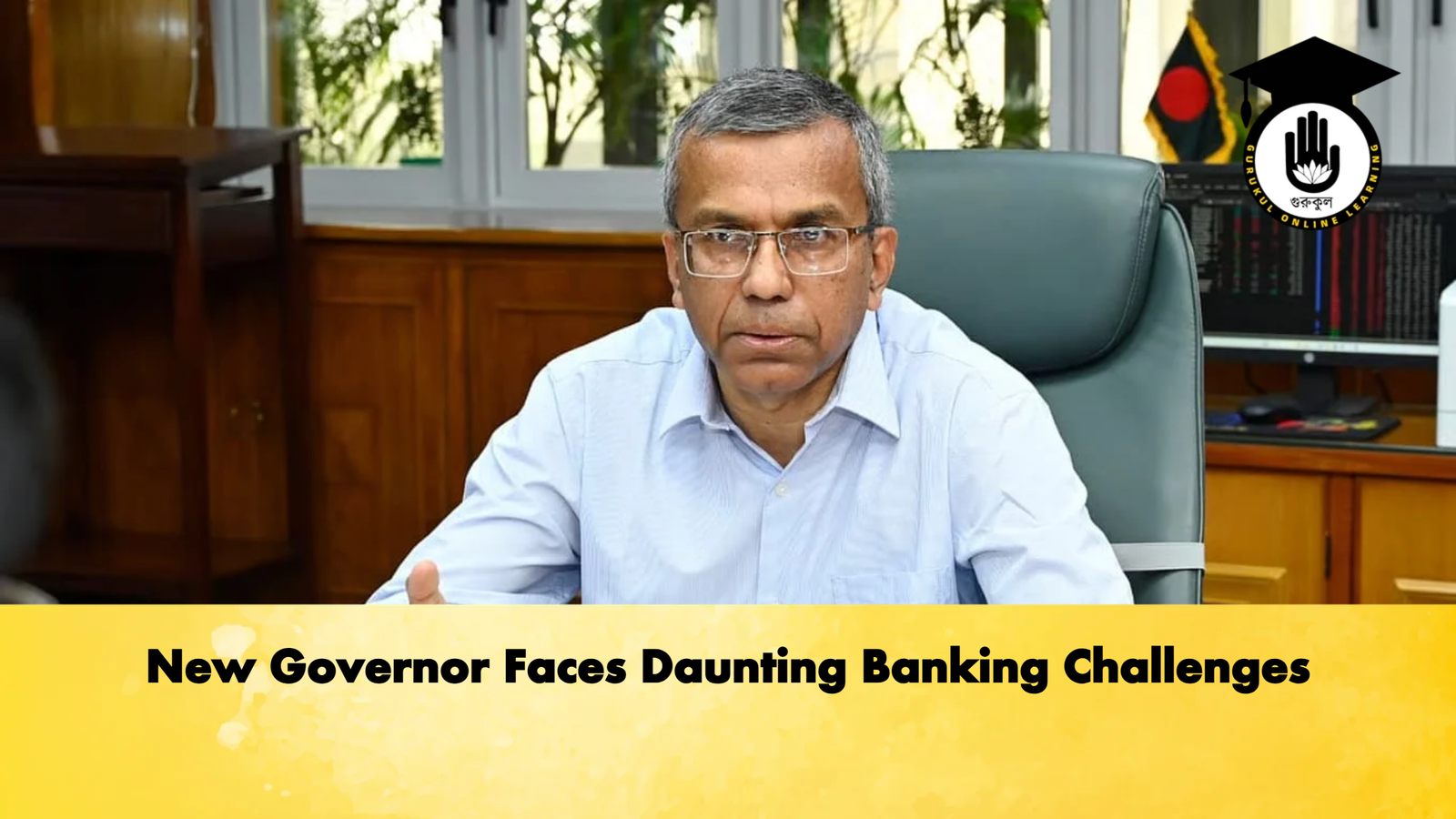
When the Awami League government was ousted amid widespread student and public protests, Bangladesh’s banking sector was in acute crisis. A severe shortage of foreign currency left businesses struggling, exacerbating inflation, while several banks reportedly controlled by the S Alam Group were allegedly being funded through unchecked money creation. Alongside the currency crunch, regulatory oversight and discipline within the banking system had virtually collapsed, leaving the sector vulnerable to mismanagement and financial malpractice.
In this context, economist Ahsan H. Mansur assumed the governorship of Bangladesh Bank on 14 August 2024. With extensive experience at the International Monetary Fund (IMF), Mansur brought both technical expertise and institutional reform experience. During his one-and-a-half-year tenure, he mitigated much of the dollar and taka crises, launched the consolidation of five troubled banks, and tightened money supply to contain inflation. Policy interest rates were increased, which subsequently raised lending rates, slowing the pace of business activity and investment but stabilising the financial system.
Shortly after the BNP government took office following the 13th National Parliamentary elections, Mansur was removed from the governorship just ten days into their tenure. Businessman Mostaque Rahman was appointed as the new governor, inheriting a banking sector still grappling with systemic fragilities and ongoing reform initiatives.
Key Challenges Ahead
The BNP government campaigned on promises of banking sector reform, including stricter oversight of financial institutions, enhanced autonomy for Bangladesh Bank, and eventual abolition of the Banking Division. Analysts emphasise that sustaining and building upon reforms initiated under Mansur will be essential for stabilising the sector.
Critical priorities for the new governor include restoring depositor confidence, completing bank consolidation initiatives, aligning regulations with international banking standards, and preventing any recurrence of financial malpractice. The government is also accelerating amendments to the Bank Companies Act and Bangladesh Bank Order to strengthen the legal framework, while maintaining strict vigilance against money laundering and the outflow of illicit funds.
Anis E. Khan, former chairman of the Association of Bankers, told The Daily Star: “Significant challenges remain. The reform process must continue, consolidation completed, and professional independent directors installed to ensure good governance. Recovery of non-performing loans and repatriation of embezzled funds must remain top priorities for the new administration.”
Current Status of the Banking Sector
When Mansur took office, the dollar was surging and foreign exchange reserves were critically low. By introducing market-based foreign exchange policies, he eased the dollar crisis, encouraged remittance flows, and increased reserves from $25.92 billion on 5 August 2024 to $35.04 billion recently (IMF BPM6 accounting: $30.3 billion). The exchange rate stabilised around 122–123 taka per US dollar.
Despite these improvements, non-performing loans (NPLs) surged due to previously hidden defaults. The NPL ratio rose from 12.56% in June 2024 to 35.73% by September, amounting to nearly BDT 6.5 trillion. Several banks previously mismanaged under Awami League-aligned interests—including First Security, Social Islami, Union, Global Islami, and Exim—were consolidated into the Sammilito Islami Bank, though the process remains incomplete. Six additional financial institutions remain marked for closure.
Investigations into alleged misconduct involving major industrial groups—including S Alam, Beximco, Nabil, Summit, Orion, Jemcon, NASA, Bashundhara, Sikder, and Aramit—were launched during Mansur’s tenure. Bangladesh Bank continues to pursue recovery of embezzled funds both domestically and internationally, establishing agreements with foreign institutions where required.
To control inflation, Mansur relied on policy interest rates, raising them above 14%, which helped reduce inflation to approximately 8.5%. However, higher lending rates have dampened investment and slowed commercial activity, according to business observers.
The new governor, Mostaque Rahman, now faces the formidable task of consolidating reforms, completing bank mergers, recovering non-performing loans, and restoring public and investor confidence—all while navigating political pressures and ensuring long-term stability in Bangladesh’s banking sector.