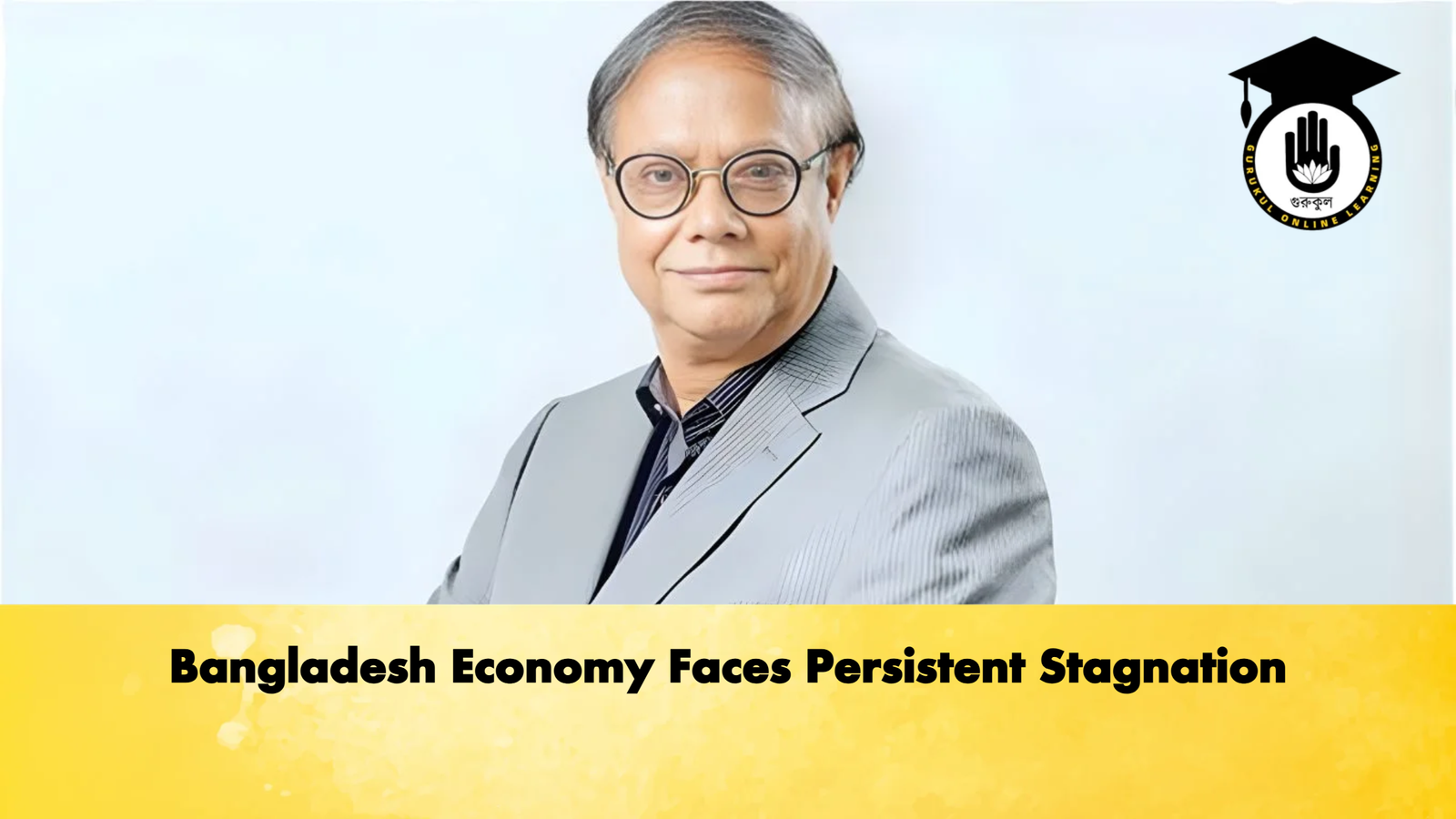
Over the past few years, Bangladesh’s economy has failed to achieve the anticipated progress despite high expectations. Economist Ahsan H. Mansur, a former faculty member of the University of Dhaka and a full-time IMF official, was appointed Governor of Bangladesh Bank following the July mass uprisings. Civil society members and economic analysts initially hoped that Mansur would stabilise the economy and put it on a sustainable growth trajectory. However, subsequent developments have fallen short of these expectations.
Economic Deterioration
Since assuming office, the national economy has experienced contraction, rising inflation, disruption in trade, and an increase in non-performing loans. Nearly 18 months of strict contractionary monetary policy failed to restore stability. Many businesses and factories have shut down, and public confidence has declined, reflecting a broader economic slowdown.
Progress on Repatriating Illicit Funds
Governor Mansur had prioritised the repatriation of illegally transferred funds. In December 2024, he projected that some funds could be returned within six months. Subsequently, he visited the United States, United Kingdom, and Switzerland, among other countries. A year later, he revised the timeline to four to five years. Actual progress, however, has been negligible.
| Year | Projected Timeline | Actual Progress | Cost (in crore BDT) |
|---|---|---|---|
| 2024 | 6 months | 0% | N/A |
| 2025 | 4–5 years | 0% | Increased expenses |
Meanwhile, joint investigation committees aimed at curbing irregularities, loan fraud, and money laundering in the banking and capital markets failed to produce tangible results. Investor confidence has been eroded, stalling both new investments and industrial expansion.
Monetary Policy and Stability
Mansur’s monetary policies failed to control inflation effectively. The policy interest rate was raised to 10% in three phases, pushing maximum lending rates to 16–17%. This has discouraged productive investment and left job creation effectively stagnant.
| Challenge | Economic Impact |
|---|---|
| High policy interest rate | Increased borrowing costs, reduced investment |
| Rising inflation | Reduced purchasing power |
| Exchange rate stability efforts | Export decline (-14.25%) |
| Weak regulatory enforcement | Persistent irregularities in industry and banking |
Criticism and Recommendations
Private sector researchers, including Dr. Debapriya Bhattacharya, and Dhaka Chamber of Commerce and Industry Chairman Taskin Ahmed, have criticised Mansur’s policies for failing to stabilise investment, employment, and the broader economy. They have recommended that the new government focus on four priority areas:
Control inflation
Reduce interest rates
Maintain currency value
Regulate debt levels
Analysts from the Centre for Policy Dialogue (CPD) and other institutions contend that Mansur was ineffective across all these areas. His policies, aligned with IMF directives, have inflicted long-term damage on Bangladesh’s economic prospects.
Conclusion
Due to unrealistic promises and ineffective policy measures, Bangladesh faces a persistent economic crisis. Indicators of investment, employment, and growth reflect this ongoing challenge, and the consequences are likely to intensify over the coming years.