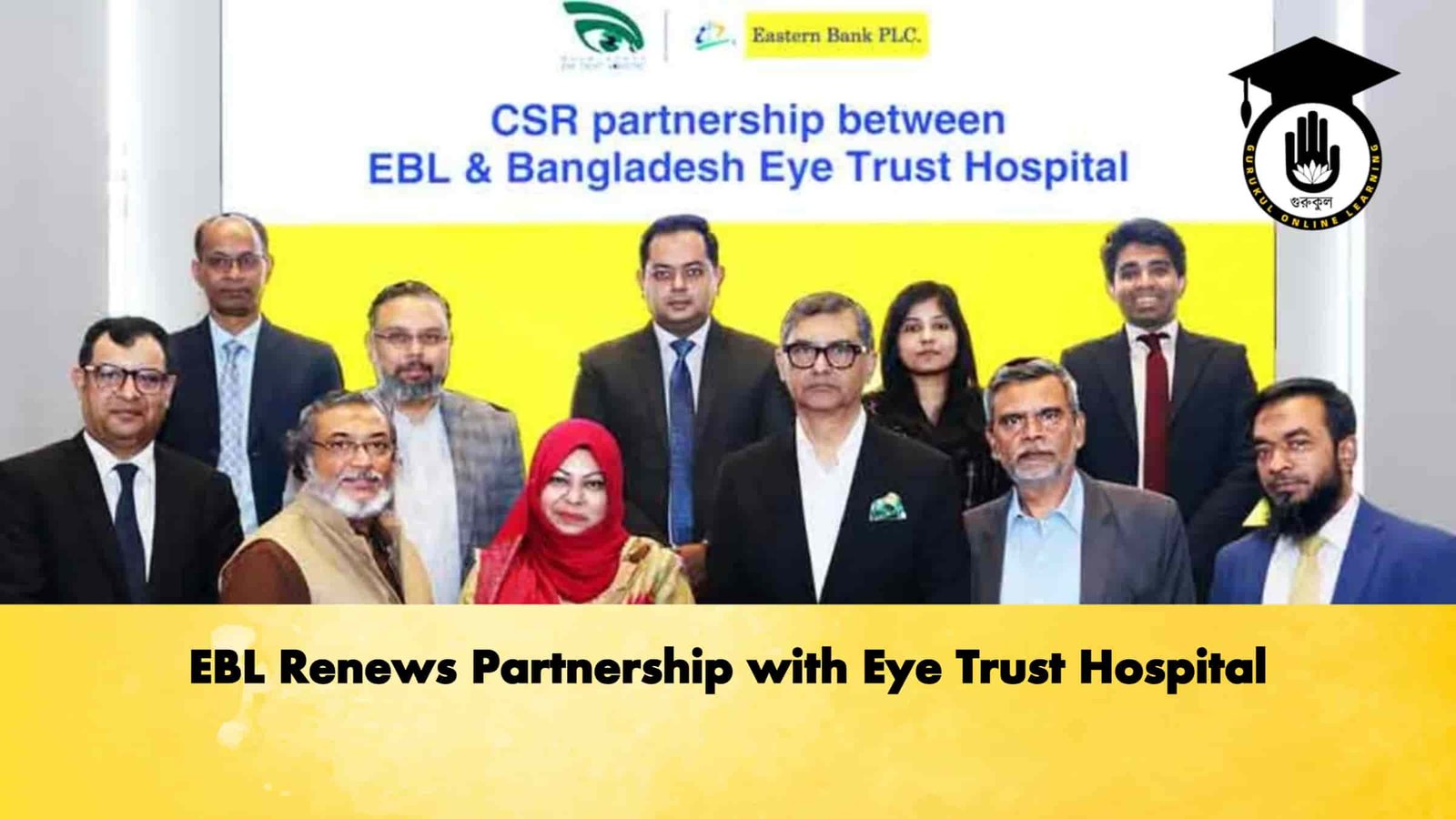
Eastern Bank PLC (EBL) has renewed its partnership with Bangladesh Eye Trust Hospital (BETH) in a move aimed at expanding access to essential eye care services for economically disadvantaged communities across Bangladesh. The renewed collaboration will help provide free or subsidised treatment for patients who might otherwise remain deprived of basic medical care, particularly those suffering from preventable or treatable vision problems.
According to a press statement issued by the bank, the partnership will support a range of services including eye examinations, cataract surgeries, transportation for patients travelling from remote areas, and meals during treatment. These services will be delivered at BETH’s modern eye care facility located on Satmosjid Road in Dhaka.
The renewed agreement was formally marked during a ceremony held recently at EBL’s head office in Dhaka. On the occasion, Ziaul Karim, Head of Communications and External Affairs at EBL, handed over a cheque to Dr. Niaz Abdur Rahman, Managing Director of Bangladesh Eye Trust Hospital. Representatives from both organisations attended the event, underscoring their shared commitment to expanding humanitarian healthcare services in the country.
Speaking at the ceremony, Ziaul Karim emphasised the importance of sustained collaboration between the private sector and healthcare institutions in addressing public health challenges. He noted that Bangladesh Eye Trust Hospital has been playing a crucial role in delivering eye care services to underserved communities, often at no cost to patients.
He further stated that EBL remains committed to supporting such initiatives through its corporate social responsibility programmes. According to him, improving access to eye care not only restores sight but also enhances the overall quality of life for thousands of individuals who struggle with vision impairment due to financial constraints.
Dr. Niaz Abdur Rahman highlighted that many people in rural and low-income communities suffer from avoidable blindness, primarily due to untreated cataracts and limited access to specialised medical facilities. He explained that the hospital’s mission is to ensure that no one loses their vision simply because they cannot afford treatment.
With continued support from partners such as EBL, he added, the hospital has been able to extend its services to thousands of patients each year. Beyond restoring sight, these efforts also help individuals regain independence, return to work, and live with renewed dignity.
The partnership focuses particularly on cataract treatment, which remains one of the leading causes of blindness in developing countries. Cataract surgery is widely regarded as one of the most effective and cost-efficient medical procedures for preventing permanent vision loss.
The initiative covers several key components designed to ensure that underprivileged patients receive comprehensive care.
| Support Component | Description |
|---|---|
| Eye Screening | Initial examinations to diagnose vision problems |
| Cataract Surgery | Surgical treatment for patients suffering from cataracts |
| Transportation | Travel assistance for patients from distant areas |
| Patient Meals | Food support during hospital visits and treatment |
| Post-Treatment Care | Follow-up examinations and guidance |
Among those present at the ceremony were Dr. Mahziba Rahman Chowdhury, Consultant Ophthalmologist at BETH, and M. Kamrul Islam Shanzeed, General Manager of the hospital. Representatives from EBL included Major Md. Abdus Salam (Retired), Head of Administration, and Md. Maskur Reza, Head of Business Information Systems.
Healthcare experts believe that partnerships between financial institutions and medical organisations play a vital role in addressing gaps in healthcare accessibility. In countries where a significant portion of the population lives with limited income, corporate support can help expand treatment opportunities and reduce preventable blindness.
Through this renewed collaboration, EBL and Bangladesh Eye Trust Hospital aim to continue restoring vision and improving the lives of thousands of disadvantaged people across the country.