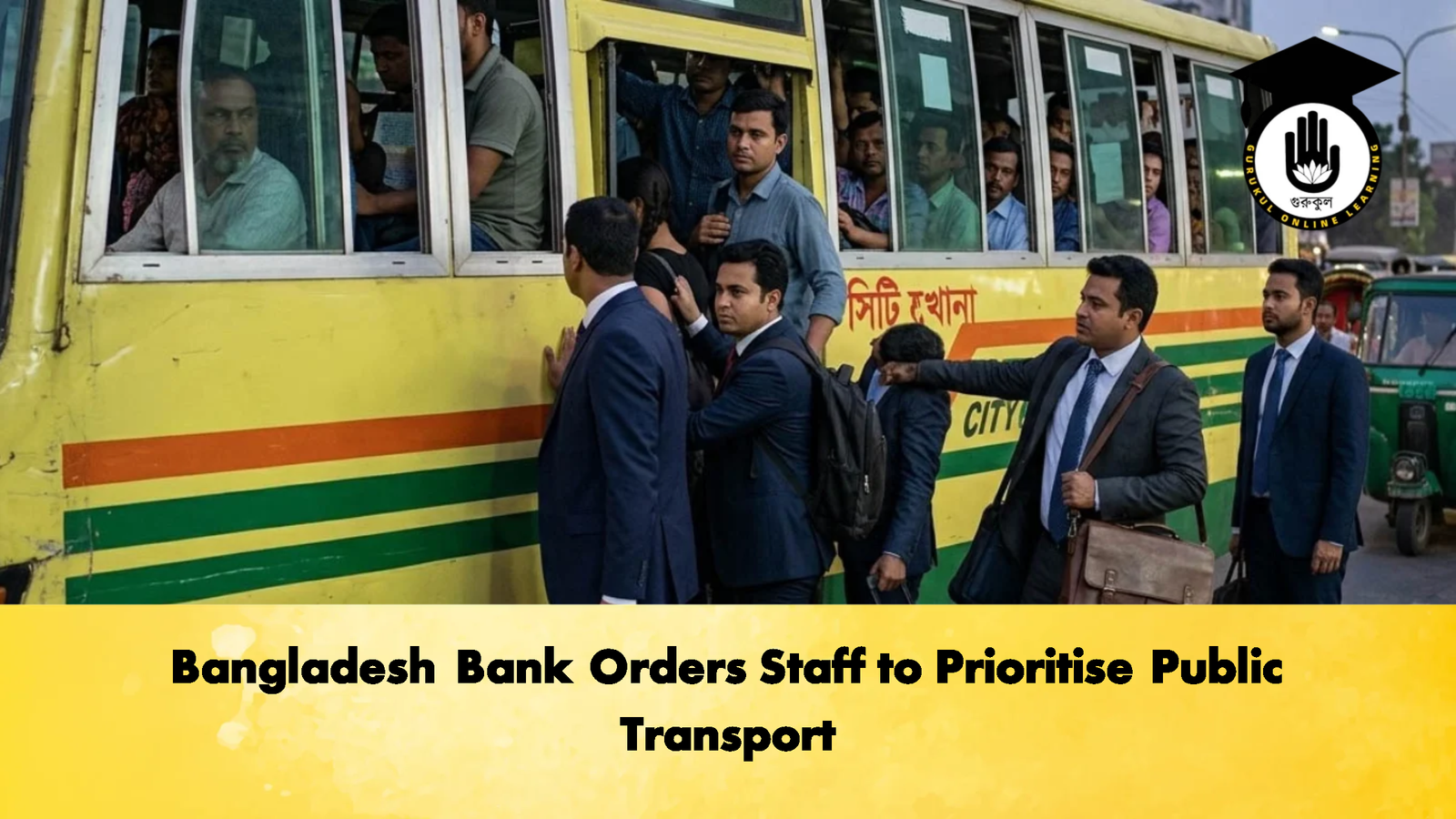
Amid escalating global geopolitical tensions and the resulting energy crisis, Bangladesh Bank has issued a set of detailed directives to all commercial banks across the country. Released on Wednesday, 11 March 2026, the instructions are aimed at promoting energy efficiency across head offices, branches, sub-branches, and other banking establishments nationwide.
Focus on Transport and Fuel Efficiency
Officials from Bangladesh Bank noted that a large portion of private vehicle use in Dhaka is attributed to bank employees. To ease pressure on the country’s fuel reserves, staff have been instructed to reduce private car use and rely on public transport, carpooling, or shared rides wherever possible. Non-essential travel is discouraged, and fuel consumption is to be closely monitored.
“Encouraging bankers to switch from private vehicles to collective transport will ease fuel demand while maintaining operational efficiency,” said a senior official.
Office Energy-Conservation Measures
The directives provide clear measures to optimise electricity consumption within banking premises:
Air conditioners (ACs), lighting, fans, and other electrical appliances should be operated only when necessary and switched off when not in use.
AC temperatures should not be set below 25°C.
Decorative lighting and promotional digital boards must adhere to scheduled timings, avoiding unnecessary illumination.
Generators should be used efficiently to conserve fuel and electricity during power outages.
Key Directives at a Glance
| Area | Directive | Objective |
|---|---|---|
| Staff Transport | Use public transport or carpool; limit private vehicle use | Reduce fuel consumption |
| Office AC | Maintain ≥25°C; switch off when unnecessary | Conserve electricity |
| Lighting & Fans | Operate only when needed; follow schedules | Reduce energy use |
| Digital Displays | Limit operational hours; avoid unnecessary display | Improve energy efficiency |
| Generator Use | Operate efficiently | Save fuel and electricity |
Strategic and Broader Implications
Bangladesh Bank stressed that these measures are precautionary but crucial, considering disruptions in global energy supply chains. Successful implementation will enable the banking sector to make a meaningful contribution to national energy conservation, while ensuring that essential banking services continue uninterrupted.
Experts also emphasise the behavioural impact: consistent use of public transport and mindful electricity consumption could result in long-term reductions in overall energy demand. The initiative aligns with the government and central bank’s broader strategy of sustainable energy management, particularly as the nation faces rising fuel prices and potential shortages.
By implementing these directives, Bangladesh Bank is encouraging institutions and employees alike to coordinate effectively in managing energy resources, demonstrating a proactive response to the intersection of global crises and domestic operational efficiency.