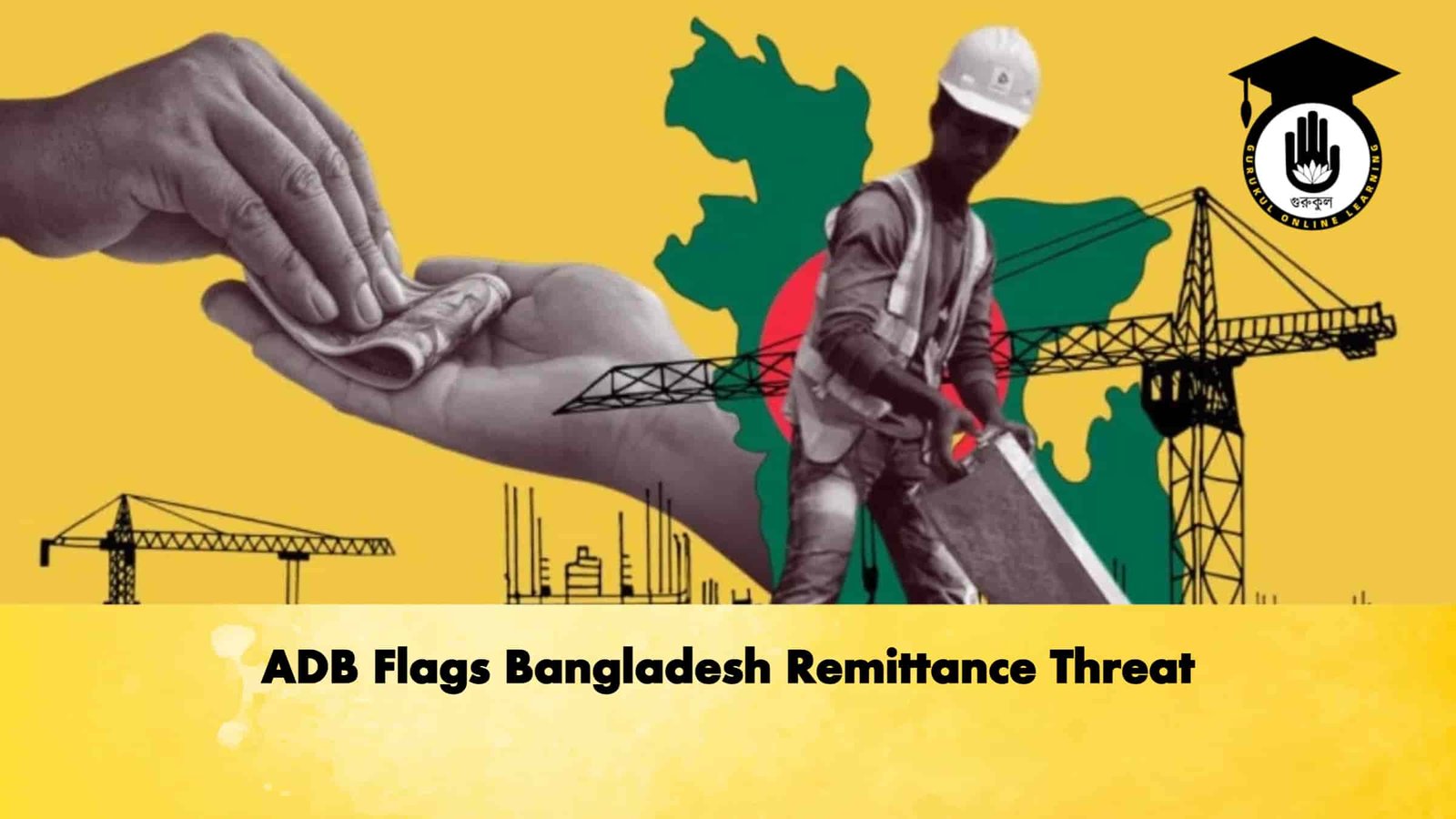
Bangladesh could face a notable slowdown in remittance inflows as escalating conflict in the Middle East begins to weigh on labour markets and migrant earnings, according to a new assessment by the Asian Development Bank. The warning underscores growing concerns that external shocks may undermine one of the country’s most vital sources of foreign currency.
In its latest report, the Manila-based lender cautions that prolonged geopolitical instability could dampen economic growth across developing Asia and the Pacific by as much as 1.3 percentage points over the 2026–2027 period. At the same time, inflationary pressures may intensify, potentially rising by 3.2 percentage points if disruptions in global energy markets persist for more than a year.
For Bangladesh, the implications are particularly significant. The country receives more than 30 billion dollars annually in remittances, nearly half of which originate from the Middle East. Key destinations—including Saudi Arabia, Oman, Qatar, the United Arab Emirates, and Kuwait—remain central to Bangladesh’s overseas employment landscape. Collectively, these countries accounted for approximately 86 per cent of Bangladeshi migrant workers deployed abroad during the 2024–2025 fiscal year.
Early signs of disruption have already emerged. Hundreds of outbound flights carrying migrant workers to Middle Eastern destinations have reportedly been cancelled following the escalation of tensions involving the United States, Israel, and Iran. These cancellations have not only delayed employment opportunities but also disrupted income flows for thousands of households reliant on remittances.
The ADB warns that any sustained decline in remittances could amplify broader macroeconomic vulnerabilities. Reduced inflows of foreign currency would place additional strain on Bangladesh’s balance of payments, while diminished household income could weaken domestic consumption. This dual impact—external and internal—makes remittance shocks particularly challenging to manage.
Historically, remittances have acted as a stabilising force during economic downturns, often increasing when domestic conditions worsen. However, the current crisis may prove different. As the report notes, the shock is concentrated in the Middle East, a region that serves as both a major employer of migrant labour and a primary source of remittance flows.
A comparative snapshot of remittance dependence across selected South Asian economies illustrates the region’s exposure:
| Country | Remittances from Middle East (% of GDP) |
|---|---|
| Nepal | 8.1% |
| Pakistan | 5.6% |
| Sri Lanka | 2.9% |
| Bangladesh | 2.8% |
Although Bangladesh’s ratio appears lower than some of its neighbours, the absolute volume of remittances remains substantial, making any decline economically significant.
Beyond remittances, the report highlights additional risks stemming from elevated energy prices. Higher oil and gas costs are expected to feed into production and consumer prices, particularly in energy-importing economies such as Bangladesh. While these pressures may ease if energy markets stabilise by 2027, the near-term outlook remains uncertain.
The ADB concludes that the combined effects of weaker remittance inflows, rising energy costs, and tighter global financial conditions could present a complex policy challenge for Bangladesh and other South Asian economies in the months ahead.