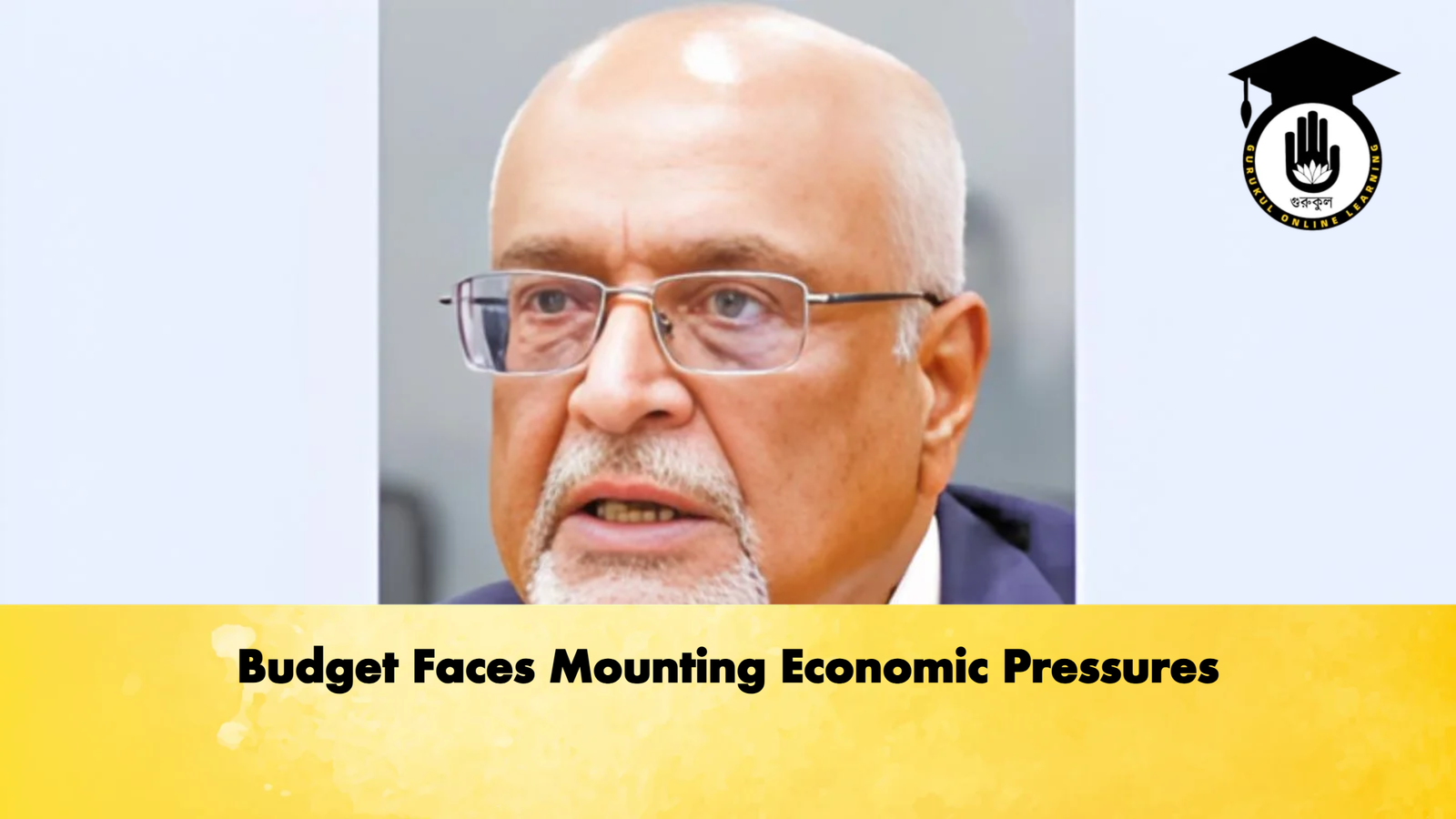
Economists have warned that the preparation of the forthcoming national budget is likely to become increasingly complex due to a convergence of domestic and global economic pressures. Rising energy costs, persistently high inflation, sluggish revenue collection, and volatility in the foreign exchange market are collectively shaping expectations of what many describe as a “pressure-laden budget”.
According to leading economists, including Dr Debapriya Bhattacharya, Convener of a prominent citizen platform, Bangladesh is entering the budget formulation phase at a time when external uncertainties and internal structural weaknesses are simultaneously intensifying. He argues that if revenue growth continues to lag behind targets, significant fiscal gaps may emerge in both development and recurrent expenditure, posing risks to macroeconomic stability.
Dr Bhattacharya further highlights that the existing debt burden, combined with limited fiscal space for additional borrowing, is constraining the government’s policy options. At the same time, fluctuations in global energy prices are exerting upward pressure on import costs. This has contributed to foreign exchange strain and periodic instability in the exchange rate, further complicating macroeconomic management.
A broad section of economists believe that the upcoming budget must go beyond its traditional role as a statement of income and expenditure. Instead, they argue it should function as a comprehensive reform-oriented economic roadmap. Priorities should include modernising the tax system, strengthening revenue administration, improving expenditure efficiency, and ensuring more targeted allocation within social protection programmes.
Analysts also caution that if inflation remains unchecked, real purchasing power among households will continue to erode. This could suppress domestic demand and slow economic growth. In addition, mounting fiscal pressure on the public sector may delay the implementation of development projects, with potential long-term consequences for infrastructure expansion and productivity growth.
The key economic pressures identified by experts are summarised below:
| Pressure Area | Current Situation | Potential Impact |
|---|---|---|
| Energy Costs | Fluctuating global prices | Higher import bills and foreign exchange pressure |
| Inflation | Persistently elevated | Reduced purchasing power and rising living costs |
| Revenue Collection | Below target levels | Wider budget deficit and increased borrowing dependence |
| Foreign Exchange Market | Ongoing volatility | Exchange rate instability and higher import costs |
| Debt Situation | Significant existing obligations | Reduced fiscal space for new borrowing |
Experts broadly agree that addressing these multidimensional challenges will require a coordinated and disciplined policy response. Strengthening revenue mobilisation, rationalising non-essential expenditure, and prioritising productive investment are seen as essential steps towards stabilising the economy.
Furthermore, structural reforms are widely regarded as critical for building long-term resilience. Without such reforms, economists warn that short-term fiscal adjustments alone will be insufficient to restore stability or support sustainable growth.
In conclusion, the upcoming fiscal framework is no longer viewed merely as an accounting exercise. Rather, it is increasingly seen as a decisive test of the country’s economic direction, with significant implications for both short-term stability and long-term development prospects.