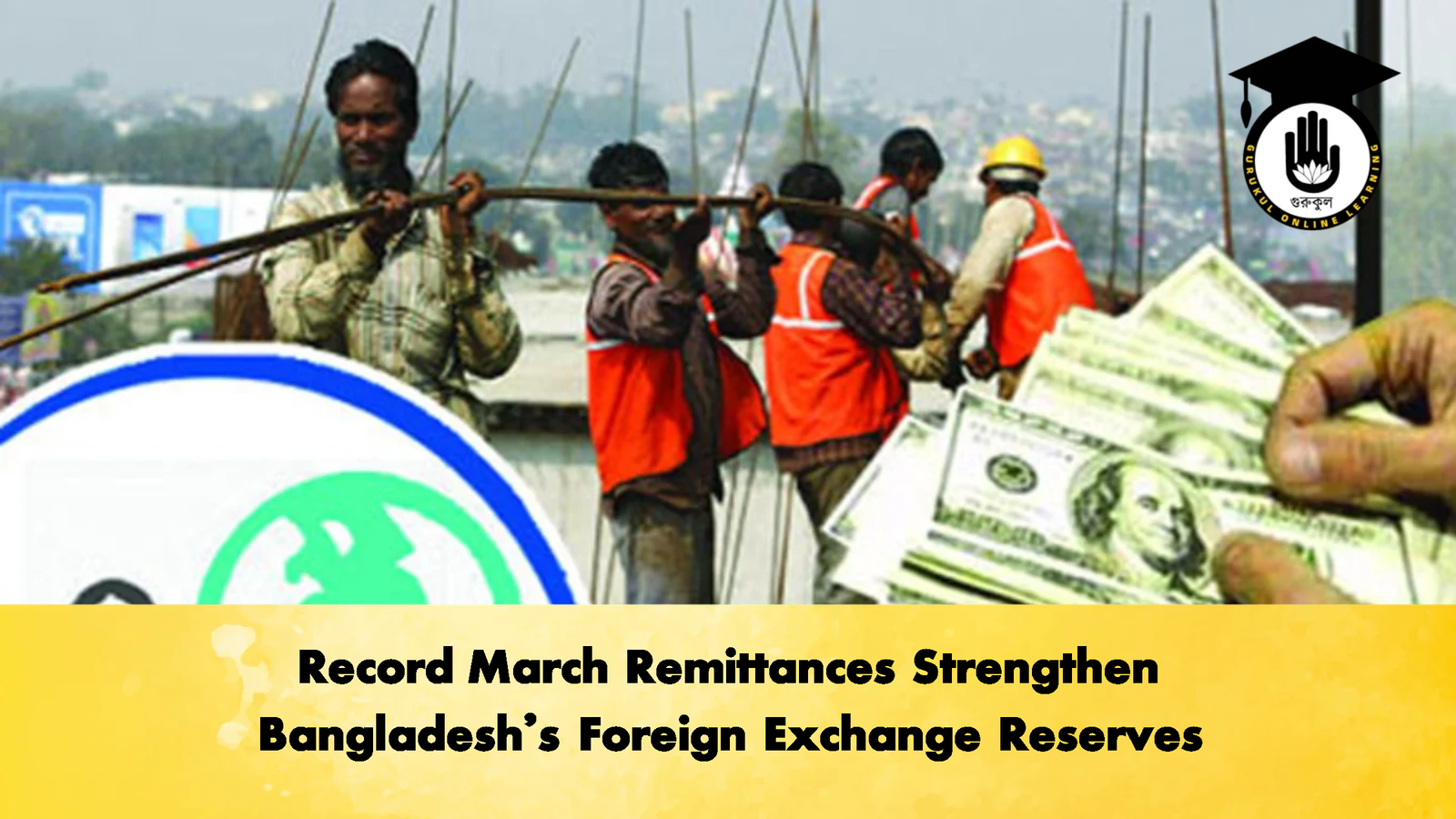
Bangladesh has recorded a historic surge in remittance inflows during March, with expatriate workers sending close to $4 billion in a single month—the highest level ever documented in the country’s economic history. The development highlights the growing structural importance of overseas earnings in supporting macroeconomic stability, easing external financing pressures, and reinforcing the country’s foreign exchange buffer.
According to Bangladesh Bank, total remittance inflows in March stood at $3.755 billion. At the prevailing exchange rate of approximately Tk122.75 per US dollar, this equates to more than Tk460 billion entering the domestic economy within a single month, marking a record-setting milestone for inward foreign currency transfers.
The figures were confirmed on Wednesday (1 April) by Arif Hossain Khan, Executive Director and spokesperson of the central bank. Officials and industry analysts have largely attributed the sharp increase to seasonal demand ahead of the holy month of Ramadan and the subsequent festival of Eid al-Fitr. These periods typically see a rise in household expenditure, prompting expatriates to send additional funds to support family consumption, savings, and festive preparations.
Alongside seasonal influences, structural improvements in remittance channels have also played a significant role. The growing use of formal banking systems, mobile financial services, and regulated transfer platforms, combined with policy incentives for legal remittance inflows, has helped reduce reliance on informal channels such as hundi networks. This shift has improved transparency, strengthened financial governance, and ensured more stable foreign exchange inflows.
A comparison with previous periods illustrates the scale of the increase. In February, remittances stood at $3.02 billion, while in March of the previous year inflows were $3.30 billion. The latest figure therefore reflects an annual rise of around 14%, underscoring sustained resilience in overseas income flows despite global economic uncertainty and varying labour market conditions in destination countries.
On a broader fiscal-year basis, the upward trajectory is even more evident. Between July and March of the 2025–26 financial year, total remittance inflows reached $26.21 billion. This represents a strong 20% increase compared with $21.78 billion recorded during the same period of the previous fiscal year. The data reinforces the continued strength of migrant workers’ contributions, which remain a cornerstone of Bangladesh’s external sector stability.
The inflow of foreign currency has also provided support to the country’s reserve position. Despite ongoing import payments and external debt servicing obligations, foreign exchange reserves have shown modest improvement. At the end of business on 1 April, gross reserves stood at $34.25 billion. Under the International Monetary Fund’s BPM6 methodology, which offers a standardised international benchmark, reserves were recorded at $29.61 billion.
| Indicator | Value / Change |
|---|---|
| March 2026 Remittance | $3.755 billion (record high) |
| Equivalent in Local Currency | Over Tk460 billion |
| February 2026 Remittance | $3.02 billion |
| March 2025 Remittance | $3.30 billion |
| Year-on-Year Growth (March) | +14% |
| FY2025–26 (July–March) Total | $26.21 billion |
| Previous FY (Same Period) | $21.78 billion |
| Growth (FY Comparison) | +20% |
| Gross Foreign Exchange Reserves | $34.25 billion |
| IMF BPM6 Reserve Measure | $29.61 billion |
Economists note that sustained remittance growth plays a vital role in financing the trade deficit, stabilising the exchange rate, and supporting domestic consumption. It also acts as a critical buffer against external vulnerabilities, particularly during periods of global monetary tightening and commodity price volatility.
Looking ahead, analysts expect remittance inflows to remain relatively robust in the short term, particularly during recurring festive cycles. However, long-term sustainability will depend on global employment trends for migrant workers, wage conditions in host economies, and continued policy efforts to encourage formal remittance channels.
In conclusion, March’s record-breaking inflow represents a significant strengthening of Bangladesh’s external sector position. It underscores the enduring contribution of overseas workers while reinforcing the central role of remittances in maintaining financial stability, supporting development needs, and cushioning the economy against external shocks.