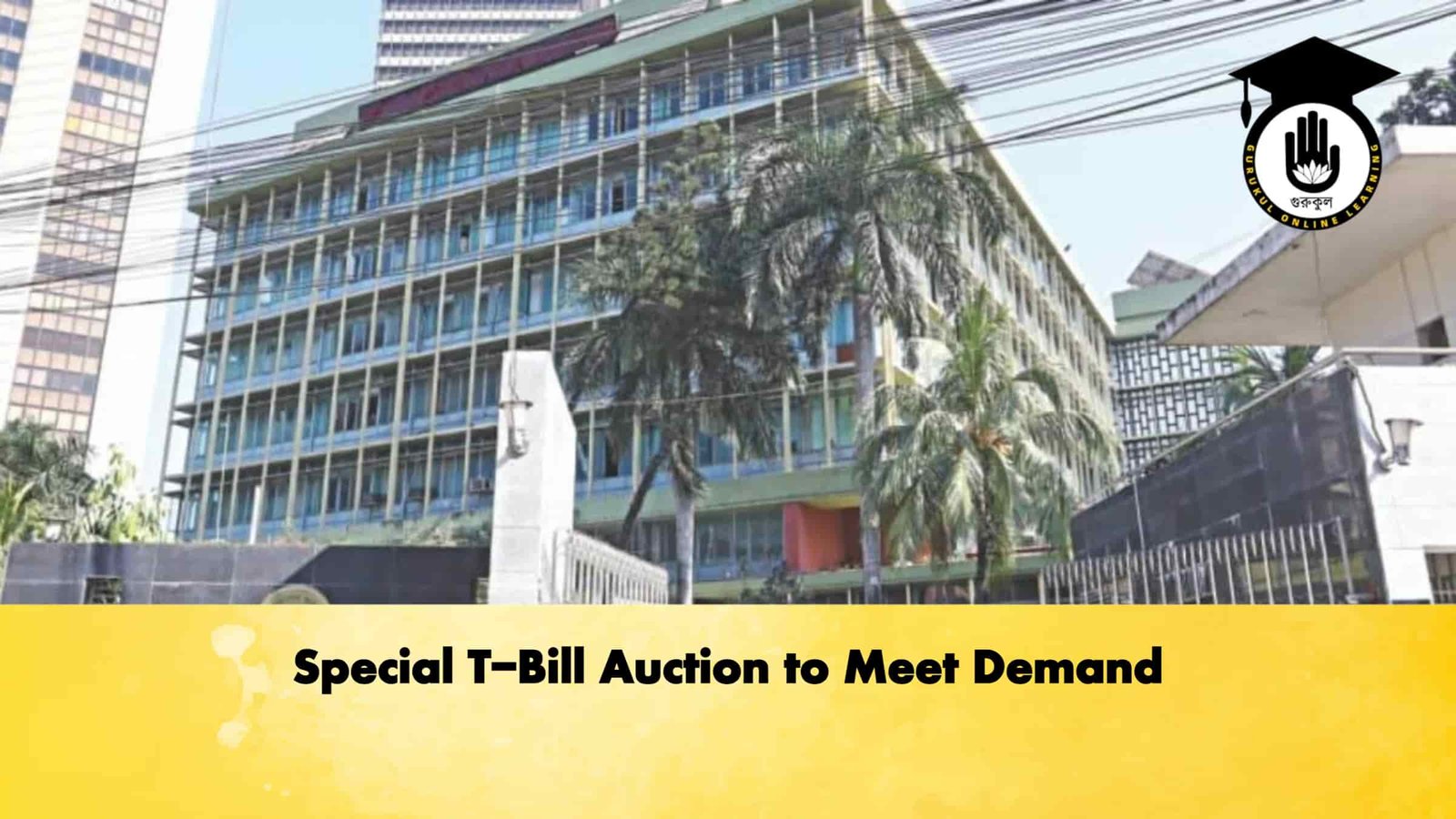
Bangladesh’s central bank is poised to conduct a fresh special auction of short-term government securities as fiscal pressures mount, underscoring the state’s increasing reliance on domestic borrowing to bridge a widening financing gap.
The Bangladesh Bank has scheduled a Tk5,000 crore auction of 91-day treasury bills on 8 April. This follows an earlier auction of identical size held at the start of the month, bringing total funds raised through such special operations in April to Tk10,000 crore.
Senior officials at the central bank indicate that the move is a direct response to the government’s intensifying cash requirements. Revenue collection has fallen short of expectations, while public expenditure—particularly on subsidies and social welfare programmes—continues to rise. As a result, authorities are turning more frequently to the banking sector for short-term financing.
Bankers suggest that this strategy has been facilitated by a comfortable liquidity position within the financial system. Towards the end of March, commercial banks reportedly parked approximately Tk11,500 crore in the central bank’s standing deposit facility, a clear indication of surplus funds. This excess liquidity has made it easier for the government to mobilise resources through treasury instruments without significantly crowding out private borrowers.
Further contributing to liquidity expansion, the central bank has been purchasing US dollars from commercial banks through auctions since the beginning of the fiscal year. These transactions inject local currency into the banking system, increasing the capacity of banks to invest in government securities.
The government has also demonstrated a willingness to deviate from its regular borrowing calendar. During the October–December quarter, it raised around Tk10,000 crore through off-schedule auctions, typically a signal of urgent financing needs. Such measures are often linked to the implementation of social safety net programmes and other priority expenditures.
Planned Government Borrowing (April–June Quarter)
| Instrument Type | Planned Amount (Tk crore) | Tenure | Auction Frequency |
|---|---|---|---|
| Treasury Bills (91-day) | 44,000 | Short-term | Weekly |
| Treasury Bills (182-day) | 36,000 | Short-term | Weekly |
| Treasury Bills (364-day) | 30,000 | Short-term | Weekly |
| Total T-Bills | 1,10,000 | — | 12 sessions |
| Treasury Bonds | 39,000 | Medium/Long | Periodic |
Officials from the central bank’s debt management division emphasise that such borrowing does not necessarily translate into a net increase in public debt. A substantial portion is used to refinance maturing obligations through a process of rolling over existing liabilities.
Meanwhile, private sector credit growth remains subdued at just over 6 per cent, reflecting tepid investment sentiment across the economy. In the absence of robust lending opportunities, banks are increasingly channeling their surplus funds into government securities, which are widely regarded as risk-free assets.
Yields on treasury bills have also softened, dipping below 10 per cent in recent weeks—a trend largely attributed to the abundance of liquidity in the banking system. This environment has enabled the government to secure financing at relatively lower costs, even as its borrowing needs continue to grow.