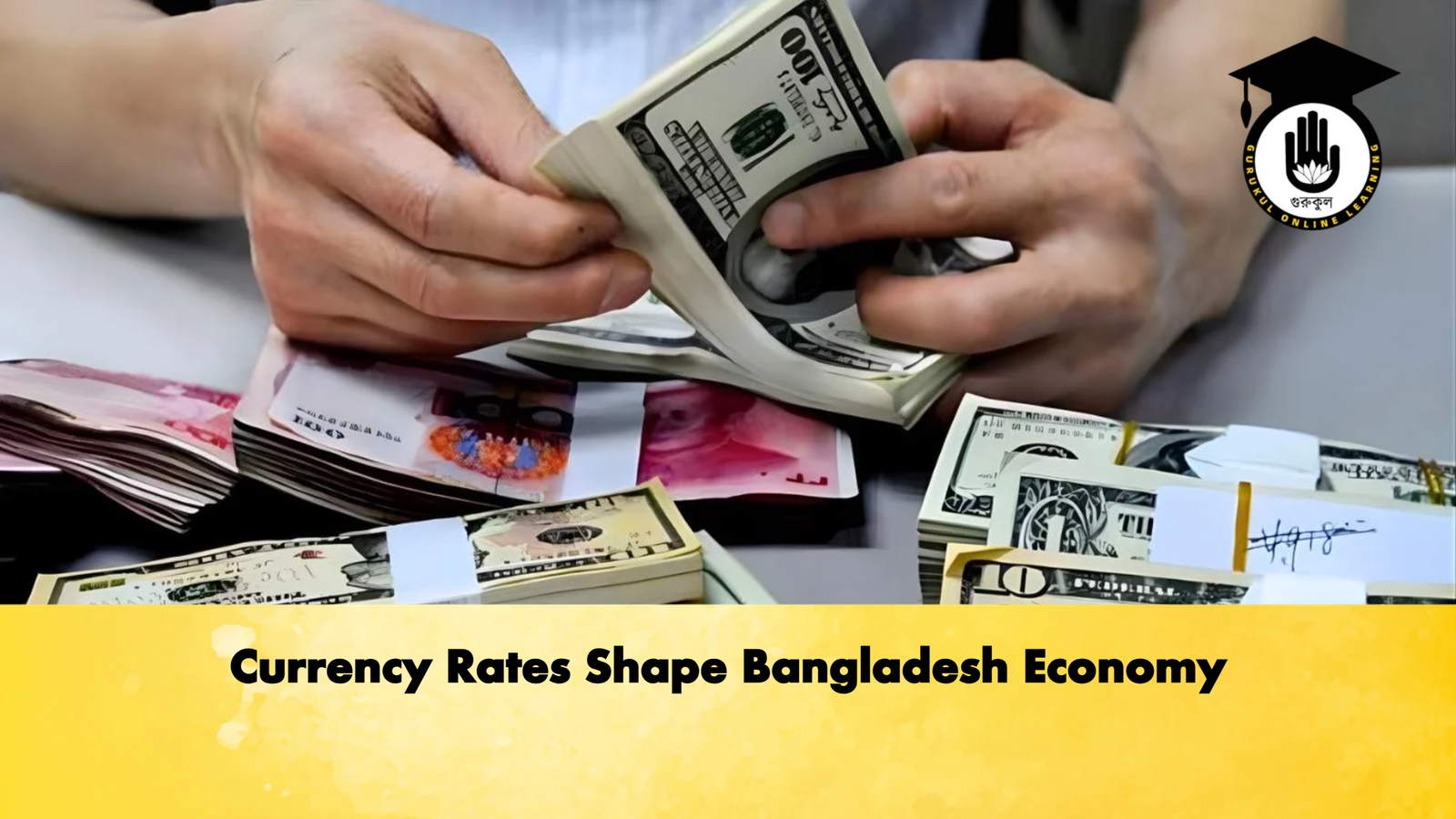
Bangladesh’s integration with the global economy is becoming increasingly deep and multidimensional, with foreign exchange rates playing a central role in shaping its macroeconomic landscape. Far beyond being a simple numerical indicator, exchange rates influence inflation, import costs, export competitiveness, foreign investment flows, and overall economic stability.
Key international currencies such as the US dollar, euro, and British pound exert immediate and long-term effects on the Bangladeshi economy. Given the country’s import-dependent structure, prices of essential goods—including fuel, industrial raw materials, food commodities, and technological equipment—are heavily influenced by movements in foreign exchange rates. When the US dollar strengthens against the Bangladeshi taka, import expenses rise, often triggering inflationary pressure within the domestic market and increasing the cost of living.
At the same time, exchange rate movements can provide certain benefits. A relatively weaker taka enhances the value of remittances sent by overseas Bangladeshis. This additional purchasing power supports household consumption, stimulates rural economies, and strengthens small and medium-sized enterprises. Remittance inflows from workers in the Middle East, Europe, and Southeast Asia remain a vital pillar of Bangladesh’s foreign currency reserves and broader financial stability.
Latest Exchange Rates (6 April 2026)
| Currency | Value in Bangladeshi Taka (BDT) |
|---|---|
| US Dollar (USD) | 122.75 |
| Euro (EUR) | 140.13 |
| British Pound (GBP) | 162.30 |
| Indian Rupee (INR) | 1.33 |
| Malaysian Ringgit (MYR) | 30.00 |
| Singapore Dollar (SGD) | 95.58 |
| Saudi Riyal (SAR) | 31.39 |
| Kuwaiti Dinar (KWD) | 398.45 |
| Australian Dollar (AUD) | 85.68 |
Economic analysts emphasise that exchange rate stability is essential for maintaining macroeconomic confidence. Sudden and sharp fluctuations in currency values can create uncertainty for investors, disrupt business planning, and complicate long-term financial forecasting. Rising import costs often translate into higher production expenses, which are ultimately passed on to consumers through increased retail prices.
Conversely, exporters may benefit from a weaker local currency, as it makes Bangladeshi goods more competitively priced in international markets. This dual effect means that policymakers must carefully balance competing pressures to maintain a sustainable exchange rate environment.
The Bangladesh Bank, along with other financial regulatory authorities, typically monitors global economic trends, foreign exchange reserves, and domestic market conditions when formulating monetary and currency policies. Experts suggest that ensuring adequate foreign currency supply, improving transparency in the forex market, and maintaining prudent policy coordination are essential steps toward achieving exchange rate stability.
In essence, the foreign exchange rate is not merely a technical financial figure. It is a crucial barometer of Bangladesh’s economic health, reflecting its growth trajectory, external vulnerability, and long-term financial resilience in an increasingly interconnected global economy.