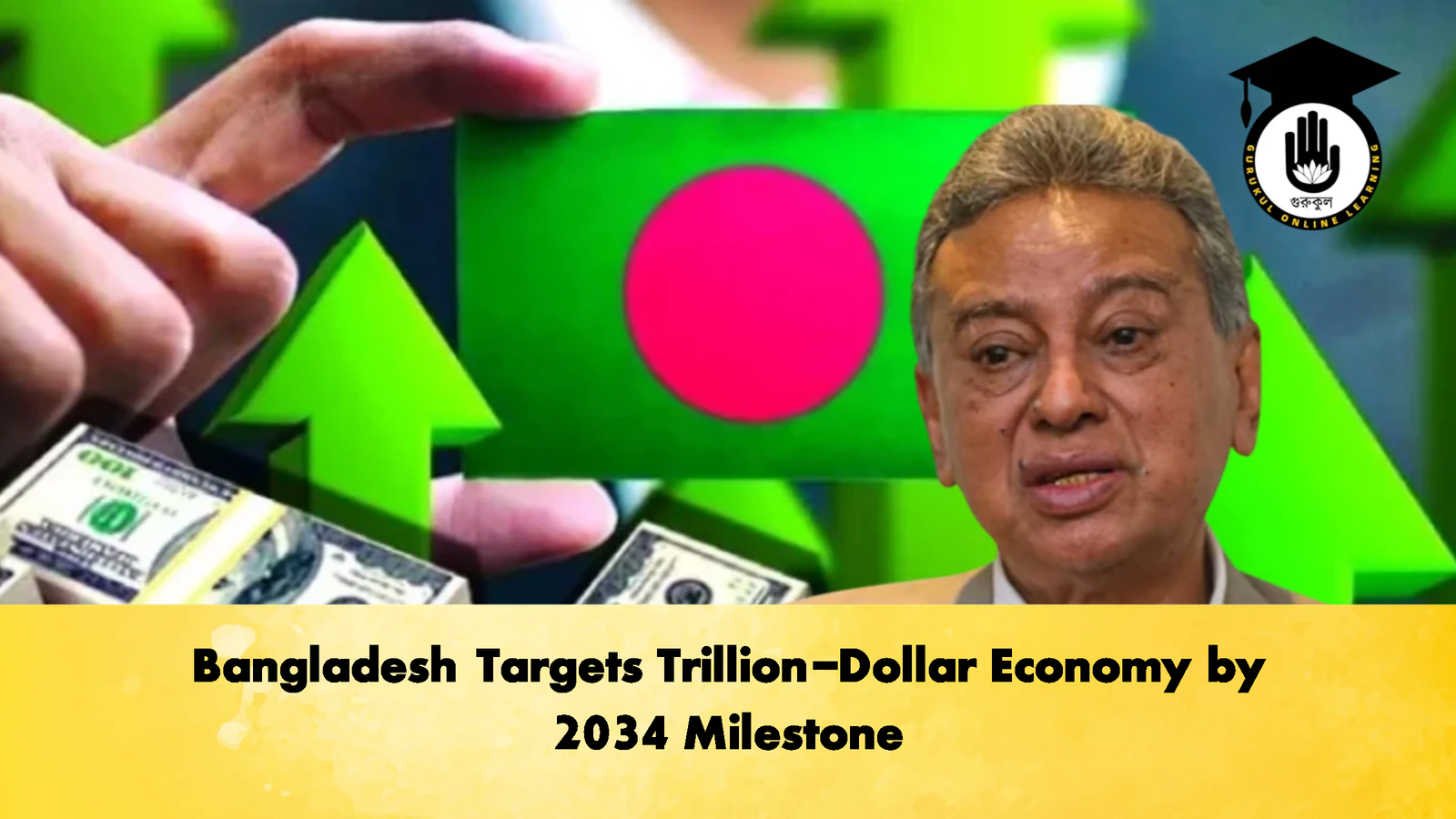
The Government of Bangladesh has set an ambitious target to elevate the national economy to a trillion-dollar scale by 2034, according to Finance Minister Amir Khasru Mahmud Chowdhury. The announcement reflects a long-term vision aimed at strengthening economic resilience, expanding employment opportunities, and enhancing citizens’ living standards through a diversified and inclusive growth strategy.
Citing the latest figures from the Bangladesh Bureau of Statistics, the Finance Minister informed Parliament that the country’s per capita income has reached US$2,769 in the 2024–25 fiscal year. This milestone underscores steady economic progress, despite ongoing global uncertainties and domestic structural challenges.
The statement was delivered in response to a written query from SM Jahangir Hossain during a parliamentary session. The Minister emphasised that achieving a trillion-dollar economy will require a comprehensive and multi-sectoral approach, rather than reliance on a single driver of growth.
Key Economic Indicators and Targets
| Indicator | Current Status (2024–25) | Future Goal (2034) |
|---|---|---|
| Per Capita Income | US$2,769 | Significant sustained rise |
| Economic Size | Mid-sized emerging | Trillion-dollar economy |
| Employment | Expanding sectors | Fuller employment levels |
| Investment | Growing | Substantially increased |
| Export Diversification | Ongoing | Broader global footprint |
A Multi-Dimensional Growth Strategy
The government has adopted a broad-based development framework, prioritising investment expansion, job creation, and economic democratisation. Particular emphasis is being placed on emerging sectors such as the creative economy and sports economy, alongside traditional industries.
According to the Finance Minister, boosting per capita income requires simultaneous progress across several fronts. These include employment generation, industrial productivity, export growth, remittance inflows, skills development, social protection, and macroeconomic stability. Such an integrated approach is intended to ensure that economic gains are both sustainable and inclusive.
To stimulate employment and reduce joblessness, initiatives are underway to expand opportunities across manufacturing, construction, services, information technology, agro-processing, and small-scale entrepreneurship. These efforts are expected to enhance household incomes and gradually uplift overall living standards.
Investment and Industrial Expansion
In a bid to accelerate private investment and industrialisation, the government is working to simplify business start-up procedures, improve the ease of doing business, and create a more investor-friendly environment. Increased financial flows into productive sectors are anticipated to drive the establishment of new factories and enterprises, thereby generating further employment.
Special attention is also being given to small and medium-sized enterprises (SMEs). The government has introduced measures to facilitate easier access to finance, encourage women and youth entrepreneurship, and improve market access. These initiatives are expected to strengthen local economies and foster new income streams.
Export Growth and Remittance Enhancement
To sustain external sector growth, policies have been designed to support export-oriented industries through incentives, diversification, and exploration of new international markets. At the same time, efforts are being made to boost remittance inflows by enhancing the skills of overseas workers, creating new employment opportunities abroad, and encouraging the use of formal channels for money transfers.
Strengthening Agriculture and Rural Economy
Recognising the importance of rural development, the government is also focusing on increasing agricultural productivity, improving infrastructure, and expanding agro-based small businesses. These measures aim to raise rural incomes and stimulate broader economic activity.
Implementation Timeline and Outlook
The Finance Minister noted that several initiatives are already being implemented in the 2025–26 fiscal year, while others will be rolled out progressively over the short, medium, and long term. He expressed optimism that these coordinated efforts would lead to higher incomes, reduced unemployment, increased investment and production, and stronger purchasing power.
Ultimately, the government believes that this comprehensive strategy will place Bangladesh on a robust trajectory towards achieving its trillion-dollar economic ambition by 2034, marking a transformative chapter in the nation’s development journey.