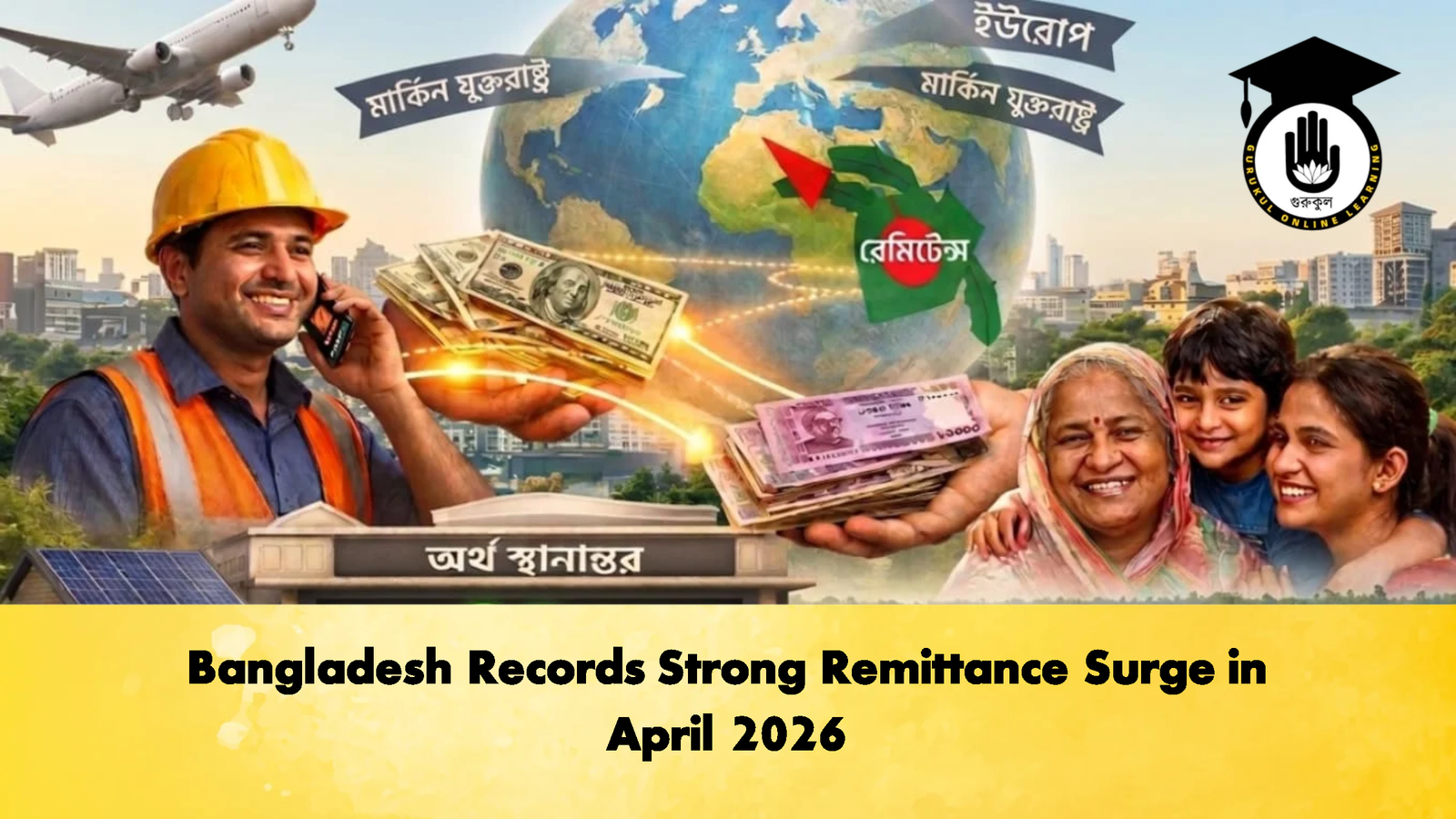
Bangladesh has reported a marked increase in remittance inflows during the first half of April 2026, reinforcing the continued strength of overseas earnings from migrant workers and the growing reliance on formal financial channels for international transfers.
According to the latest data released by Bangladesh Bank, the country received US$1.788 billion in remittances between 1 and 15 April 2026. The inflow on 15 April alone stood at US$181 million, reflecting a steady and consistent daily transfer pattern from expatriate communities across key labour markets.
Table of Contents
ToggleSignificant year-on-year growth
The latest figures represent a substantial improvement compared with the same period last year. During 1–15 April 2025, remittance inflows amounted to US$1.472 billion, indicating a year-on-year increase of approximately 21.5 per cent for the fortnight.
Economists attribute this rise to a combination of structural and cyclical factors. These include improved labour market conditions in major destination countries—particularly in the Gulf Cooperation Council (GCC) region and parts of Southeast Asia—as well as policy incentives that encourage expatriates to use formal banking channels rather than informal transfer systems.
Remittance performance snapshot
| Period | Remittance Inflow | Change |
|---|---|---|
| 1–15 April 2026 | US$1.788 billion | — |
| 1–15 April 2025 | US$1.472 billion | +21.5% year-on-year |
| 15 April 2026 (single day) | US$181 million | Highest daily inflow in the period |
Sustained momentum across the fiscal year
The upward trajectory is not confined to April alone. Between 1 July and 15 April of the 2025–26 fiscal year, Bangladesh recorded total remittance inflows of US$27.996 billion, compared with US$23.257 billion during the corresponding period of the previous fiscal year.
This reflects a year-to-date growth of approximately 20.4 per cent, signalling sustained resilience in remittance flows throughout the current fiscal cycle.
Macroeconomic significance
Remittances remain one of Bangladesh’s most critical external financial lifelines. They play a vital role in:
- Supporting foreign exchange reserves
- Stabilising household consumption across rural and urban areas
- Reducing pressure on the balance of payments
- Providing a buffer against import-related external shocks
In periods of global financial uncertainty, remittance inflows often serve as a stabilising force for developing economies. Bangladesh, in particular, benefits significantly due to its large overseas workforce distributed across the Middle East, Europe, North America, and Southeast Asia.
Structural drivers behind growth
Banking sector officials and economists point to several contributing factors behind the sustained increase. Policy interventions aimed at formalising remittance flows—such as incentives for legal transfers, improved exchange rates for official channels, and expanded digital financial services—have strengthened the attractiveness of banking routes.
In parallel, stricter monitoring of informal money transfer systems, commonly known as hundi, is believed to have redirected a portion of remittance flows into official banking channels, thereby boosting recorded inflows.
The expansion of mobile financial services and faster settlement systems has also reduced friction in cross-border transactions, making formal remittance channels more accessible, particularly for low- and middle-income migrant workers.
External risks and global dependency
Despite the strong performance, analysts caution that remittance flows remain exposed to external vulnerabilities. These include fluctuations in global labour demand, particularly in construction and service sectors; volatility in oil prices affecting Gulf economies; and broader geopolitical uncertainties that may influence employment conditions for migrant workers.
Any slowdown in hiring activity in key destination markets could have a direct impact on future inflows, given Bangladesh’s structural dependence on overseas employment.
Outlook
Overall, the current trend points to sustained resilience in Bangladesh’s remittance sector. If maintained, the double-digit growth recorded so far in the fiscal year is likely to provide continued support for macroeconomic stability, foreign exchange management, and domestic consumption.
While uncertainties remain, the strengthening of formal remittance channels and steady labour demand abroad suggest that Bangladesh is well positioned to maintain strong inflows in the near term, reinforcing the sector’s central role in the national economy.