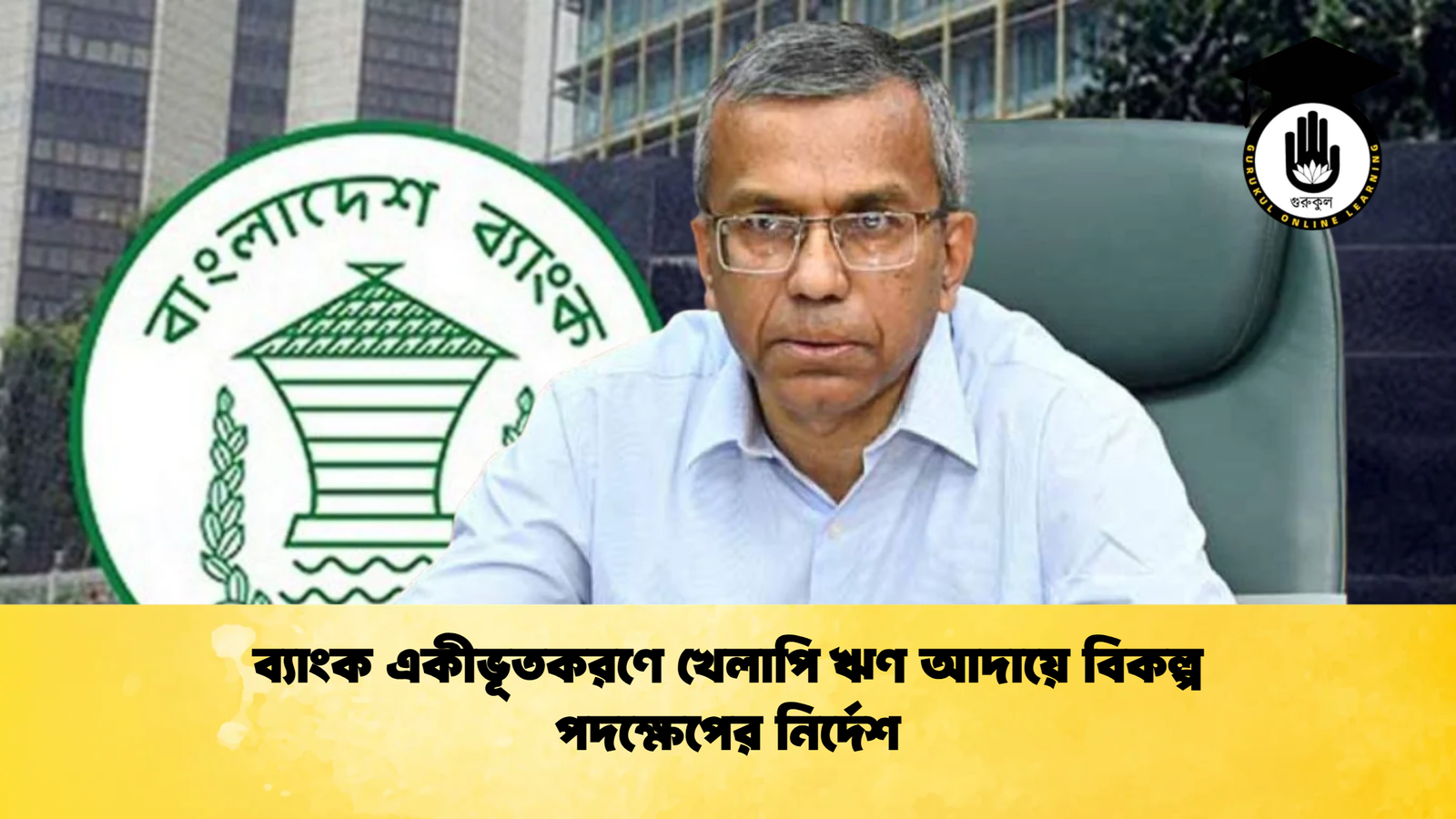
Bangladesh Bank Governor Mostaqueur Rahman has confirmed that the ongoing programme of bank consolidation will proceed, alongside rigorous measures to recover defaulted loans. In a significant directive, he has also instructed that factories previously closed due to outstanding debts be reopened in full compliance with regulatory requirements, signalling a dual focus on financial stability and economic revitalisation.
The announcement came during a meeting on Tuesday (3 March) with the administrators of five banks currently undergoing merger. All administrators are Bangladesh Bank officials temporarily overseeing the management of these institutions. The meeting provided an update on the progress of the consolidation process and the challenges faced in managing non-performing loans.
Governor Rahman assumed office last Thursday, succeeding Ahsan H. Mansur, who was relieved of his duties. Mansur had initiated a series of reforms, including the consolidation of weak banks and efforts to improve governance and financial discipline. Following the change in both government and central bank leadership, questions had arisen regarding the continuity of these reforms. Governor Rahman, however, has made it clear that the structural reform agenda, including bank mergers, will continue without interruption.
During the meeting, the governor was briefed on the rationale for the consolidation and the progress achieved so far. He emphasised three key priorities for the merged institutions:
Increasing deposits and strengthening capital bases
Taking all possible measures to recover non-performing loans
Reopening debt-laden factories in compliance with regulations
Governor Rahman expressed confidence that these measures would not only stabilise the banking sector but also stimulate industrial activity, create employment, and support broader economic growth. Officials further indicated that managing directors for the consolidated banks would be appointed shortly to ensure smooth and effective operations.
Merged Banks Forming ‘Combined Islami Bank’
| Previous Banks | Previous Ownership | New Entity |
|---|---|---|
| Union Bank | S. Alam Group, Chattogram | Combined Islami Bank |
| First Security Islami Bank | S. Alam Group, Chattogram | Combined Islami Bank |
| Global Islami Bank | S. Alam Group, Chattogram | Combined Islami Bank |
| Social Islami Bank | S. Alam Group, Chattogram | Combined Islami Bank |
| EXIM Bank | Former NAB Chairman Nazrul Islam Majumdar | Combined Islami Bank |
The five banks—Union Bank, First Security Islami Bank, Global Islami Bank, Social Islami Bank, and EXIM Bank—have now been merged to form the Combined Islami Bank. EXIM Bank was previously controlled by Nazrul Islam Majumdar, a former chairman of the Bangladesh Association of Banks, while the other four were controlled by Saiful Alam of the Chattogram-based S. Alam Group. Both Majumdar and Alam are known to have close ties to former Prime Minister Sheikh Hasina, highlighting the political and corporate significance of the merger.
The headquarters of the newly merged bank has been inaugurated at Senakalyan Bhaban, Motijheel, Dhaka, and the government has already appointed the chairman and board of directors. The consolidation is expected to strengthen governance, improve operational efficiency, restore public confidence, and provide a more resilient financial framework for depositors and investors.
Governor Rahman’s directives underline Bangladesh Bank’s commitment to maintaining financial discipline, ensuring loan recovery, and supporting industrial revival. The consolidation also represents a clear signal that structural reforms will continue under his leadership, with the broader aim of strengthening the banking sector, enhancing transparency, and promoting sustainable economic growth in the country. By integrating weak banks and improving management standards, the initiative seeks to stabilise the financial system while simultaneously fostering industrial and employment growth.