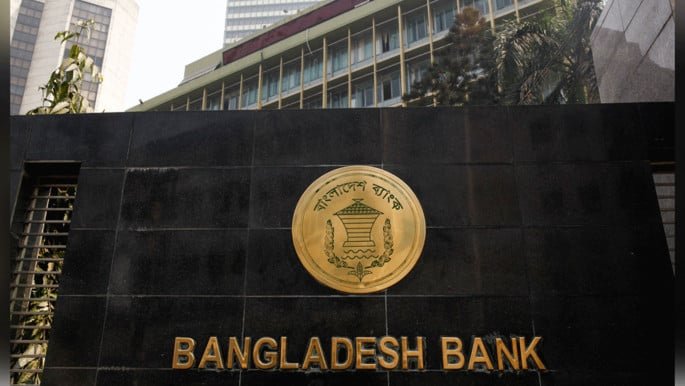
The Bangladesh Bank has instructed all mobile financial service (MFS) providers to take immediate action to prevent illegal online gambling transactions through their platforms. However, MFS operators argue that identifying the nature of such transactions is a complex challenge.
Following a directive from the ICT Division, the central bank recently sent official letters to all 13 MFS providers operating in the country. These letters, a copy of which was obtained by Gurukul, warned that MFS platforms are increasingly being used to launder money abroad through illegal gambling activities. The central bank has urged providers to urgently compile a list of suspicious accounts.
In its communication, the Bangladesh Bank has mandated that each MFS provider set up a task force and implement an automated monitoring system with artificial intelligence (AI) capabilities. The system should be capable of tracking gambling-related transactions, and a public reporting portal and helpline should be established to allow citizens to report suspicious activities.
The central bank also plans to meet with seven MFS operators on 6 November to review the progress made in curbing gambling-related transactions, according to a central bank source.
While no specific figures are available, a senior Bangladesh Bank official indicated that up to Tk5,000 crore could be transferred out of the country through online gambling. The Bangladesh Telecommunication Regulatory Commission (BTRC) has already blocked gambling websites operating within the country, but the use of virtual private networks (VPNs) has allowed gambling to continue unchecked.
In addition to BTRC’s efforts, the central bank is taking a stronger stance to monitor transactions through both banks and MFS platforms to identify any potential links to gambling activities.
Another official from Bangladesh Bank stated that some MFS agents or merchants could be facilitating payments directly to gambling sites. Gamblers pay in Bangladeshi Taka, but to convert this into dollars, higher exchange rates are often used. These transactions are often routed through multiple layers, making it difficult to track large daily transfers.
Speaking to a former professional gambler under condition of anonymity, it was revealed that many people in Bangladesh create profiles on betting apps to engage in online gambling. These players typically wager on games where they have the most experience.
Once registered on a betting app, players can transfer funds into business accounts via MFS platforms. After placing bets, winnings can be withdrawn from these accounts. However, the central bank noted that while funds are easily moved out of Bangladesh when gamblers lose, the situation is far more complicated when they win. Since online gambling is illegal, gamblers often use false identities, and their registration details are difficult to trace.
Tanvir Hassan Zoha, assistant attorney general at the International Crimes Tribunal, Bangladesh, commented, “All online gambling transactions have undeniably taken place through MFS platforms; I have not seen any that have gone through bank accounts. Investigations should focus on MFS accounts where suspicious funds are being deposited. By catching a few individuals, authorities can uncover the entire network and apprehend more people.”
Zoha also pointed out, “Banks were instructed to set up monitoring teams, but this should have been done much earlier. When the Digital Bangladesh blueprint was created, such teams should have already been in place.”
He further emphasised, “The MFS task force will not succeed if it does not fully leverage technology. Open-source intelligence and the Real-time Gross Settlement (RTGS) systems of MFS platforms are critical for effective monitoring.”
What Do MFS Providers Say?
MFS providers have defended their position, stating that they are committed to preventing illegal transactions but face challenges due to the anonymous nature of online gambling transactions.
Muhammad Zahidul Islam, head of Media and Communication at Nagad, one of the leading MFS providers, said, “Nagad is never involved in such transactions. We carefully select institutions for processing payments after thorough verification. Therefore, we cannot process payments for any entity without proper government licensing or approval.”
He added, “For person-to-person or send-money transactions, neither Nagad nor anyone else can know the true purpose behind the transaction. However, we closely monitor all transactions, and if we identify any suspicious activity, we report it to the relevant authorities.”
Shamsuddin Haider Dalim, head of Corporate Communications at bKash, another leading MFS provider, said, “If we detect any suspicious activity in an account, we voluntarily report it to the Bangladesh Financial Intelligence Unit (BFIU). bKash has the necessary technology and trained staff to monitor transactions regularly and take necessary steps to prevent illegal activities, including online gambling, money laundering, and unauthorised transfers.”
“In addition, we collaborate with law enforcement agencies through regulatory bodies to support any investigations related to illegal transactions. Based on information from suspicious accounts, authorities take action against the involved individuals and institutions,” Dalim added.
Experts Believe BB Alone Cannot Stop Online Gambling
Experts have argued that Bangladesh Bank cannot single-handedly curb online gambling activities. They contend that the Bangladesh Telecommunication Regulatory Commission (BTRC) and law enforcement agencies must play an active role in shutting down gambling websites, as the central bank does not have the authority or capacity to block or monitor these sites directly.
Md Arfan Ali, managing director of Bank Asia, commented, “Banks and MFS providers should establish dedicated transaction monitoring teams. These transactions are illegal, and weak monitoring systems only increase their frequency. Without proper oversight, detecting such activities becomes difficult. Therefore, institutions must set up teams specifically tasked with identifying suspicious activity.”
Toufique Ahmed Chowdhury, former director general of the Bangladesh Institute of Bank Management (BIBM), added, “Transactions are taking place through both banks and MFS platforms. Bangladesh Bank must take strict action regarding these transactions. Institutions themselves should maintain monitoring teams to detect any suspicious activity.”
He also highlighted that “the central bank does not have the capability to track where such transactions occur. Banks and MFS providers need to identify gambling-related transactions, which law enforcement agencies can then investigate.”
To address the issue of online gambling, a meeting was scheduled at BTRC on 3 November, chaired by Foyez Ahmad Tayeb, the special adviser for the Ministry of Posts. The meeting will include senior officials from various departments, including the director general of the Directorate General of Forces Intelligence (DGFI), the National Telecommunication Monitoring Centre (NTMC), the National Security Intelligence (NSI), and the Criminal Investigation Department (CID).