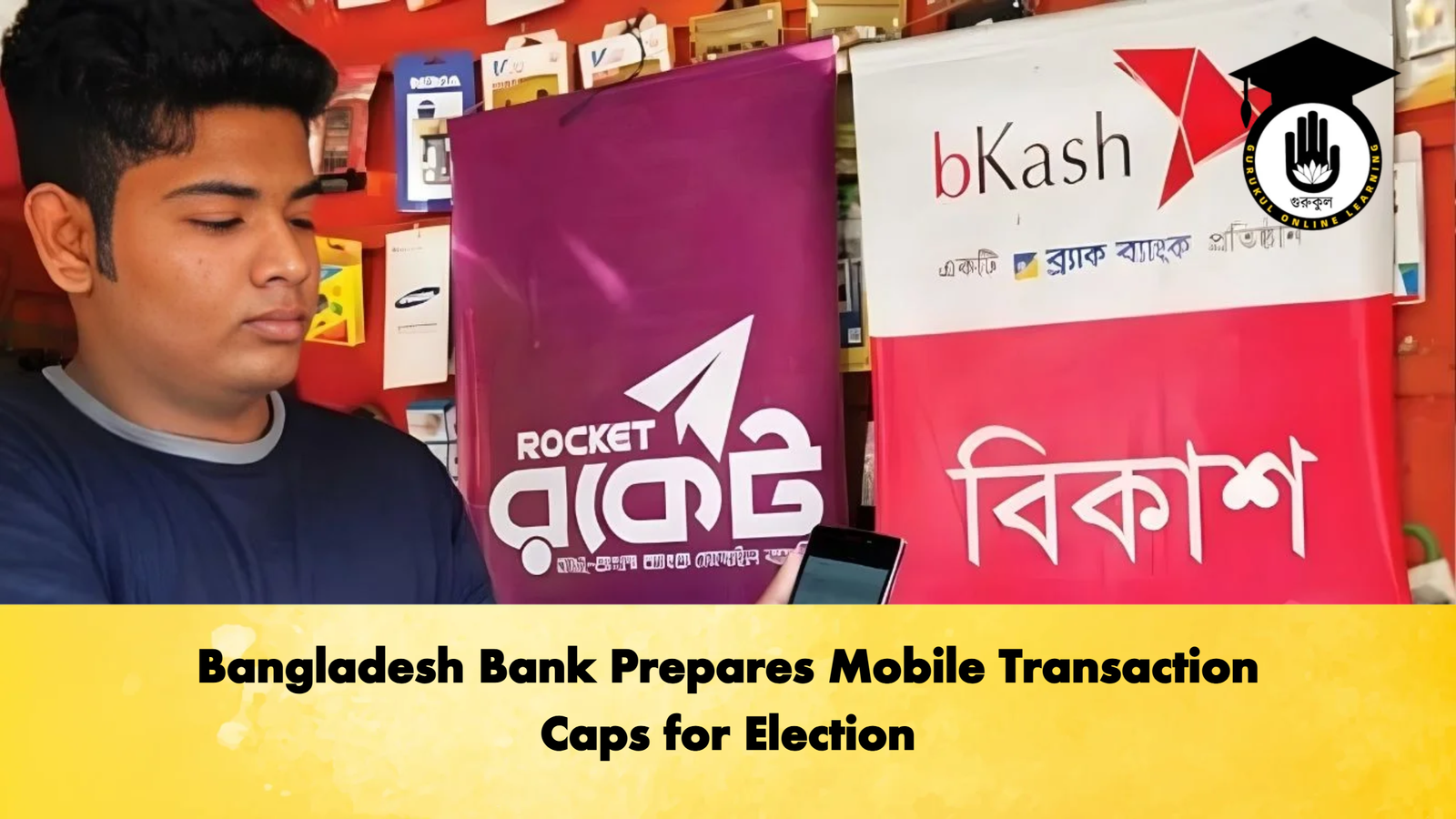
As Bangladesh gears up for its upcoming parliamentary elections, the central bank is preparing to impose stringent restrictions on mobile financial services (MFS) transactions. The initiative aims to curb illegal financial activities during the election period and ensure transparency in financial flows.
Arif Hossain Khan, Executive Director and spokesperson of Bangladesh Bank, stated on Sunday (1 February) that authorities are considering setting daily transaction limits for mobile banking users during the election. Under the proposed measures, ordinary customers may be allowed to transfer a maximum of BDT 10,000 per day, with individual transactions capped at BDT 1,000.
“Traditionally, ahead of each national election, the Election Commission issues guidelines to limit MFS transactions,” Khan explained. “However, we have not yet received any official directive this time. Once a formal communication is received, the necessary steps will be implemented promptly.”
Currently, the country’s leading MFS platforms—such as bKash, Rocket, and Nagad—operate under the following transaction limits:
| Transaction Type | Current Limit | Proposed Election Limit |
|---|---|---|
| Daily transactions per user | BDT 50,000 | BDT 10,000 |
| Daily cash withdrawal | BDT 30,000 | Under discussion |
| Personal (P2P) transactions | BDT 50,000 | BDT 1,000 per transaction, up to 10 transactions/day |
| Monthly transaction amount | BDT 300,000 | Not yet determined |
| Daily number of transactions | 50 | 10 (under discussion) |
| Monthly number of transactions | 100 | Not yet determined |
According to Bangladesh Bank sources, such restrictions are primarily intended to prevent centralised illegal financial activity and irregularities during the electoral period. The spokesperson further noted, “If necessary, stricter measures may be introduced in MFS services during the election period.”
Financial experts argue that these limits, before and after the election, will encourage users to exercise caution in their transactions while reducing the scope for abnormal financial activity. Such measures are expected to promote financial transparency and reinforce the integrity of the electoral process.
Bangladesh Bank’s move is seen as a crucial step in combating election-period money laundering, illicit transactions, and potential financial malpractice. In addition to regulatory control, the initiative is likely to enhance customer awareness and ensure that all mobile financial transactions are carried out with greater accountability and oversight.