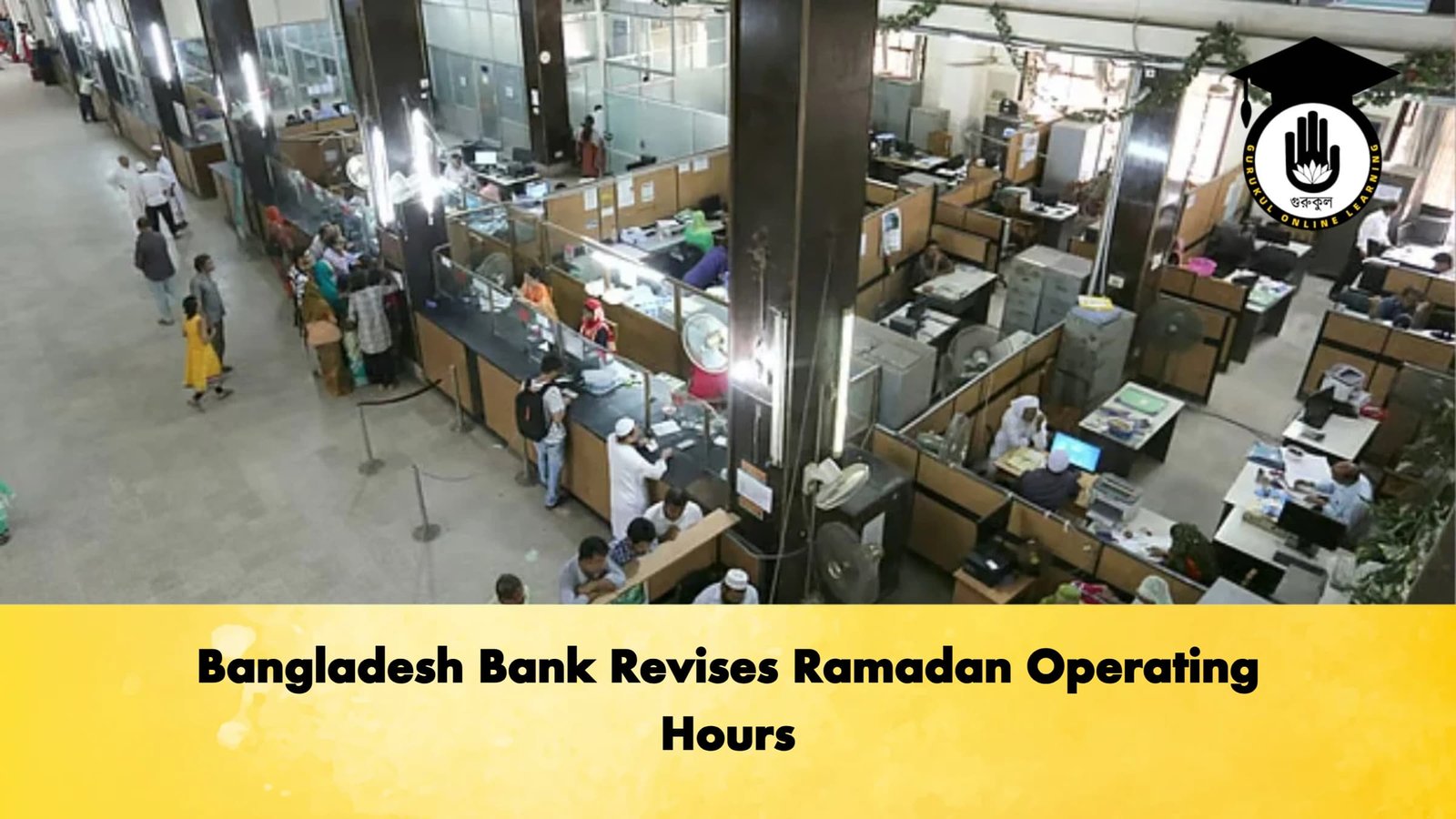
In anticipation of the holy month of Ramadan, Bangladesh Bank has officially announced a revised schedule for the country’s banking sector. According to a circular issued by the Department of Off-site Supervision, the central bank has adjusted both operational and public transaction hours to accommodate the religious observances of employees and the general public during the fasting period.
New Timings for Transactions and Operations
The directive, issued on Thursday, 19 February 2026, stipulates that banking activities will commence at 09:30 and conclude at 16:00. However, the window for direct public transactions—the period during which customers can visit branches for deposits, withdrawals, and other over-the-counter services—will end earlier, at 14:30.
A brief 15-minute interlude for Zuhr prayers has been mandated between 13:15 and 13:30. While customer-facing counters will technically remain closed during this prayer break, the central bank clarified that internal administrative tasks and inter-departmental coordination may continue through rotating shifts to ensure continuity of service.
Comparative Banking Hours: Ramadan vs. Standard
To provide clarity for businesses and individual account holders, the following table outlines the temporary shift from the standard operating procedure:
| Activity | Standard Schedule (Pre-Ramadan) | Ramadan Schedule (2026) |
| Office Commences | 10:00 | 09:30 |
| Public Transactions Close | 16:00 | 14:30 |
| Office Closes | 18:00 | 16:00 |
| Prayer/Lunch Break | 13:00 – 14:00 (approx.) | 13:15 – 13:30 |
Impact on the Financial Sector
This annual adjustment is a significant logistical undertaking for the Bangladeshi financial landscape. By shifting the start time forward by thirty minutes and curtailing the evening hours, the central bank aims to allow employees sufficient time to return home for Iftar.
Retailers and corporate entities are advised to plan their cash management and large-scale transfers accordingly, as the condensed transaction window often leads to increased footfall during mid-morning hours. Once the month of Ramadan concludes and the Eid-ul-Fitr holidays are observed, all scheduled banks will immediately revert to their traditional 10:00 to 18:00 operational timings.
The central bank’s prompt notification allows the digital banking infrastructure—including ATMs and online portals—to be monitored more closely, ensuring that the reduction in physical banking hours does not hinder the nation’s liquidity or digital commerce.