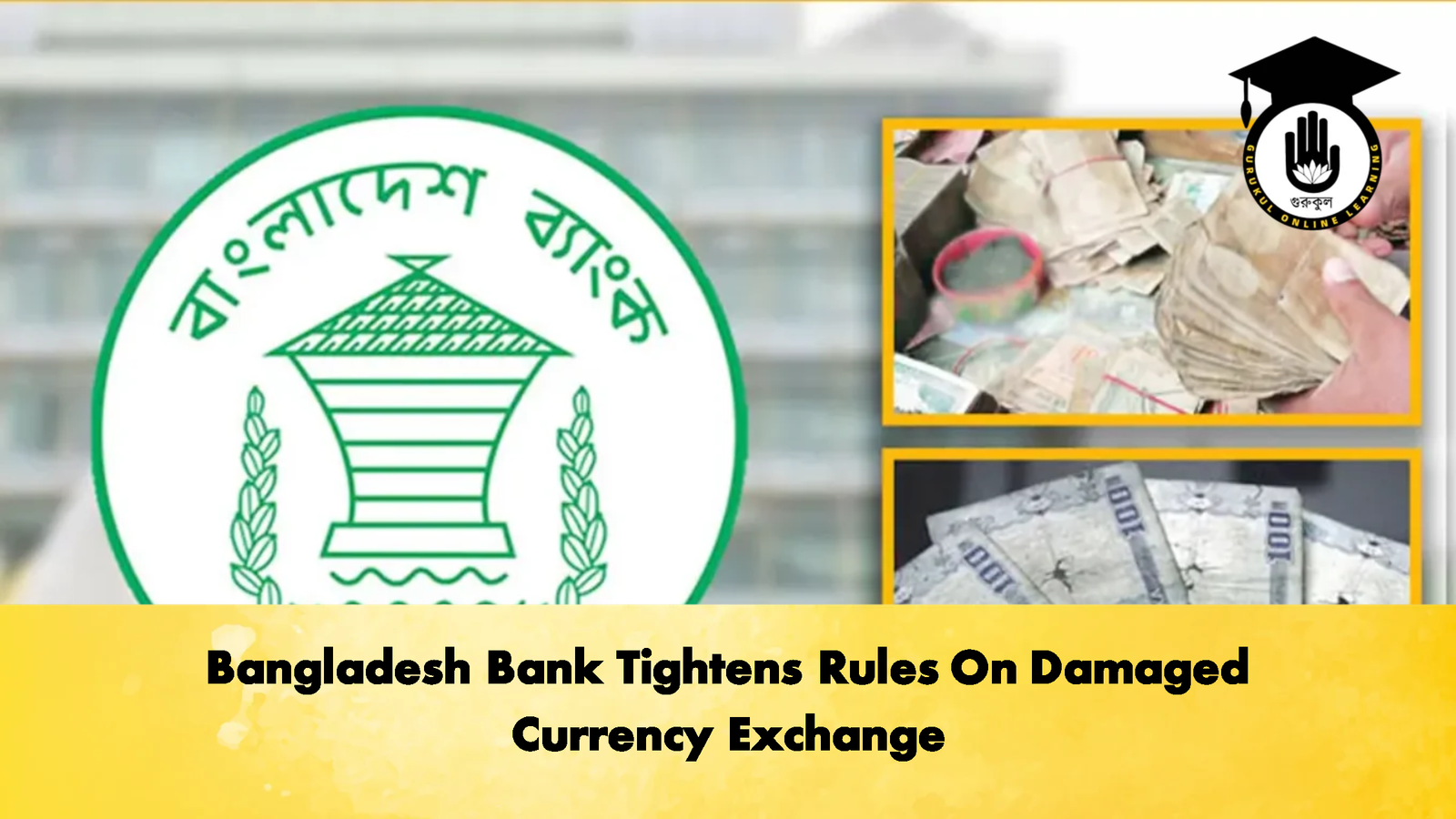
The Bangladesh Bank has moved decisively to address the growing problem of damaged currency in circulation by issuing a strict directive that obliges all scheduled banks to accept and exchange torn, mutilated, and soiled banknotes. The central bank has warned that any failure to comply with this order will invite firm regulatory action.
Announced on Sunday (12 April), the directive comes amid rising public frustration over the refusal of some bank branches to accept damaged notes, a practice that has disrupted routine transactions and created widespread inconvenience. Despite existing guidelines, the persistence of such issues has prompted the central bank to reinforce its position with stronger enforcement measures.
Reinforcing the Clean Note Policy
The directive is part of the broader “Clean Note Policy”, an initiative aimed at ensuring that only usable and presentable currency remains in circulation. Bangladesh Bank has acknowledged that, despite repeated instructions, damaged notes continue to be widely used—largely because customers often struggle to exchange them at bank counters.
To rectify this, all bank branches have now been instructed to provide uninterrupted services for accepting defective notes and replacing them with either fresh currency or notes suitable for recirculation. The regulator has underlined that this obligation is mandatory and must be treated as a core banking service.
Core Requirements for Banks
| Requirement | Details |
|---|---|
| Acceptance obligation | All torn, soiled, and mutilated notes must be accepted |
| Exchange service | Customers must receive fresh or reusable notes |
| Dedicated counters | Banks must operate special exchange counters |
| Priority denominations | Tk 5, Tk 10, Tk 20, Tk 50 |
| Enforcement | Legal measures for non-compliance |
Emphasis on Small Denominations
Particular importance has been placed on lower-value notes—Tk 5, Tk 10, Tk 20, and Tk 50—which are most frequently used in daily transactions and are therefore more susceptible to wear and tear. Banks have been directed to prioritise the collection and replacement of these notes through designated service counters.
According to the central bank, the continued circulation of damaged currency not only complicates transactions but also disrupts informal economic activities, including transport fares and small retail purchases. Improving the quality of these notes is therefore seen as essential to maintaining the efficiency of everyday commerce.
Legal Framework and Enforcement
The directive has been issued under Section 45 of the Bank Companies Act, 1991, which empowers Bangladesh Bank to enforce compliance across the banking sector. The regulator has described the matter as “extremely important” and signalled a zero-tolerance approach towards any form of negligence.
Banks found unwilling or slow to implement the directive may face regulatory sanctions, including fines and administrative penalties. The central bank is also expected to intensify monitoring efforts, potentially conducting inspections to ensure that all branches adhere to the rules.
Broader Economic and Consumer Impact
The move has been welcomed by economists and financial experts, who view it as a necessary step towards improving currency management in a largely cash-dependent economy. By ensuring that damaged notes can be easily exchanged, the directive is expected to reduce transactional friction and improve liquidity in the market.
For consumers, the policy promises to eliminate a long-standing source of frustration. Many individuals, particularly those in rural and informal sectors, have faced difficulties when banks refused to accept damaged notes, effectively rendering their money unusable.
Furthermore, the initiative is likely to enhance accountability within the banking system, encouraging institutions to prioritise customer service while adhering to regulatory standards.
Future Outlook
While the directive represents a significant policy intervention, its effectiveness will depend on consistent implementation and strict oversight. Bangladesh Bank is expected to monitor compliance closely and take prompt action against any violations.
If enforced effectively, the policy could lead to a noticeable improvement in the quality of circulating currency, restore public confidence in the banking system, and ensure smoother financial transactions across the country.