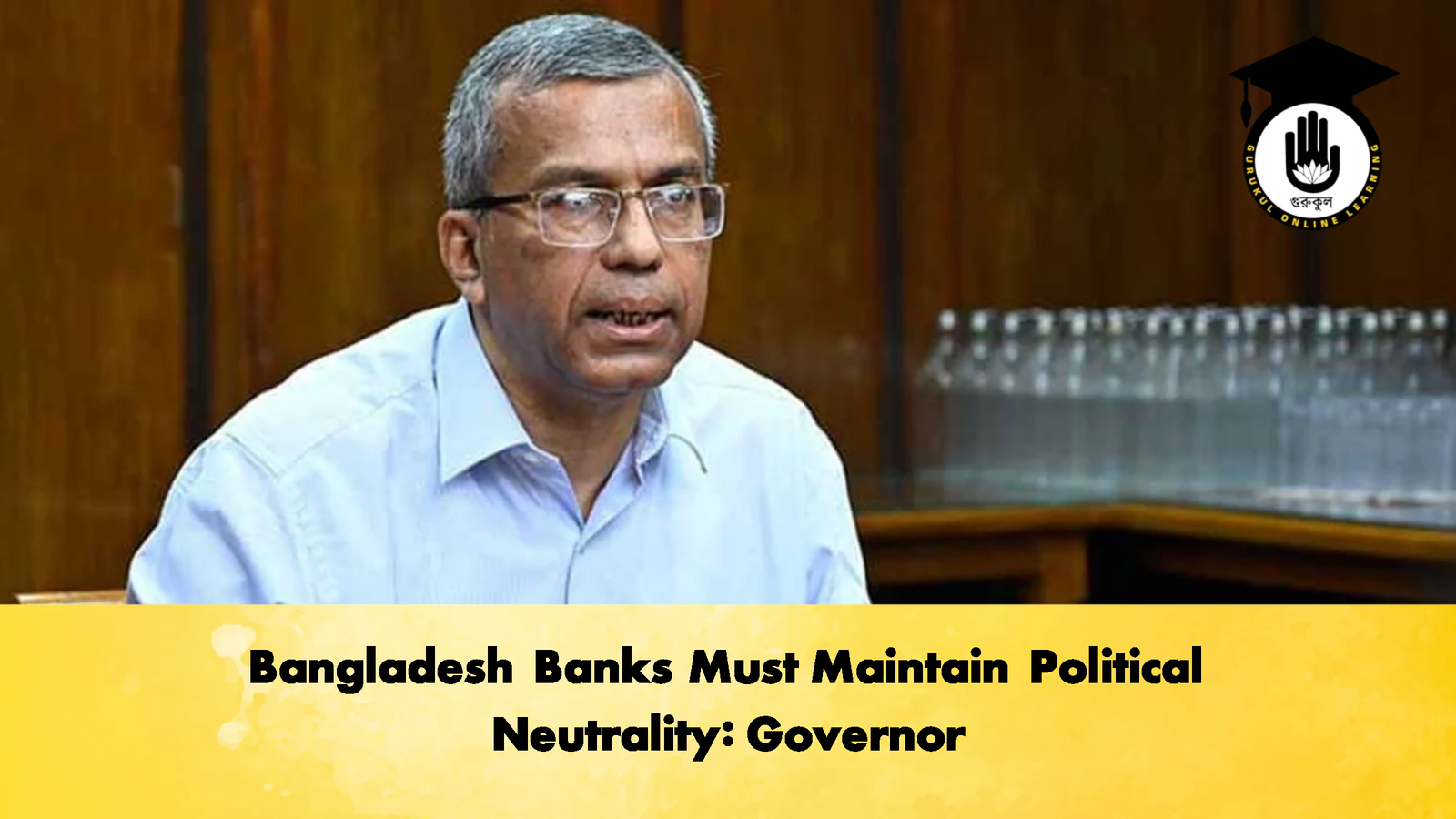
Bangladesh Bank Governor Mostaqueur Rahman has issued a firm directive that no bank in the country should operate in allegiance to any political party, group, or family. Addressing the Board of Directors and senior executives of Islami Bank Bangladesh Limited (IBBL) on Monday, the governor emphasised that professionalism, transparency, and political neutrality must underpin the operations of all financial institutions in Bangladesh.
Historical Governance Concerns
Governor Rahman sharply criticised IBBL’s operations during the tenure of the Awami League government, stating that the bank had previously prioritised the interests of a particular political faction. This, he observed, had facilitated opportunities for financial mismanagement, irregular lending, and governance lapses, weakening both depositor confidence and institutional integrity.
“No bank will work for any party, group, or family. Every institution must operate free from political influence, with full professionalism,” he asserted.
This meeting marked Governor Rahman’s first formal engagement with IBBL since taking office. Bank officials acknowledged past governance challenges but highlighted measures undertaken to stabilise operations, restore credibility, and strengthen risk management. They also sought policy guidance and support from Bangladesh Bank to ensure sustainable development.
Strategic Focus on Remittances and Foreign Exchange
IBBL has long been a leader in remittance collection, particularly from expatriates in the Middle East, utilising an extensive network across countries such as Saudi Arabia, the UAE, and Qatar. These inflows have historically bolstered the bank’s foreign currency reserves and expanded its depositor base, enabling strong liquidity management.
Governor Rahman stressed that remittance mobilisation is particularly critical amid the current Middle East conflicts, which have heightened domestic demand for US dollars. He urged IBBL to enhance efforts in foreign currency collection, strengthening both the bank’s reserves and national economic stability.
| Focus Area | Governor’s Directive | Expected Impact |
|---|---|---|
| Remittance Mobilisation | Increase collection from expatriates, especially Middle East | Strengthen foreign currency reserves |
| Political Neutrality | No bank to serve any party, group, or family | Improved governance and transparency |
| Recovery of Defaulters | Revive closed or defaulted investment projects | Stimulate industrial activity and employment |
| Non-Performing Loan Recovery | Engage with entrepreneurs to renew defaulters’ loans | Reopen factories and restore economic activity |
| Policy Support | Central bank to provide guidance and assistance | Enable bank stability and sustainable growth |
Recovery of Non-Performing Loans
Governor Rahman highlighted the need to revive investment projects that have become non-performing or defunct. He instructed IBBL to consult with entrepreneurs and consider renewing defaulted loans under specific policy measures. The objective is to reopen factories, stimulate industrial output, safeguard employment, and protect depositor interests.
Commitment to Professionalism and Oversight
Governor Rahman reiterated that IBBL, once a leading financial institution, must continue its revival through disciplined management, robust oversight, and adherence to regulatory guidelines. He assured the bank of Bangladesh Bank’s full support to uphold governance standards while facilitating growth.
“The central bank will continue to support Islami Bank in every possible way to maintain its strength, enhance foreign currency inflows, and safeguard depositor trust,” he said.
Broader Implications
This meeting reflects Bangladesh Bank’s overarching mission to fortify the financial sector, eliminate political interference, and reinforce the role of banks as professional, accountable, and socially responsible institutions. Analysts argue that implementing these directives could restore public confidence, strengthen industrial financing, and enhance Bangladesh’s overall economic resilience—particularly amid global uncertainties and fluctuating foreign currency demand.
By combining political neutrality, strategic remittance mobilisation, and active recovery of non-performing loans, the governor’s directives aim to position IBBL and other banks as stable, growth-oriented institutions, capable of supporting both national economic priorities and depositor trust in a rapidly evolving financial landscape.