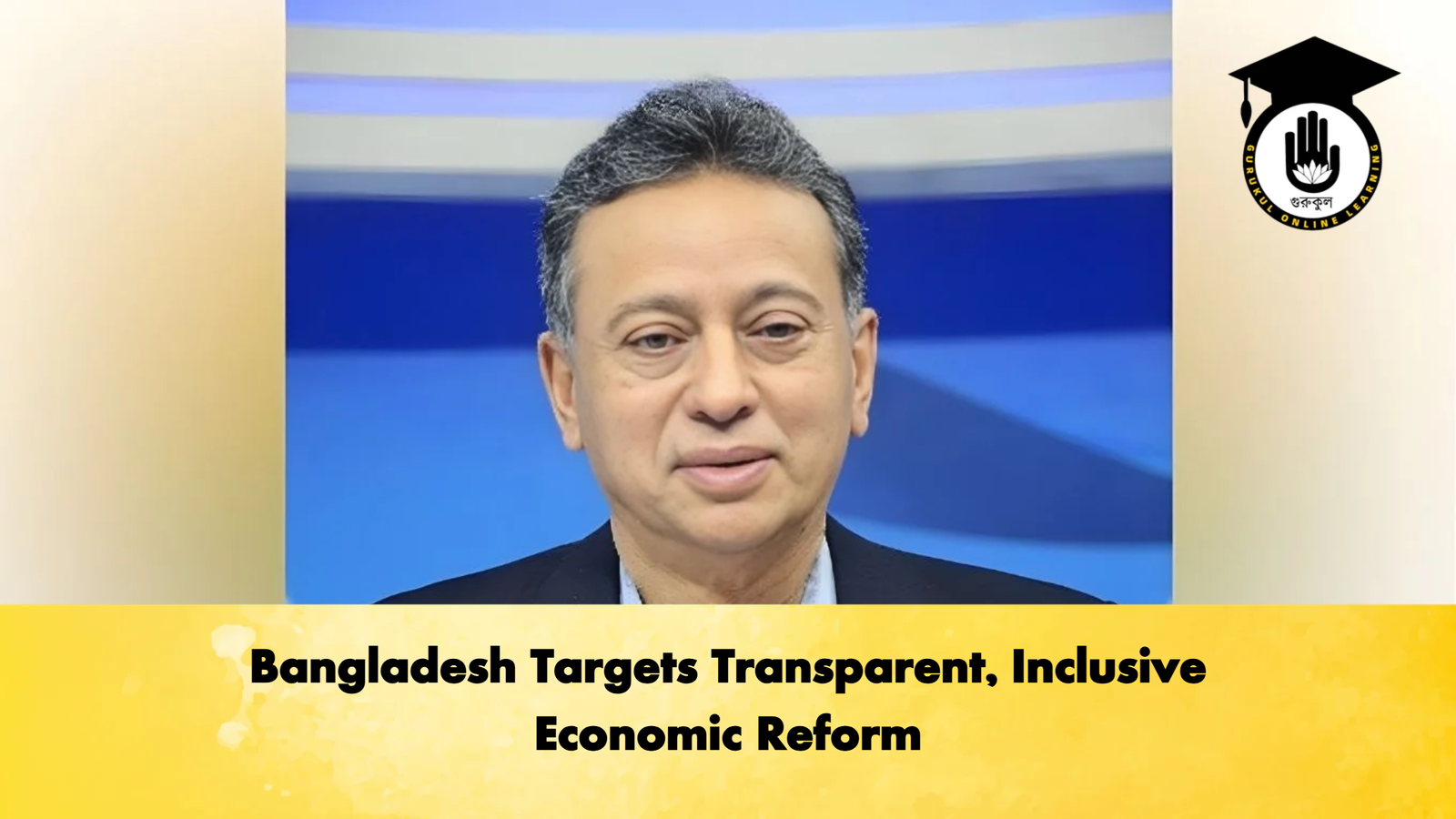
Bangladesh’s newly appointed Finance Minister, Amir Khasru Mahmud Chowdhury, has made a firm commitment to end the era of a “patronage economy” in the country. Speaking to journalists for the first time at the Secretariat on Wednesday, he outlined his vision of an economy that is accessible and equitable for all citizens.
“We can no longer allow a patronage-driven economy to persist,” he said. “Our objective is to build an economic system that guarantees equal opportunities for every citizen. Establishing a level playing field is essential so that everyone’s rights are respected.”
A major focus of the minister is the reform of state-owned enterprises, which he describes as hampered by inefficiency and a lack of professionalism. “The foremost challenge is the lack of professionalism and operational effectiveness within our public institutions. Rebuilding these institutions is our top priority. Without transparency and competence, no programme can succeed,” he explained.
Minister Chowdhury emphasised that development initiatives will falter unless state institutions are equipped with professionalism, transparency, and effectiveness. “Our goal is to make every institution efficient and results-oriented,” he added.
He also stressed the importance of democratizing the economy, moving away from patronage-based practices. “Bangladesh’s economy must provide equal opportunities for all citizens. Every individual should have the chance to participate in and benefit from economic growth. This is our central mission,” he said.
The minister further called for serious deregulation to foster development. “Bangladesh is currently over-regulated, a legacy of patronage politics. What we need is liberalisation, deregulation, and equal opportunities for all,” he noted.
Chowdhury outlined three primary priorities as part of his mandate:
| Priority | Description |
|---|---|
| Institutional Reform | Introduce professionalism, transparency, and operational efficiency in public institutions |
| Democratic Economy | Ensure equal opportunities and a level playing field for all citizens |
| Deregulation & Liberalisation | Reduce excessive regulatory burdens to create a stimulating economic environment |
Amir Khasru Mahmud Chowdhury’s political experience is notable. He previously served as Commerce Minister during Khaleda Zia’s government in 2001 and has now been entrusted with the Ministry of Finance and Planning under the BNP-led administration, led by Tarique Rahman.
The Finance Minister made it clear that his agenda will decisively curb patronage politics and transform the national economy into a transparent, efficient, and inclusive system. Analysts believe these initiatives could reshape Bangladesh’s business and investment climate, enhancing both economic transparency and stability.
Bangladesh is now embarking on a new chapter where equitable opportunities and capable state institutions are expected to drive sustained economic progress for all citizens.