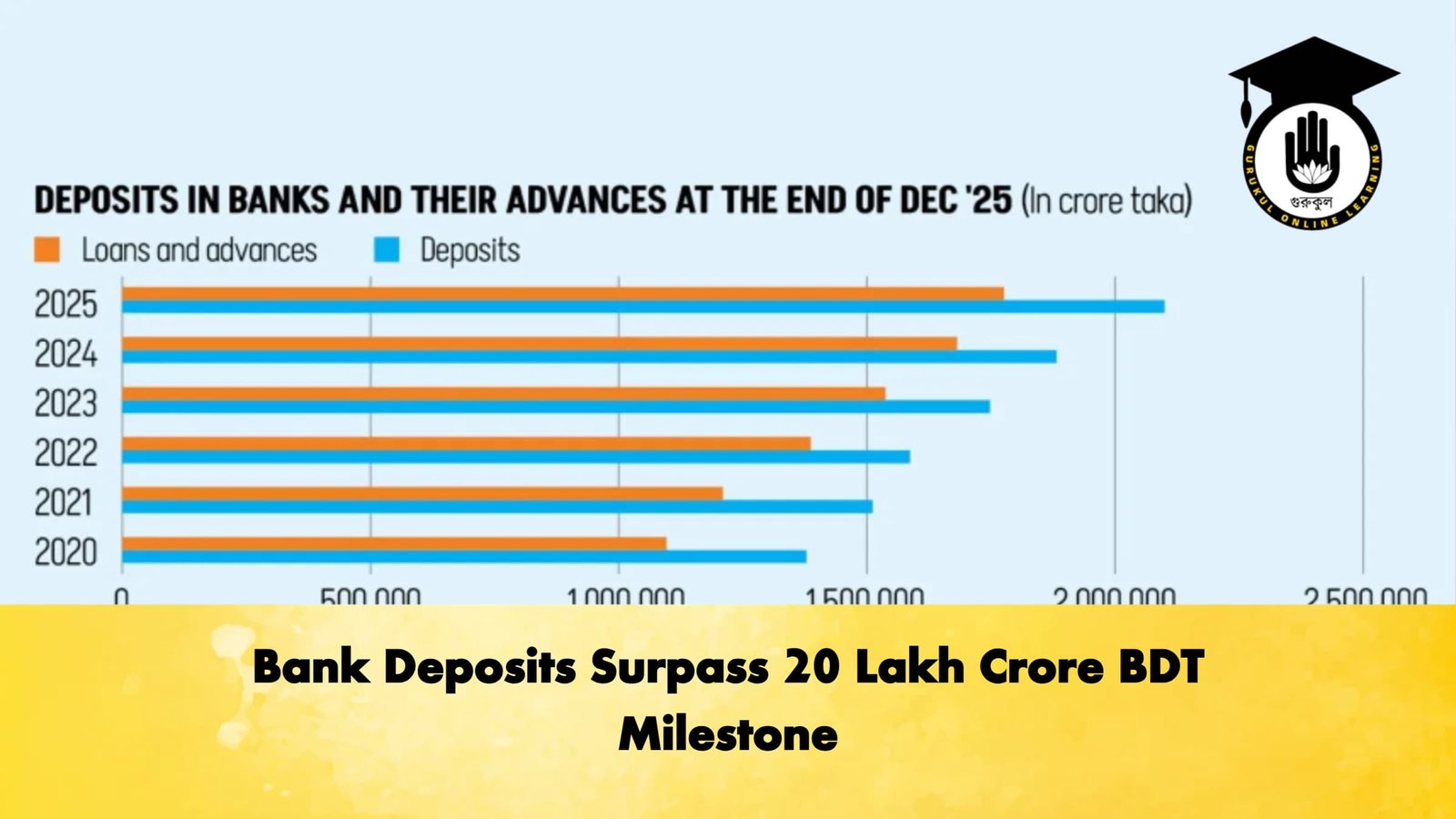
The Bangladeshi banking sector witnessed a remarkable turnaround in 2025, as deposit growth surged to a five-year peak by the end of December. This resurgence is primarily attributed to a steady restoration of public confidence and a stabilising economic environment, following a period of significant volatility and liquidity concerns.
Breaking Records: The 21 Lakh Crore BDT Peak
According to the latest quarterly statistics released by Bangladesh Bank (BB), total savings across the country’s 61 scheduled banks reached an unprecedented 21 lakh crore BDT by the close of the year. This represents an 11.51% year-on-year increase, marking the first time the industry has breached the 20 lakh crore BDT threshold.
The “Bangladesh Bank Quarterly” report suggests that this robust expansion reflects a higher propensity among households and businesses to hold financial assets within the formal banking sector. This shift was largely bolstered by a gradual easing of inflationary pressures, which halted the “dissaving” trend—where consumers were previously forced to dip into savings to meet rising living costs.
A Fragmented Recovery
Despite the impressive headline figures, industry experts warn that the recovery is not uniform. Md Mahiul Islam, Deputy Managing Director at BRAC Bank, noted that while overall confidence is returning, the surge in deposits is concentrated within a select group of seven to eight high-performing institutions.
The data reveals that private commercial banks, including Islamic banks, remain the primary custodians of the nation’s wealth, followed by state-owned and foreign entities.
| Segment | Market Share of Deposits |
| Private Banks (inc. Islamic) | 69.52% |
| State-Owned Banks | 20.30% (est.) |
| Foreign Banks | 10.18% (est.) |
Lending Caution Amidst Deposit Surplus
Paradoxically, while banks are flush with cash, credit growth has hit a significant slump. In 2025, banks recorded their slowest growth in loans and advances, with total disbursements reaching 17.77 lakh crore BDT—a modest 5.6% increase compared to the previous year.
Several factors have contributed to this “cautious lending” phase:
High Interest Rates: Rising borrowing costs have dampened appetite for private sector investment.
Non-Performing Loans (NPLs): Banks are increasingly wary of a buildup in default loans, leading to stricter vetting processes.
Monetary Policy: Tighter controls from the central bank have encouraged banks to prioritise stability over aggressive expansion.
Restoring Trust after the 2024 Crisis
The 2025 boom follows a dismal 2024, where a “confidence crisis” crippled several institutions. High-profile loan irregularities and the inability of some banks to honour withdrawal requests led to a liquidity crunch that required emergency fund injections from the central bank. The current growth suggests that the “recent political developments” and subsequent regulatory reforms have successfully fostered a renewed sense of stability and trust among savers.