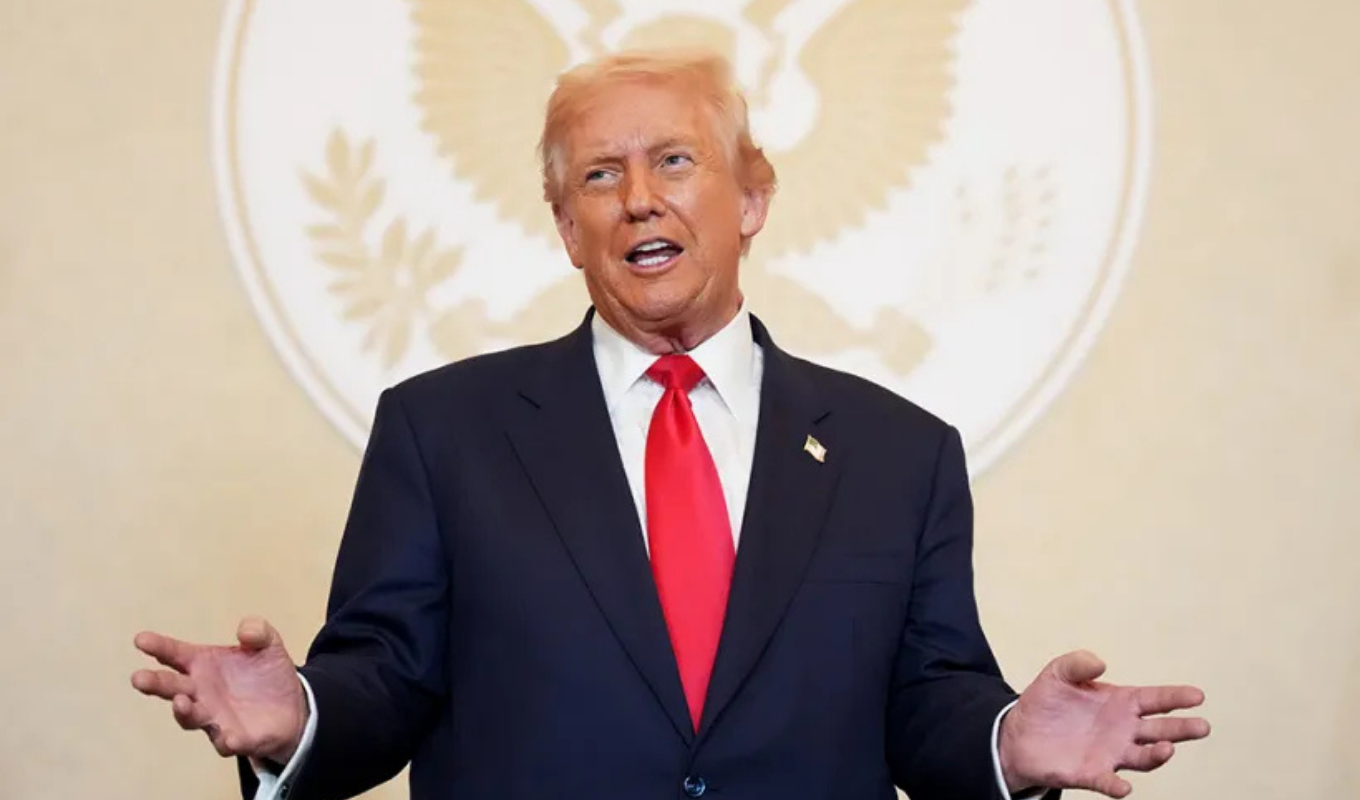
The Bank of England’s recent softening on its position regarding ‘stablecoins’ marks another shift in the UK’s financial landscape, which appears to be influenced by former US President Donald Trump. Stablecoins, a form of virtual currency, are designed to be less volatile than traditional cryptocurrencies, with their value usually pegged to the US dollar or other stable assets. They are often seen as safer alternatives, particularly for investors looking to enter the crypto market, and are touted as offering a more efficient future for international payments. However, they have also been criticised for potentially facilitating illegal activities.
Two years ago, Bank of England Governor Andrew Bailey declared that stablecoins did not meet the necessary standards to be considered “safe money”. Other regulators, especially outside of the US, largely agreed with this assessment. However, Trump has since praised stablecoins, calling them “perhaps the greatest revolution in financial technology since the birth of the internet”. Following Trump’s state visit in September, and with Treasury Secretary Scott Bessent taking a leading role in discussions, the Bank’s stance has softened significantly. There is now even the possibility that the Bank could act as a ‘lender of last resort’ for stablecoin issuers in sterling. Has Bailey become a true believer in the potential of stablecoins, or is this merely another act of obeisance to the influence of the Trump administration?
Winners Take All
I recently debated Elon Musk’s eye-watering mega-bonus on the radio with former Greek Finance Minister Yanis Varoufakis. The deal means that if Musk can drive the value of Tesla from its current $1.4 trillion valuation to $8.5 trillion in the next decade, through the sale of AI-powered vehicles and humanoid robots, he’ll receive $1 trillion in new shares to top up his already vast holdings.
I sceptically predicted that this “self-driving truck of gold” would never materialise, given that both Tesla and the volatile Musk himself may falter before delivering such promises. The fact that three-quarters of Tesla shareholders voted in favour of the bonus is a clear sign that we are nearing the peak of the tech stock boom. Despite this, one extravagant promise does not detract from the fundamental value of entrepreneur-led capitalism as a driver of progress.
Varoufakis countered, arguing that Musk’s deal is an example of ‘cloud rent’ (or what he terms ‘techno-feudalism’), where tech moguls seek market dominance through the control of vast amounts of customer data. In his view, Musk and his peers are ruthless monopolists, but in the winner-takes-all world they inhabit, there is always another Silicon Valley or Shenzhen mogul coming up with a new innovation that could ultimately take them down.
Bad Numbers
As the long wait for the UK Budget continues, the backdrop for Labour’s Rachel Reeves looks increasingly bleak with each report from the Office for National Statistics. The latest data shows unemployment has reached a post-pandemic high of 5 per cent, while there has been a drop of 180,000 in the number of ‘payrolled employees’ in the year to October. Even worse, public-sector pay rises driven by unions are now running at 6.6 per cent annually, far outpacing the current inflation rate of 3.8 per cent. Meanwhile, the private sector is seeing more modest increases at just 4.2 per cent. Almost every negative statistic comes with the added note that it exceeds last year’s estimates. One can’t help but wonder: what has Rachel Reeves done to get us into this mess, and how much worse will it get before her political clock runs out?
Fraternal Fortunes
The death of the UK’s wealthiest resident, Gopichand Hinduja, has created a headache for the editors of the ‘rich list’. Gopichand, who presided over the Hinduja family’s £35 billion fortune, leaves behind a complicated legacy. His death may cause the fortune to be divided between multiple claimants, including his sons and brothers on one side, and the daughters of his late elder brother Srichand, who died in 2023, on the other.
This family division dates back a decade, when a falling out over the ownership of the Swiss-based Hinduja Bank led to a long-standing rift. Once united by a common spiritual goal, the family now finds itself embroiled in legal and financial disputes over the legacy of their patriarch. Gopichand’s legacy to London includes the opulent Raffles Hotel in Whitehall, where a single Negroni cost me £24.
In contrast to the Hinduja family’s internal strife, David and Simon Reuben, the brothers who made their fortune in metals before diversifying into property, are rising up the rich list. Their latest development is the Waldorf Astoria hotel near Admiralty Arch, a project that rivals Raffles in luxury. It seems that for the super-wealthy, the battle for supremacy continues, with sibling rivalries and extravagant projects at the heart of it all.
Fake News
The departure of Lord Mayor Alastair King was marked by a ‘Last Laugh’ fundraiser at the Guildhall, with a parody performance involving a mock-up of former President Donald Trump. The event began with the American national anthem as ‘President Trump’ made his grand entrance, leading a table of Chinese bankers near me to stand in formal attention, possibly unaware of the satire.
The highlight of the evening was a sharp impersonation of Trump by Scottish comedian Lewis MacLeod, who donned a MAGA hat for the occasion. Mobile footage of the performance has no doubt made its way to the White House. After Trump’s recent clash with the BBC, we can only hope he doesn’t retaliate with harsh new tariffs on London’s financial services, claiming the last laugh for himself.