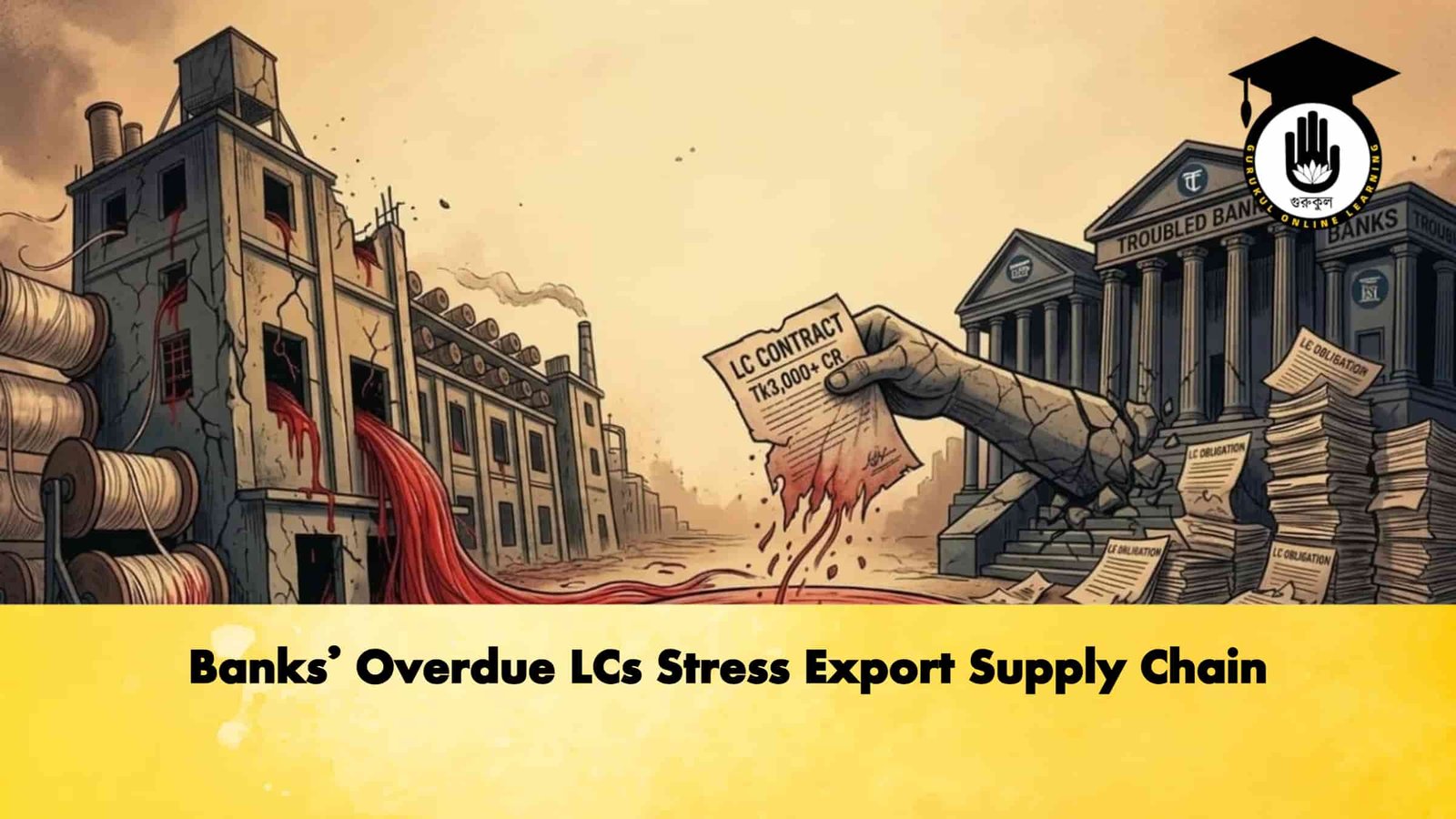
Textile manufacturers in Bangladesh are facing sustained financial pressure as more than a dozen financially stressed commercial banks have failed to settle overdue liabilities linked to local back-to-back letters of credit (LCs), leaving accepted bills unpaid for extended periods.
Industry sources and bankers estimate that unpaid obligations have accumulated to approximately Tk3,000 crore to Tk4,000 crore over the past five years. These liabilities relate to accepted bills that were not settled after maturity, despite clear obligations under the Guidelines for Foreign Exchange Transactions 2018.
Under a local back-to-back LC arrangement, garment exporters procure yarn, fabric, and other raw materials from domestic suppliers using export orders from foreign buyers as collateral. Once a bank accepts a supplier’s bill, it assumes a binding obligation to make payment on the maturity date, typically within 120 days. However, numerous cases show that payments have remained unsettled for years after acceptance.
A Bangladesh Bank assistant spokesperson and director, Mohammad Shahriar Siddiqui, confirmed that there is no regulatory provision allowing non-payment against accepted bills. He noted that in normal practice, overdue amounts are recovered by debiting the respective commercial bank’s account held with the central bank. Where disputes arise, they are addressed individually upon appeal. He also stated that troubled banks have been instructed to clear outstanding liabilities immediately, referencing a circular issued on 26 October 2022 that warned of regulatory action, including possible cancellation of Authorised Dealer licences, for non-compliance.
Despite these instructions, multiple exporters report persistent delays.
Selected outstanding LC liabilities
| Entity / Company | Amount outstanding | Duration / Status | Banks involved (where stated) |
|---|---|---|---|
| Ahmed Group | $15 million (~Tk200 crore) | Ongoing | Multiple banks |
| Bank Asia clients | $16 million | Multiple overdue cases | Various banks |
| Textile sector total (BTMA estimate) | ~$90 million | As of last available data (November) | Various banks |
| Mosharaf Composite Textile Mills | ~$2 million | Up to 5 years overdue | Multiple banks (incl. Islami Bank Bangladesh, Premier Bank, Agrani Bank, Exim Bank) |
| New Town Knitwear supplier case | $192,000 | ~5 years overdue | Islami Bank Bangladesh, Exim Bank |
| Optimum Fashions Wear Ltd suppliers | $120,000 | ~18 months overdue | Two banks |
| Abanti Colour Tex Ltd | $472,000 | ~2 years overdue | Not specified |
| Crony Apparels Ltd | $35,000 | ~2 years overdue | Not specified |
| NZ Apparels Ltd | $800,000 | Over 1 year overdue (partial cases) | Islami Bank Bangladesh, Exim Bank, Premier Bank |
Bank Asia Managing Director Sohail RK Hussain stated that delayed settlement of accepted bills has become increasingly common. He noted that, unlike foreign LC obligations where the central bank intervenes immediately, similar enforcement is required for local LCs, particularly as around 15 distressed banks are reportedly unable to meet obligations. Bank Asia has issued reminder letters and is considering legal action in some cases.
The Bangladesh Textile Mills Association indicated that, based on its last available data, approximately $90 million remains tied up in unpaid LC-related transactions.
Industrial users report significant operational strain. Mosharaf Composite Textile Mills Managing Director Md Mosharaf Hossain stated that delayed receipts have hindered loan repayment, wage payments, and working capital management. He added that interest costs continue to accumulate despite non-receipt of payments.
Agrani Bank Managing Director and CEO Md Anwarul Islam stated that banks do not have scope to leave overdue payments unsettled for prolonged periods and indicated that individual cases would be reviewed where necessary.
Several exporters have issued legal notices and initiated litigation against defaulting buyers and, in some instances, associated bank officials, citing continued non-payment despite repeated reminders.