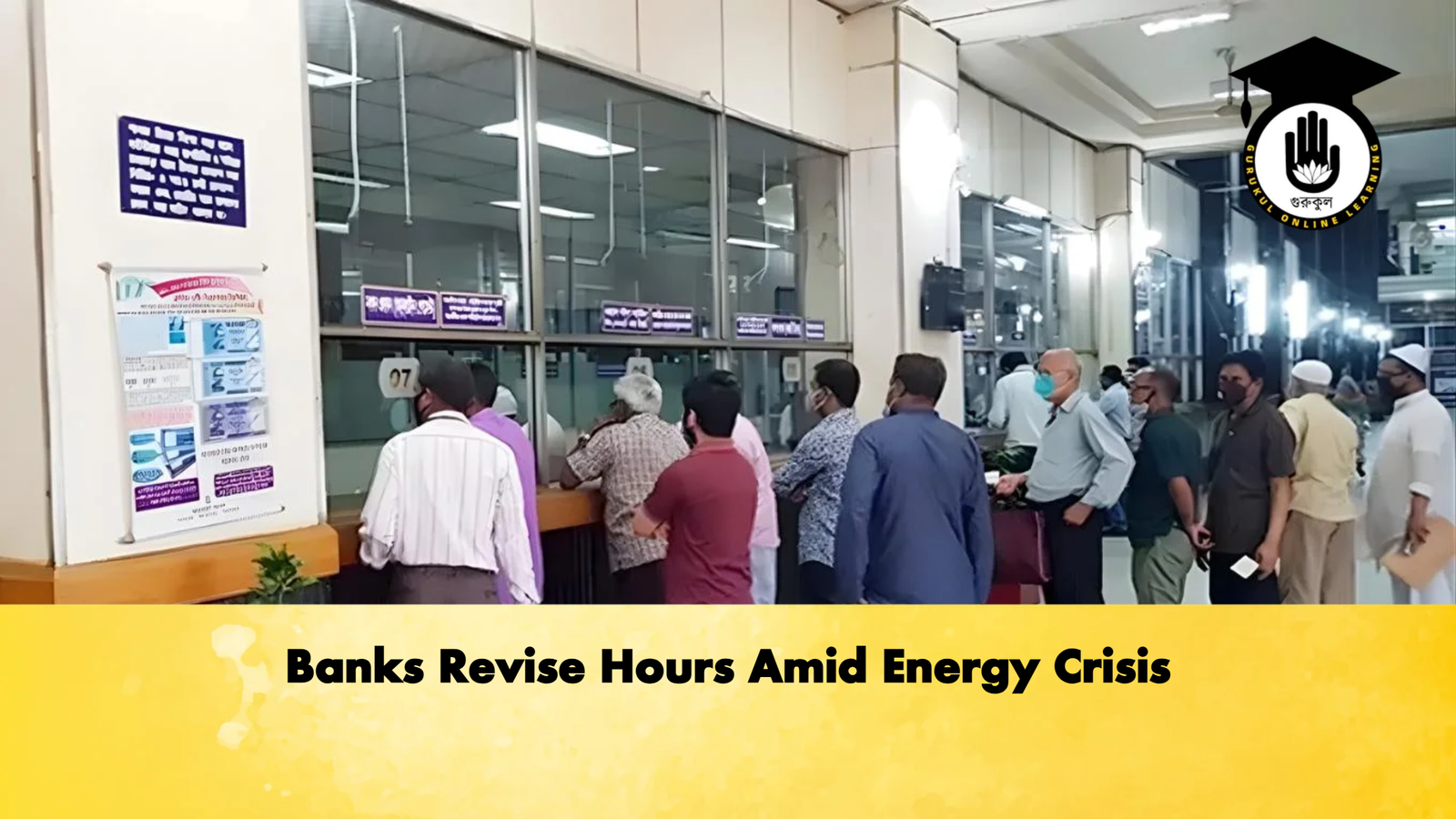
In response to escalating geopolitical instability in the Middle East and the resulting global energy crunch, Bangladesh has introduced revised operating hours across both public and private sectors, including a significant adjustment to banking schedules. The government confirmed that the new timetable will come into force nationwide from Sunday as part of a broader strategy to curb energy consumption and improve administrative efficiency.
The decision was formally approved at a Cabinet meeting held on Thursday, chaired by the head of government. Following the meeting, the Cabinet Secretary briefed the media, explaining that the restructuring of office hours is intended to bring greater discipline and time-bound coordination across national administrative functions, while also reducing pressure on electricity demand during peak hours.
Under the revised arrangement, banking transactions will now commence at 9:00 a.m. and continue until 3:00 p.m. However, banks will remain open until 4:00 p.m. to complete internal procedures such as account reconciliation, document verification, and clearing-related tasks. Previously, customer transactions were conducted from 10:00 a.m. to 4:00 p.m., with administrative work often extending into the evening.
Officials argue that the one-hour advancement of opening time, combined with the earlier closure of customer services, will help streamline operational flow while contributing to national energy savings. The adjustment is also expected to reduce congestion during peak hours and encourage more structured service delivery within a compressed timeframe.
Revised Banking Schedule Comparison
| Aspect | Previous Schedule | New Schedule |
|---|---|---|
| Customer transaction start | 10:00 a.m. | 9:00 a.m. |
| Customer transaction end | 4:00 p.m. | 3:00 p.m. |
| Internal banking operations | 4:00 p.m. onwards (evening) | 3:00 p.m. – 4:00 p.m. |
| Total operational window | ~8 hours | ~7 hours |
Economic analysts note that rising global fuel prices and persistent supply chain uncertainties have placed considerable strain on developing economies. In this context, cost-containment measures, particularly those aimed at reducing electricity consumption in the public sector, are increasingly being adopted as policy imperatives rather than temporary interventions.
Within the banking sector, initial assessments suggest that the revised schedule is unlikely to negatively impact service quality. On the contrary, some industry insiders believe that a more compressed working window may improve efficiency by encouraging quicker decision-making and reducing procedural delays. At the same time, greater reliance on digital banking platforms is expected, which could help ease pressure on physical branches.
Customers, however, may need to adjust their daily routines, as most in-person banking activities will now need to be completed within a shorter morning-to-midday timeframe. Businesses and individual account holders alike are being encouraged to plan transactions more carefully to avoid last-minute congestion.
Overall, the government’s move reflects a wider effort to adapt administrative systems to current global economic challenges. By reshaping working hours, authorities aim not only to conserve energy but also to foster a more disciplined and efficient public service structure in the long term.