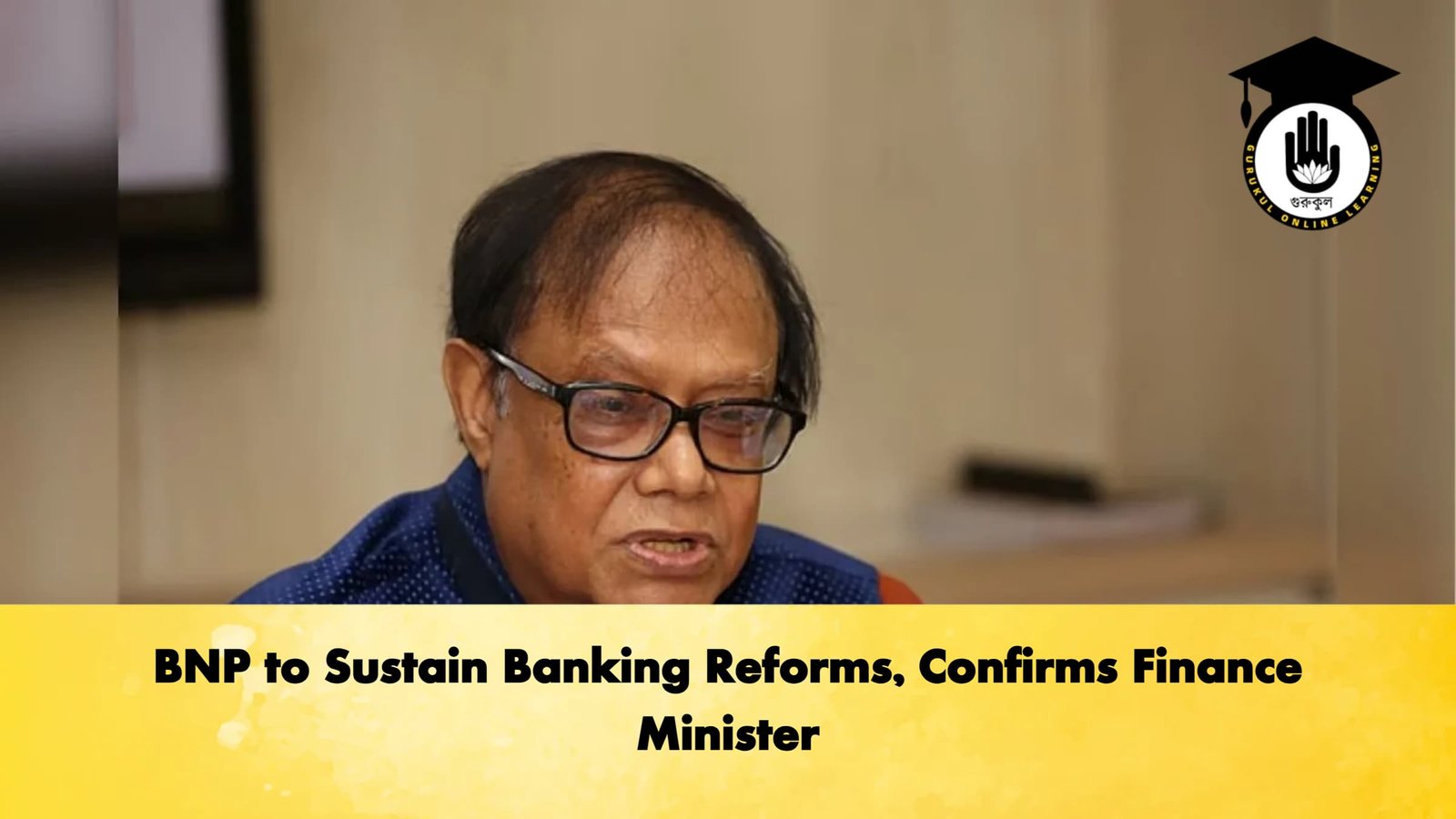
The Bangladesh Nationalist Party (BNP) has formally committed to maintaining the ongoing structural reforms within the nation’s banking sector. This strategic assurance was delivered by the Minister for Finance and Planning, Amir Khosru Mahmud Chowdhury, during a high-level private consultation with the Governor of Bangladesh Bank, Dr Ahsan H. Mansur, held at the Secretariat on Monday afternoon.
High-Stakes Deliberations at the Secretariat
Following the meeting, the Finance Minister reiterated that the current trajectory of financial rehabilitation is essential for national economic stability. Governor Mansur provided a comprehensive briefing on the progress of various reform initiatives implemented over recent months.
“We presented a concise overview of the restorative measures currently in motion,” the Governor informed the press. “The Minister underscored the imperative of continuing these operations and expressed a highly positive outlook regarding our strategic direction.”
Tackling Inflation and Non-Performing Loans (NPLs)
A primary focus of the discussion was the urgent need to curb inflation, which remains a cornerstone of the government’s economic agenda. The Governor emphasised that there is absolute consensus on prioritising price stability to protect the purchasing power of the citizenry.
Furthermore, the meeting addressed the chronic issue of defaulted loans. The central bank is set to intensify legal proceedings against major defaulters, tighten loan restructuring policies, and implement more rigorous transparency standards for bank classifications.
| Reform Category | Key Initiatives & Objectives |
| Monetary Policy | Prioritising inflation control and price stability. |
| Debt Management | Identifying intentional defaulters and enforcing legal action. |
| Transparency | Standardising bank classification and audit processes. |
| Capital Support | Ensuring liquidity flow to maintain economic momentum. |
The Emergence of ‘Combined Islamic Bank’
The dialogue also touched upon the significant merger of five major financial institutions: EXIM, Social Islami, First Security Islami, Global Islami, and Union Bank. These entities have been consolidated to form the Combined Islamic Bank, an institution designed to restore confidence in the Islamic banking framework.
The newly formed bank boasts an authorised capital of 40,000 crore BDT, with a paid-up capital of 35,000 crore BDT, of which the government has provided 20,000 crore BDT. Governor Mansur noted that the immediate goal is to ensure the bank’s stability, highlighting that legacy depositors are gradually regaining access to their funds while new deposits are beginning to flow in.
Leadership Vacuum and Governance
Despite the structural progress, the Combined Islamic Bank faces a leadership hurdle. The appointed Managing Director (MD), Nabil Mustafizur Rahman—who topped the selection committee’s merit list—has been unable to assume his duties due to ill health.
“We must now seek a new Managing Director,” the Governor stated. In the interim, an administrator and the reconstructed Board of Directors will oversee operations. There are ongoing discussions regarding the potential extension of the Board’s tenure and increasing the number of directors to ensure robust governance during this transitional phase.