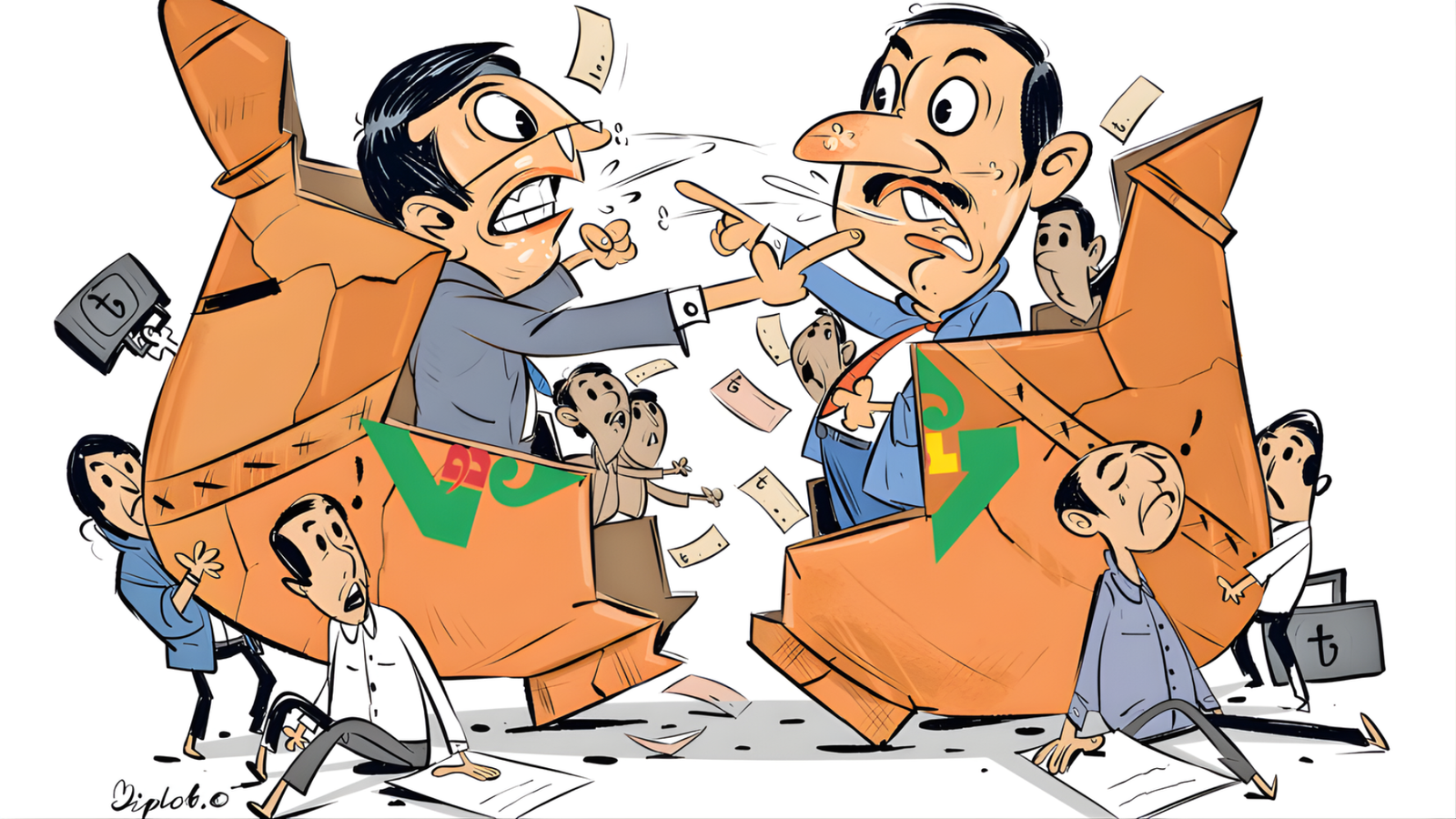
Standard Bank is grappling with internal conflict, as bad loans have surged to nearly a third of its total lending, exposing deep governance issues within the bank. The turmoil comes as the financial sector in Bangladesh struggles with growing bad debts and a decline in public confidence. Documents reveal a split among the bank’s 16-member board regarding the future of its Managing Director, Md Habibur Rahman.
Chairman Mohammed Abdul Aziz leads one faction, while his son, Vice-Chairman AKM Abdul Alim, leads the opposing group. The Alim camp has accused Rahman of corruption, specifically alleging irregularities in loan management during his previous tenure at Union Bank. This faction has called for Rahman’s removal and has written to the Bangladesh Bank (BB) requesting that he be placed on forced leave.
However, the central bank rejected this request, stating that the allegations have not been substantiated, and instructed the bank’s board to retain Rahman in his position.
Aziz’s group has defended Rahman, dismissing the allegations as unfounded and accusing the opposing faction of obstructing the bank’s operations. Aziz claims that Rahman has not committed any wrongdoings, and that the central bank would not have allowed his continued tenure if there were proven irregularities.
The internal strife has paralysed decision-making within the bank, with board meetings frequently descending into arguments over staffing and management issues. Sources at the bank have expressed concerns that this feud is hindering the institution’s ability to function effectively.
Bank’s Financial Troubles
Standard Bank has faced increasing financial difficulties, with its non-performing loans (NPLs) reaching Tk 5,968 crore (29.3% of total lending) by the end of 2024. This is a sharp increase from 4.8% in 2020. The bank’s NPLs climbed after the central bank required it to reclassify a large portion of previously “regular” loans.
Despite these challenges, Rahman stated that the bank had reduced its NPLs by Tk 900 crore in recent months, showing signs of recovery. As of 2024, the bank reported Tk 20,125 crore in deposits and Tk 20,361 crore in total investments.
Table: Key Financial Data for Standard Bank (2024)
| Financial Indicator | Value (in Crore Taka) |
|---|---|
| Non-Performing Loans (NPLs) | 5,968 |
| Deposits | 20,125 |
| Total Investments | 20,361 |
| Reduction in NPLs | 900 |
Central Bank Oversight
The Bangladesh Bank (BB) is closely monitoring the situation at Standard Bank. Previous investigations by the BB uncovered irregularities involving former chairman Kazi Akram Uddin Ahmed and his son, which had contributed to the bank’s financial decline. Following the political shift in August last year, both men left their positions at the bank.
BB spokesperson Arefin Hossain Khan confirmed that the allegations against Rahman are still under investigation, but nothing has been proven as of yet. He warned that the ongoing infighting among directors could further weaken the bank’s stability.
What the Parties Say
The Daily Star attempted to reach AKM Abdul Alim for comment, but received no response. However, director Kamal Mostafa Chowdhury, who is aligned with Alim’s faction, confirmed that they had requested Rahman’s removal due to ongoing corruption allegations and his role in dismissing nearly 100 employees. Chowdhury also claimed that Rahman had brought police into board meetings.
Rahman, on the other hand, denied any involvement in loan irregularities at Union Bank and accused Alim’s group of seeking his removal because he had refused to support their “unethical activities.” Chairman Aziz reiterated that Rahman was innocent, and that if any evidence of misconduct had been found, the central bank would not have allowed him to remain in his position.
Aziz also accused the Alim group of attempting to place their own candidates in key positions, including at the bank’s exchange houses in London and the United States, which he claimed could result in a loss of Tk 50-60 lakh for the bank.
Expert Opinion
Economist Moinul Islam, a former professor at Chittagong University, remarked that boardroom conflicts are common in private banks in Bangladesh and often lead to rapid decline. He warned that such disputes typically arise from nepotism, with directors using their positions to benefit associates, which further fuels tensions. Islam urged the central bank to intervene before the situation worsens.