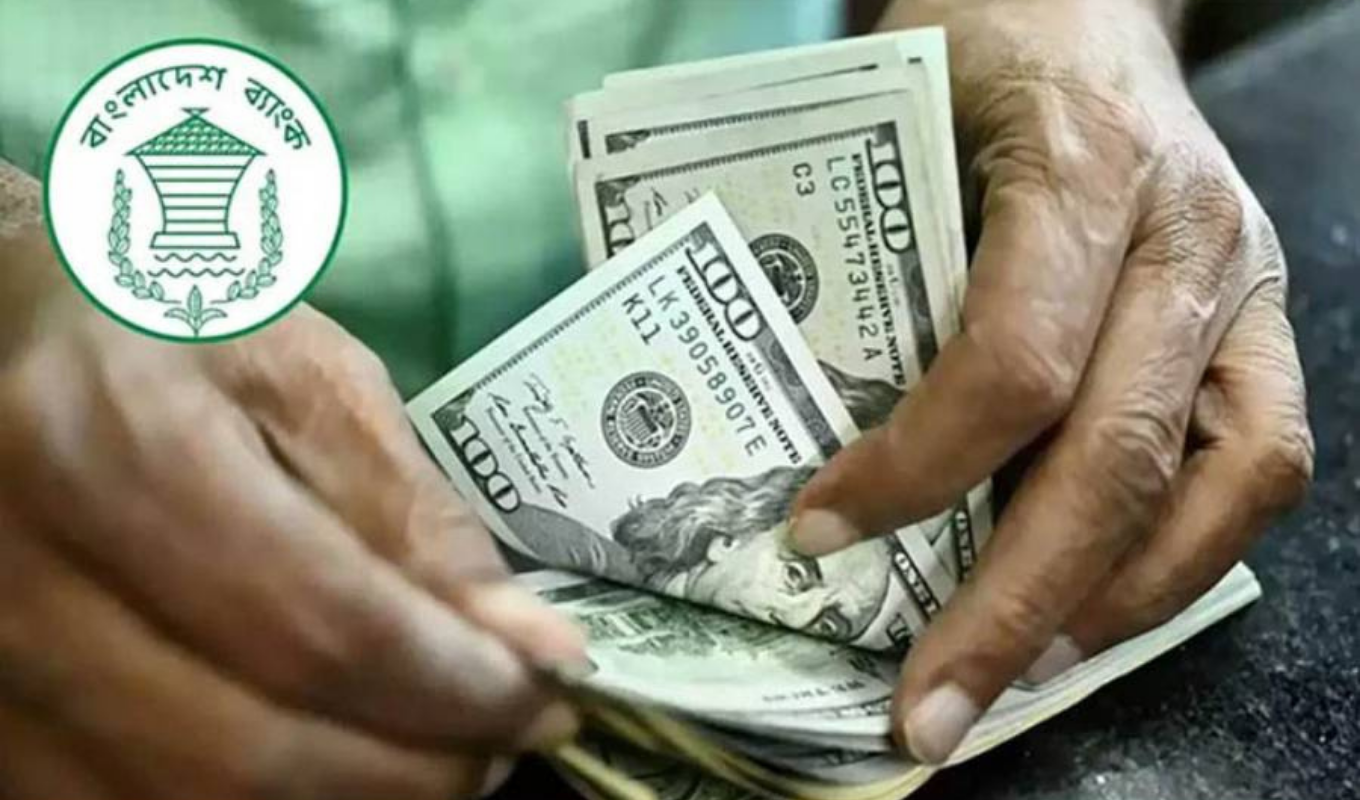
The Bangladesh Bank has continued its active intervention in the foreign exchange market, purchasing a further $141 million from commercial banks in a bid to stabilise currency conditions and reinforce confidence among exporters and remittance earners. The latest acquisition was completed on Monday, 15 December, through a structured auction involving 13 banks, reflecting the central bank’s sustained efforts to manage volatility in the taka–dollar exchange rate.
According to officials familiar with the transaction, the dollars were bought at exchange rates ranging narrowly between Tk122.29 and Tk122.30 per US dollar, underscoring the authorities’ intention to maintain rate discipline. The cut-off rate for the auction was set at Tk122.30, and the transaction was executed using the Multiple Price Auction (MPA) method, which allows participating banks to submit bids at different prices within a predefined range. This approach is designed to ensure transparency, promote market-based pricing, and discourage speculative behaviour.
Earlier in the same week, on Monday, 11 December, the central bank had purchased an even larger sum of $149 million from 16 banks. During that auction, the exchange rate ranged from Tk122.25 to Tk122.29, with the cut-off rate fixed at Tk122.29. The close alignment of rates across successive auctions indicates a deliberate policy stance aimed at preventing abrupt fluctuations while allowing gradual adjustments in line with market fundamentals.
Since the introduction of the auction-based dollar purchase mechanism on 13 July, the Bangladesh Bank has bought a cumulative $2.80 billion in the ongoing 2025–26 fiscal year. Central bank officials say the strategy is part of a broader framework to ensure adequate liquidity in the foreign exchange market, support legitimate demand for imports, and bolster external sector resilience at a time of global economic uncertainty.
Economists note that the steady inflow of remittances and export proceeds remains crucial for maintaining balance-of-payments stability. By purchasing dollars directly from banks, the central bank not only augments its foreign exchange reserves but also signals its commitment to orderly market conditions. This, analysts argue, can help restore confidence among market participants, reduce expectations of sharp depreciation, and encourage the formal channeling of remittances.
Market observers expect the Bangladesh Bank to continue such calibrated interventions in the coming months, adjusting the scale and frequency of auctions as needed to respond to evolving domestic and international economic conditions.