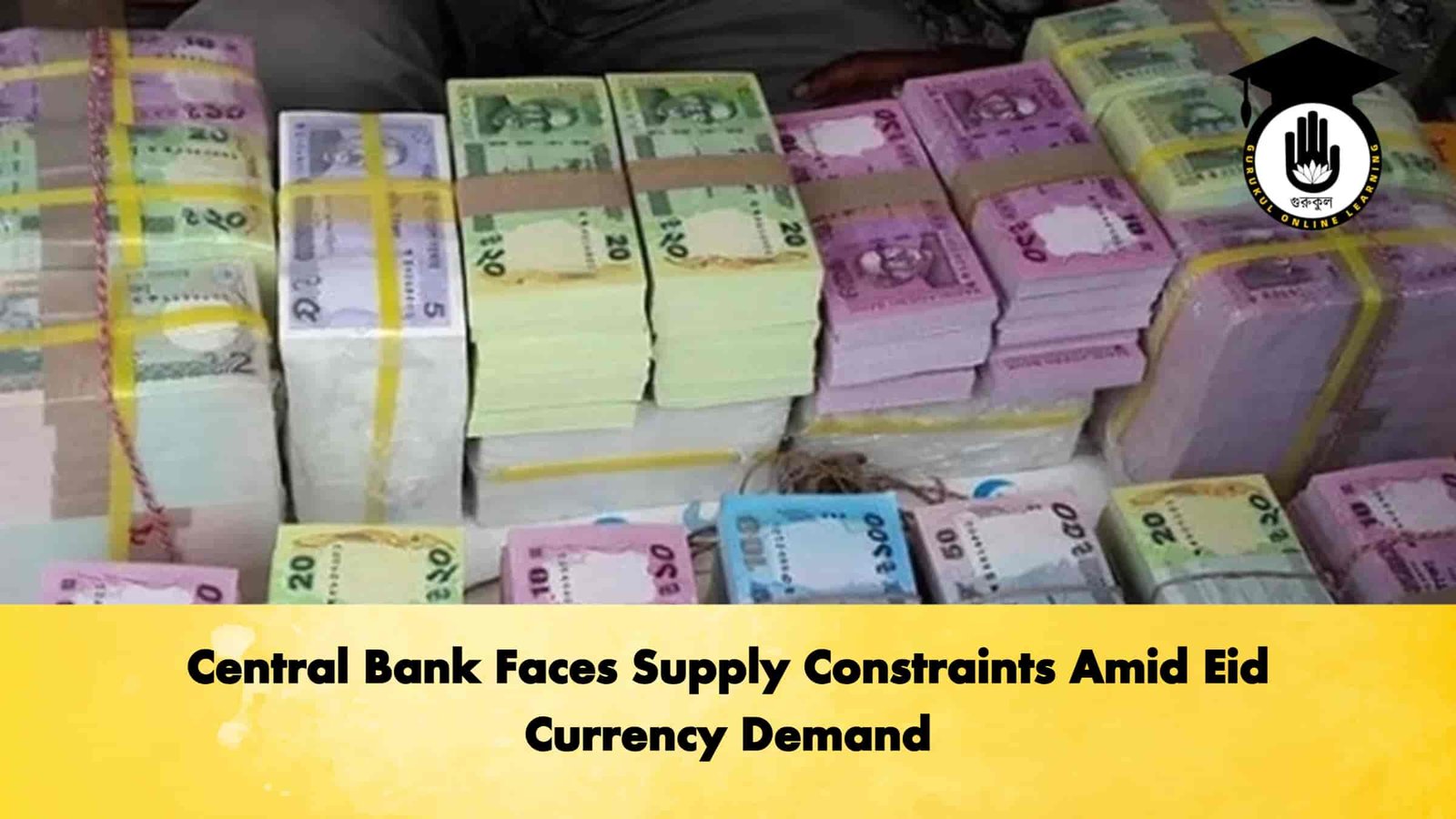
The demand for printed currency in Bangladesh significantly escalates ahead of Eid-ul-Adha. To meet this seasonal requirement, Bangladesh Bank has requested at least 16,000 crore BDT in new notes from the Security Printing Corporation (Bangladesh) Ltd, commonly referred to as the Mint. However, the Mint has communicated that it can only supply a maximum of 8,000 crore BDT due to a prevailing shortage of paper and ink.
Supply Discrepancies and Policy Decisions
While there is a deficit in new-design notes, approximately 15,800 crore BDT in older-design notes featuring the portrait of Sheikh Mujibur Rahman remains in the vault of the Security Printing Corporation. Although these notes could be released into the market within a fortnight, the central bank has made a strategic decision to withhold them.
The transition to new-design currency follows the fall of the Awami League government in August 2024. Under normal circumstances, currency designs are updated incrementally; however, the current administration has initiated a simultaneous redesign of all denominations. The process of bringing new notes to market typically requires 10 to 18 months, resulting in a supply gap that has persisted over the last two Eid festivals.
Currency Circulation and Institutional Holdings
Central bank officials distinguish between a shortage of printed notes and a liquidity crisis. While total national savings stand at approximately 24 lakh crore BDT, the demand for physical printed currency fluctuates between 320,000 crore and 360,000 crore BDT.
| Location of Physical Currency | Estimated Amount (Crore BDT) |
| Commercial Bank Vaults (approx. 12,000 branches) | 16,000 – 20,000 |
| Bangladesh Bank & Sonali Bank Chest Branches | 14,000 – 18,000 |
| Existing Old-Design Notes (Held at Mint) | 15,800 |
| Current New Note Demand for Eid | 16,000 |
| Current Mint Supply Capacity | 8,000 |
The “Clean Note Policy” and Market Reality
In November, Bangladesh Bank introduced a “Clean Note Policy” to ensure high-quality currency circulation. Commercial banks are mandated to collect worn, torn, or soiled notes from the public and return them to the central bank in exchange for “fresh” notes. However, because banks have not received an adequate supply of new currency, the market currently sees a high volume of damaged notes.
Arif Hossain Khan, Executive Director and Spokesperson of Bangladesh Bank, stated that the transition period for the new designs has caused temporary market friction. He noted that while defective notes are usually withdrawn and incinerated, the current supply constraints have slowed this process. To address the shortage of raw materials, the authorities have initiated the transport of paper and ink via air freight at a higher cost; however, this new stock is unlikely to be printed and distributed before the upcoming festival.
Public Access to Currency Exchange
Since November last year, the central bank has discontinued the facility for general customers to exchange notes directly at its counters. Instead, the public must rely on commercial banks. Despite central bank directives, many banks remain reluctant to exchange small-denomination or damaged notes, often citing various excuses to turn customers away. Bangladesh Bank expects the situation to normalise once the distribution of the newly printed 8,000 crore BDT begins.