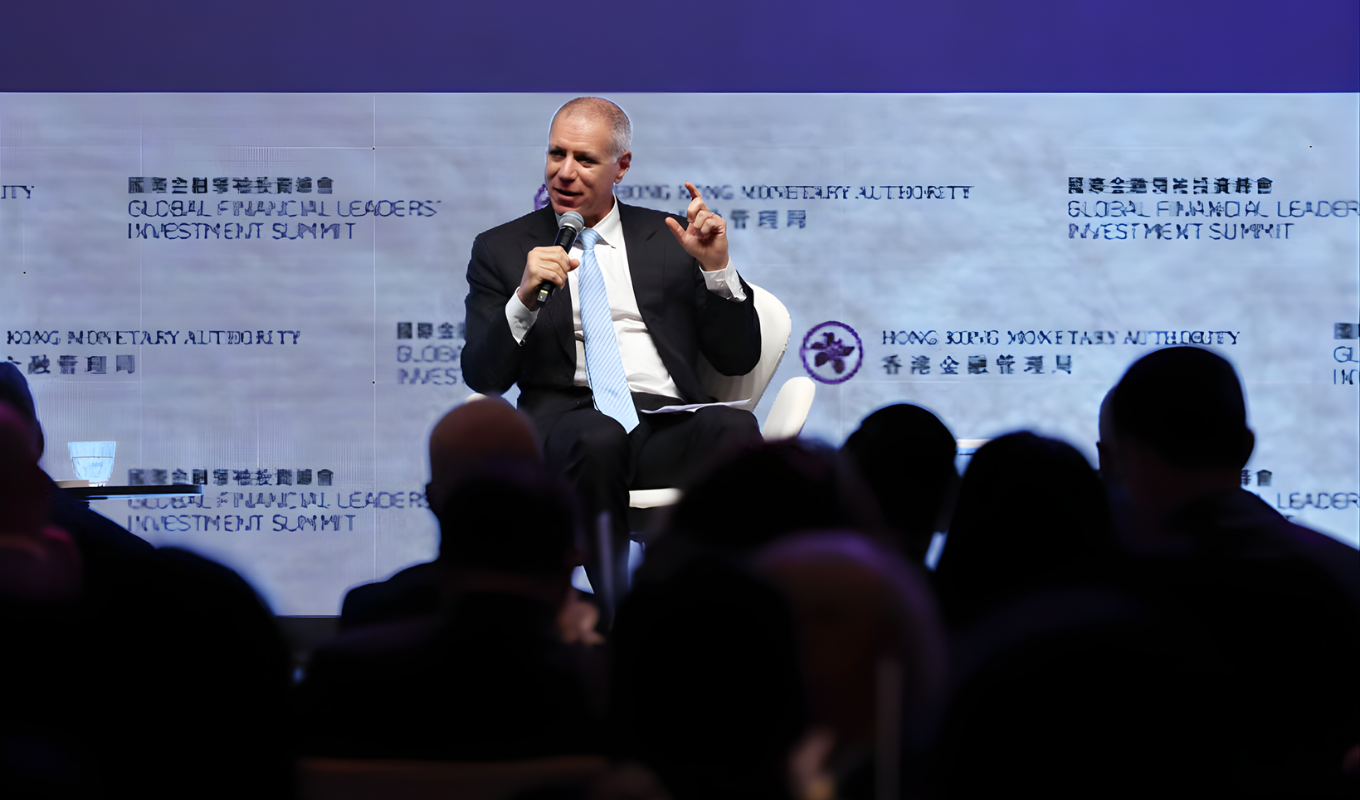
At the Global Financial Leaders’ Investment Summit in Hong Kong on Tuesday, experts expressed cautious optimism about the evolving dynamics between China and the US, while also raising concerns about the rapid disruptions posed by emerging technologies.
Despite lingering trade disputes and tariffs, financial leaders noted that the relationship between the two largest economies had entered a more “stable equilibrium” following recent high-level talks. William Ford, Chairman and CEO of US private equity firm General Atlantic, highlighted the progress made during last week’s discussions between Chinese President Xi Jinping and US President Donald Trump, which followed constructive engagements between key leaders, including US Treasury Secretary Scott Bessent and Chinese officials. Ford described these interactions as paving the way for a more stable and positive relationship moving forward.
He referred to the current phase as a “cyclical upswing,” even though challenges related to national security, competition, and technology continue to pose long-term hurdles. Ford added that despite the surface-level noise over tariffs, the underlying engagement between the two countries had been much more productive.
Georges Elhedery, Group CEO of HSBC, echoed Ford’s optimism, stating that global trade had shown resilience, even in the face of trade slowdowns. Elhedery pointed out that 72% of global trade still operates under World Trade Organization (WTO) terms, and global trade volumes grew by 2.9% despite a general dip compared to the previous year.
He noted that trade patterns were shifting, with Asia increasingly engaging in intra-regional trade and building stronger ties with regions like the Middle East. This shift, Elhedery suggested, could contribute an estimated 1.8% to Asia’s GDP, as the old China-to-US trade model evolves. Technology and AI-related goods, he added, now account for about half of trade growth, with services expanding at double the rate of goods.
Elhedery also spoke about the changing role of the US in global trade. He argued that the US is likely to become less reliant on imports as it pursues greater self-sufficiency. This shift may mean that the US will no longer play the role of the “consumer of last resort” in the global economy.
However, both Ford and Elhedery warned of the risks posed by emerging technologies, particularly in the realm of unregulated financial instruments like stablecoins. Elhedery stressed that while embracing new technologies presents opportunities, failing to regulate emerging sectors could present significant risks. He specifically pointed to the rise of unregulated stablecoin issuers and blockchain developments outside traditional financial services, warning that these activities could threaten the integrity of the financial system.
Ford also expressed caution, acknowledging that new technologies such as AI and blockchain could lead to misallocation of capital and market overvaluation in the short term. Yet, he was optimistic about the long-term prospects, predicting that such innovations would create new industries and drive productivity gains.
Ford, whose firm manages US$118 billion in assets, said that China represented a major opportunity for growth and innovation, particularly for investors focused on the future of technology and entrepreneurship. He highlighted China’s dynamic market as a top priority for any growth-focused investor.
Both leaders agreed that, while the global economy was undergoing significant shifts, particularly in trade and technology, the evolving landscape also presented ample opportunities for investment and innovation—provided investors were willing to take calculated risks in new, capital-intensive industries.