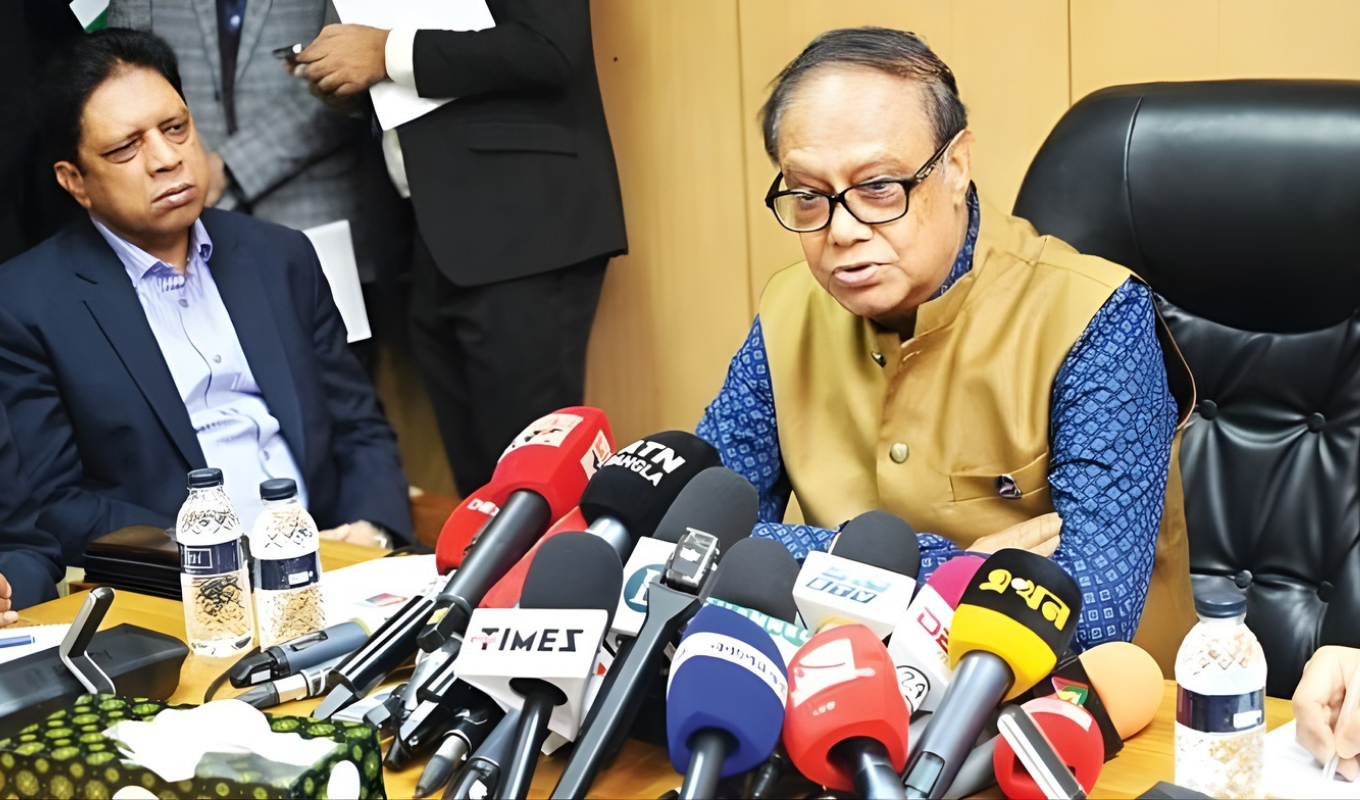
Bangladesh Bank Governor Ahsan H Mansur has announced that depositors of five merging Islamic banks will be able to withdraw their funds from the end of this month. He also revealed that the boards of directors of these banks, which are suffering due to irregularities, have been dissolved. Additionally, he declared that the shares of these five Shariah-based private banks have been rendered worthless. Speaking at a press conference on Wednesday afternoon at Bangladesh Bank’s auditorium, the Governor reassured depositors, saying there is no cause for concern now and that withdrawals up to BDT 200,000 should not pose any problems. He urged depositors with larger sums to withdraw as needed, while others can wait; once the merger is complete, they will receive deposits with market-based profit.
A new Shariah-based bank is being formed under government supervision by merging these five banks. On Wednesday, the central bank issued letters to dissolve the boards of the five banks- First Security Islami Bank, Global Islami Bank, Union, EXIM, Social Islami Bank. The Governor clarified that although the merged bank will be state-owned, it will not be a government bank in status. It will operate privately without government ownership, and its employees will not receive government employee status. He did not specify when the merger would be completed.
Regarding shares becoming worthless, the Governor explained that assets measured against shares in the banks have turned negative by BDT 350 to 420 per share. He stated that shareholders are not being asked for money but, according to international regulations, shareholders must assume responsibility. Since the capital is negative, all shares have effectively become null.
All five banks are listed on the stock market. According to regulatory rules from the Bangladesh Securities and Exchange Commission (BSEC), a shareholder meeting must be held and permission obtained to dissolve or close an institution, but this process is being bypassed in this case. When questioned about potential legal complications if investors resort to the courts, the Governor said the court will decide on such matters and that he will not make any judgement. He emphasised that banking laws differ from non-bank business regulations because banks are systemic organisations; a collapse would impact millions of families, making regulation critical. The responsibility cannot be left solely to shareholders but belongs to the regulator to oversee and intervene when necessary.
He stressed that if regulations are breached, Bangladesh Bank will intervene and has the duty to punish or guide banks onto the correct path. While earlier intervention would have been preferable, the Governor made clear that the responsibility for investors lies with the shareholders themselves, not Bangladesh Bank or the government. “The money is yours; the profit is yours, and so is the loss,” he said.
He added that since the capital is negative, they are not seeking recovery from shareholders, although in principle they should. He views the move to reduce shares to zero as done in public interest.
Earlier in the day, Bangladesh Bank officially began the merger process for these financially distressed banks, starting with the dissolution of their boards and calling for the resignation of managing directors.
Regarding future operations, the Governor said that banks currently processing Letters of Credit or conducting business will continue to do so until the merger is complete. The merger will happen gradually, one bank at a time. Bangladesh Bank has appointed administrators and supporting teams, all central bank officials, to manage the banks during this transition.