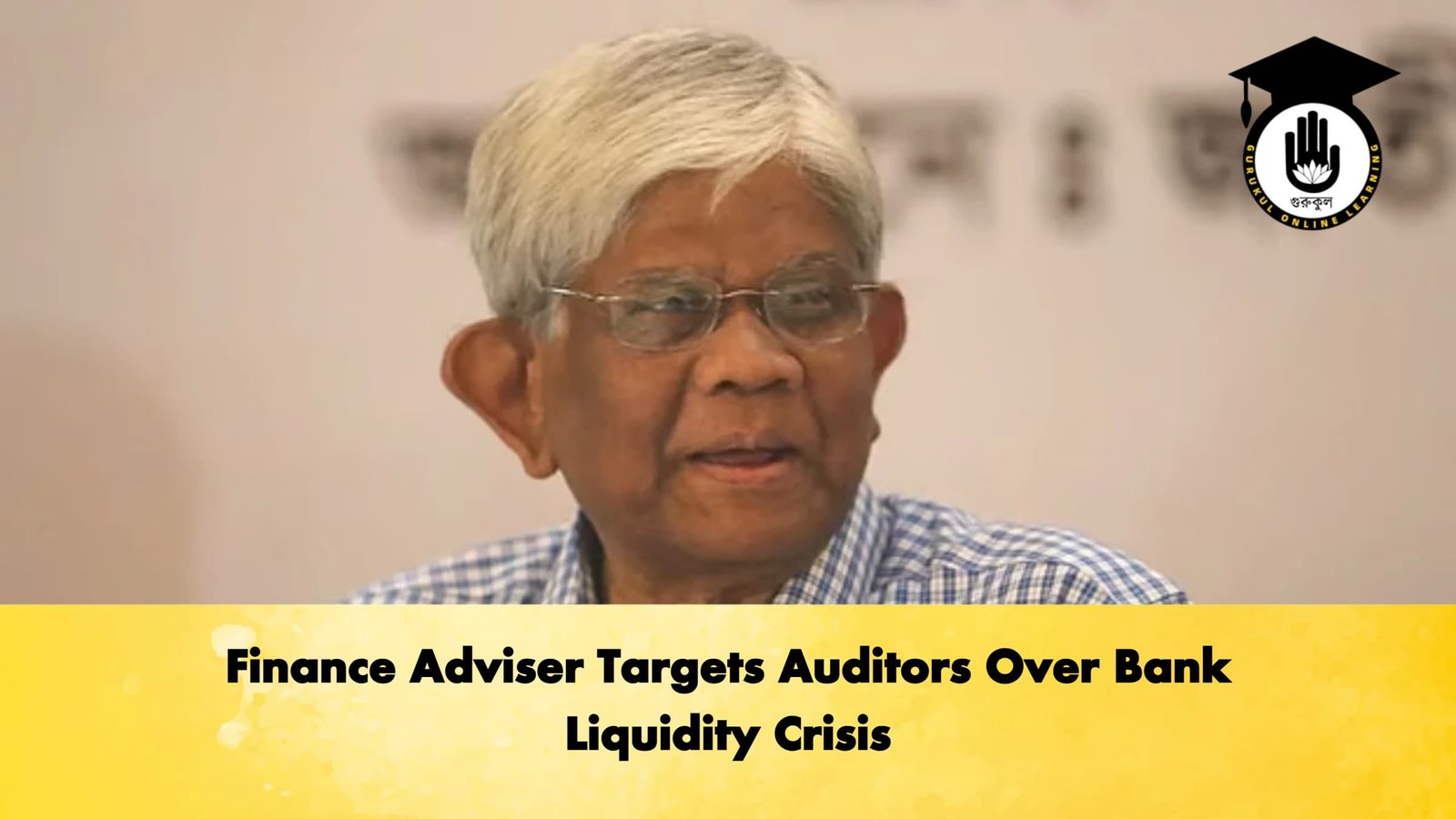
The interim government has launched a sweeping investigation into the financial reporting standards of five prominent private banks, with Finance Adviser Dr Salehuddin Ahmed confirming that auditors will be held accountable for any complicity in concealing the true state of their balance sheets. Speaking to the media at the Secretariat on Tuesday, Dr Ahmed signalled a zero-tolerance approach toward professional negligence in the banking sector.
Investigating the “Paper Profits”
The inquiry focuses on five institutions—First Security Islami Bank, Social Islami Bank (SIBL), EXIM Bank, Global Islami Bank, and Union Bank—which are currently facing severe liquidity shortages. Investors have alleged that prior to the political shifts of August 2024, these banks published audited financial statements showing robust profits, prompting many to purchase shares that have since plummeted in value.
Dr Ahmed explained that the authorities are now examining the “backdrop” of these share purchases. He noted a fundamental distinction between the rights of those who save and those who invest:
Depositors: Their protection is a “simple calculation,” and the government is committed to ensuring they recover their funds.
Shareholders: As equity owners who purchased at market rates, their situation is “complex” and subject to the risks of ownership, though the validity of the financial data they relied upon is now under review.
Accountability and Sanctions
When asked directly if the firms responsible for auditing these banks before 5 August would face sanctions, the Adviser was unequivocal: “Action will be taken.” He noted that while certain details cannot yet be disclosed, the government is scrutinising how these firms could certify healthy balance sheets for banks that were effectively insolvent.
Comparative Stakeholder Outlook
| Category | Legal Responsibility | Current Government Action |
| Audit Firms | To provide an “Independent & Fair” view | Investigation into professional misconduct. |
| Bank Directors | Fiduciary duty to shareholders | Assets and backgrounds are being scrutinised. |
| General Investors | Market risk awareness | Reviewing if they were misled by falsified data. |
| Regulators | Oversight and governance | Implementing structural reforms to curb “artificial” profits. |
Governance and Market Reality
Beyond the banking crisis, Dr Ahmed addressed broader concerns regarding the economy and bureaucracy. Responding to a report from Transparency International Bangladesh (TIB) suggesting a power imbalance between advisers and bureaucrats, he dismissed the notion as a recurring historical narrative.
On the pressing issue of inflation, the Adviser maintained that administrative force is a blunt instrument. “Governance is the key,” he argued. “You cannot control the price of essential commodities simply by deploying magistrates and inspectors. No country in the world achieves price stability without fundamental political and economic governance.”
He concluded by defending Bangladesh’s economic resilience, stating that while the nation’s progress may not always follow a “straight line” due to political complexities, the trajectory remains focused on long-term stability and reform.