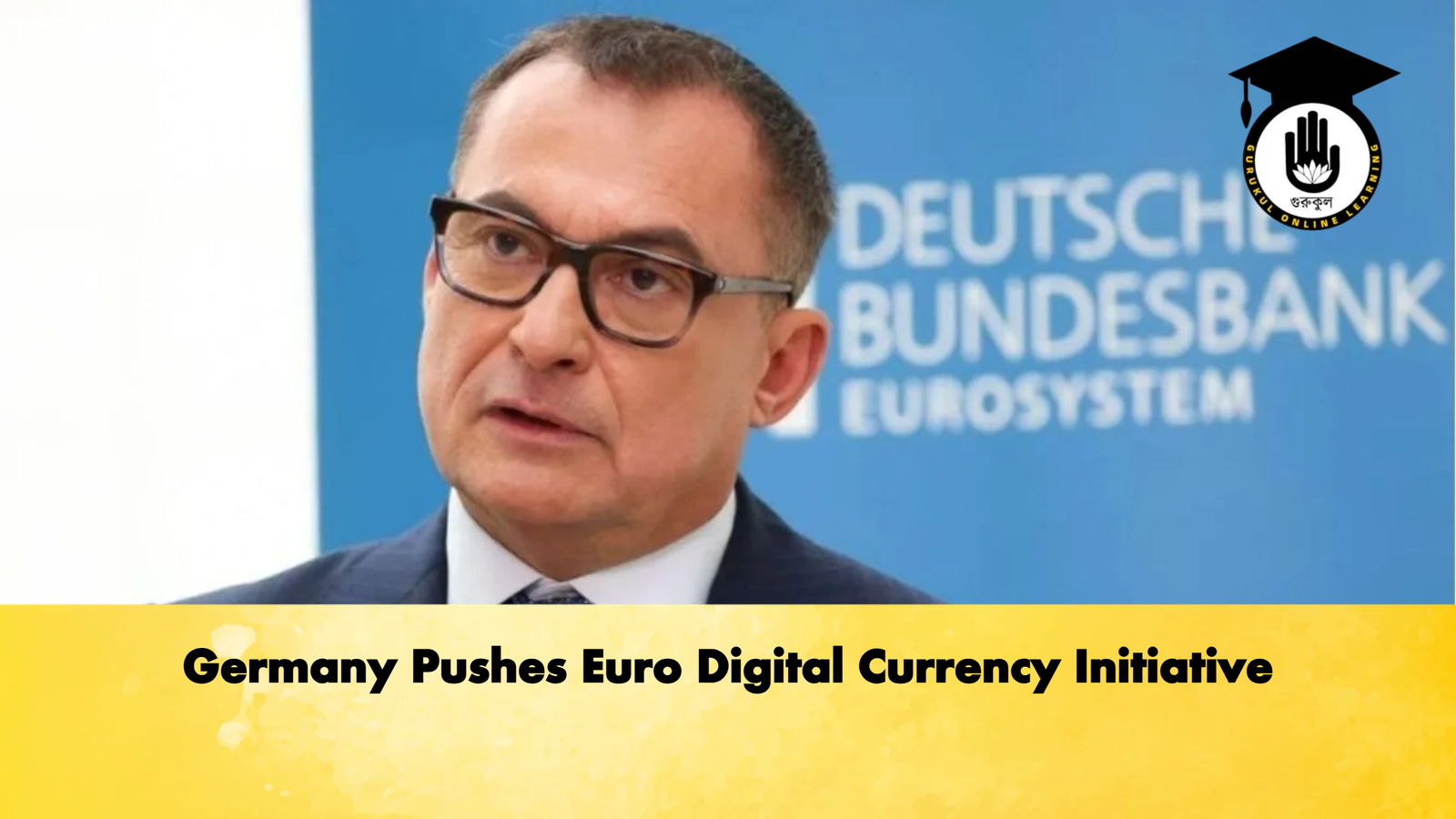
The President of Germany’s central bank, Joachim Nagel, has recently voiced strong support for euro-backed crypto stablecoins and a retail central bank digital currency (CBDC). Far from treating these innovations as optional, Nagel described them as essential instruments for safeguarding Europe’s financial sovereignty. He emphasised that the continent must defend itself against the dominance of the US dollar in digital financial markets.
Speaking in Frankfurt, Nagel stated, “We must secure our own payment infrastructure; failing to do so risks leaving us behind in the digital monetary system.” He also noted that the European Union (EU) is already advancing regulations for digital assets through the Markets in Crypto-Assets (MiCA) framework, designed to provide clear oversight and governance.
Current market dynamics underscore the urgency of his message. The market capitalisation of dollar-backed stablecoins has already surpassed $310 billion, whereas euro-backed stablecoins remain marginal in liquidity. This discrepancy poses a significant concern for European regulators: without viable alternatives, Europe risks a trend towards “digital dollarisation,” where the dollar dominates even in digital transactions.
Nagel drew a clear distinction between wholesale and retail digital currencies:
Wholesale CBDC: Intended for institutional use, enabling banks to execute programmable transactions directly in central bank money.
Retail euro-backed stablecoins: Targeted at the private sector, offering cost-efficient, cross-border payment solutions.
The following table provides a snapshot of the current stablecoin market landscape:
| Type of Stablecoin | Market Value (Billion USD) | Intended Use | Comments |
|---|---|---|---|
| Dollar-backed stablecoins | 310+ | International transactions, retail, institutional | Dominant in the market |
| Euro-backed stablecoins | Negligible | European retail and cross-border payments | Requires development and expansion |
Nagel’s central message is that Europe must create a competitive euro-based alternative to maintain monetary autonomy. He warned that stringent capital and regulatory requirements under MiCA could potentially slow the pace of innovation, highlighting the delicate balance regulators must strike between safety and technological progress.
Globally, political and legal oversight of digital currencies is intensifying. The competition for stablecoin dominance will extend beyond blockchain technology, influencing legislative agendas, policy frameworks, and economic power structures.
The digital euro is no longer a theoretical concept. The critical question is how quickly it can be implemented. Both Europe and the United States are advancing towards finalising their regulatory frameworks, and time will determine which region assumes leadership in the emerging digital economy.
In essence, euro-backed stablecoins represent more than financial innovation; they are poised to chart a path for Europe’s digital sovereignty and long-term monetary stability.