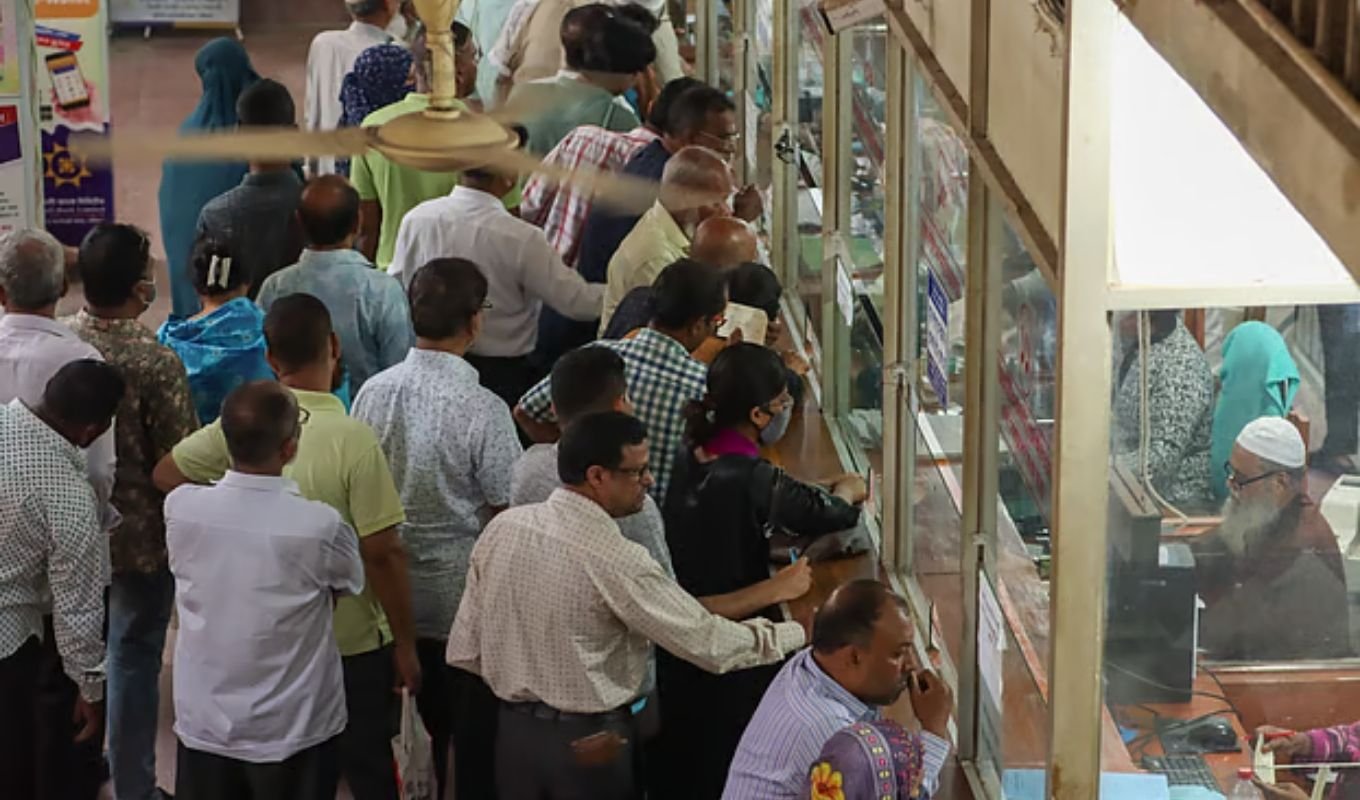
If you have a large amount of money in your bank account, the government may deduct excise duty. Previously, excise duty was applied if the balance exceeded Tk 100,000. However, in the current fiscal year’s budget announced in June, this threshold was raised to Tk 300,000, providing some relief for bank customers.
At the end of December, bank customers often receive a short message alert on their phones when excise duty is deducted. Many customers initially do not understand the reason, but banks then deduct the excise duty from their accounts.
What is Excise Duty?
Excise duty is a type of indirect tax imposed by the government on certain goods, services, or financial activities. Examples include:
Keeping money in a bank account
Making phone calls
Buying cigarettes
This tax is not based on income or profit, but is levied on the use of certain activities or facilities.
If a customer’s bank account balance reaches or exceeds Tk 300,000 at any point during the year, excise duty must be paid. The tax is applied based on the account balance.
Excise Duty Rates by Bank Balance
| Bank Balance | Excise Duty |
|---|---|
| Up to Tk 300,000 | None |
| Tk 300,001 – 500,000 | Tk 150 |
| Tk 500,001 – 1,000,000 | Tk 500 |
| Tk 1,000,001 – 5,000,000 | Tk 3,000 |
| Tk 5,000,001 – 10,000,000 | Tk 5,000 |
| Tk 10,000,001 – 20,000,000 | Tk 10,000 |
| Tk 20,000,001 – 50,000,000 | Tk 20,000 |
| Above Tk 50,000,000 | Tk 50,000 |
How is it Deducted?
Excise duty is applied once a year if the account balance reaches or exceeds Tk 300,000.
Even if the balance crosses the threshold multiple times, the tax is deducted only once.
If a customer has multiple bank accounts, excise duty is deducted from each account separately. For example, if Tk 400,000 is spread across three accounts, Tk 150 will be deducted from each, totaling Tk 450.
Typically, deductions occur in the last week of December, though sometimes they may occur in the first week of January.
Which Accounts Are Affected?
Excise duty applies to all types of bank accounts, including:
Savings accounts
Current accounts
Fixed deposits (FDR)
Deposit Pension Schemes (DPS)
Salary accounts
Why Excise Duty?
The National Board of Revenue (NBR) collects excise duty. Banks automatically deduct it from accounts and deposit it into the government treasury.
The main purposes of levying excise duty are:
To generate government revenue
To bring high-income taxpayers into the tax net
To ensure transparency in bank accounts
To maintain financial discipline
To provide administrative and taxpayer convenience