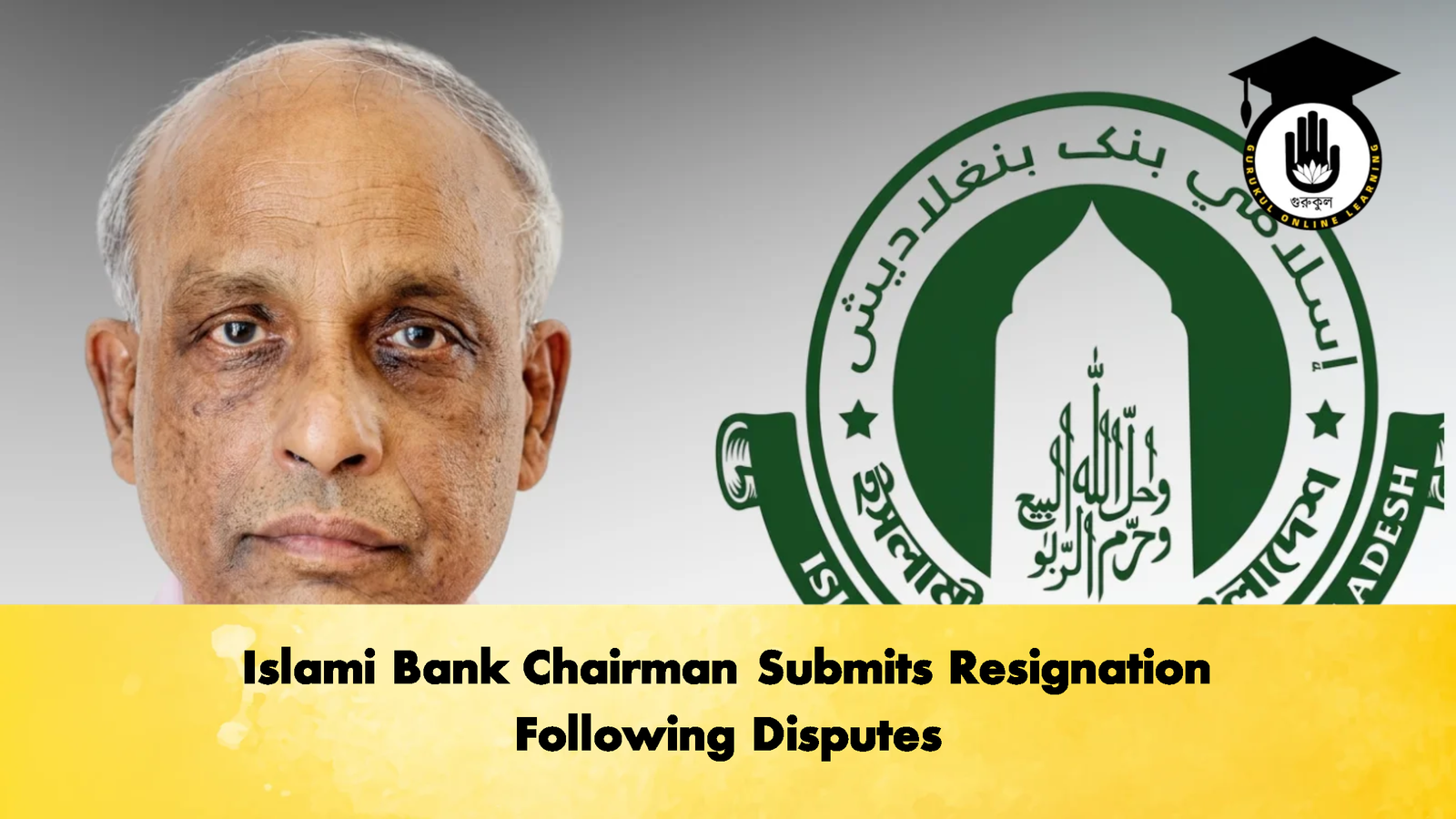
The chairman of Islami Bank Bangladesh PLC, M Zubaydur Rahman, has officially tendered his resignation from his executive position. On Sunday, 24 May, he formally transmitted his resignation letter directly to the central banking authority, Bangladesh Bank. This significant administrative development follows a protracted period of escalating operational, strategic, and administrative disagreements between the senior leadership of the private commercial bank and top-tier regulatory officials.
Mr Rahman was originally appointed to the financial institution as an independent director by Bangladesh Bank in July 2025. Following his historic induction to the board of directors, he subsequently assumed the responsibilities and formal title of chairman of the board. At the exact juncture of his initial appointment, the crucial office of Governor of Bangladesh Bank was occupied by the prominent macroeconomist Dr Ahsan H. Mansur.
Background to Executive Leaves and Regulatory Friction
According to multiple verified disclosures from central bank officials, deep-seated administrative friction began to surface within the financial sector following a notable transition in the national government. This political shift saw the Bangladesh Nationalist Party (BNP) assume executive office, which was rapidly followed by the subsequent appointment of Mostakur Rahman as the incoming Governor of Bangladesh Bank. Following these institutional transitions, distinct and unresolved disagreements arose between central bank officials and the top-tier executive echelon of Islami Bank regarding various strategic operations, monetary policies, and internal corporate governance decisions concerning the management of the institution.
Amidst these intensifying regulatory disputes, the chairman of Islami Bank, M Zubaydur Rahman, departed the country for an overseas stay, having been granted a one-and-a-half-month leave of absence. This leave was sanctioned under the explicit administrative condition that he would remain actively involved in corporate governance by attending all necessary board meetings virtually via secure online communication platforms. Concurrently, the managing director of the bank, Mohammed Omar Faruk Khan, was also placed on formal leave. These respective periods of executive leave were officially approved during a scheduled meeting of the Islami Bank board of directors conducted on 12 April.
Demonstrations at Corporate Headquarters and Resignation Submissions
On Sunday, 24 May, a crucial meeting of the bank’s board of directors had been officially convened to take place at the central corporate headquarters of the financial institution. However, the scheduled proceedings were severely disrupted when a substantial segment of the bank’s retail customers and certain staff employees initiated an unannounced demonstration directly outside the main entrance of the head office building.
The rapid sequence of key developments surrounding the street demonstration and subsequent executive actions included the following specific events:
Protester Demands: The demonstrating depositors, customers, and staff members publicly vociferated their demands, urgently calling upon the managing director, Mohammed Omar Faruk Khan, to refrain from resigning his post. Concurrently, the agitating protestors explicitly demanded the immediate and unconditional resignation of the chairman, M Zubaydur Rahman.
Transmission of Chairman’s Resignation: Under the immediate duress of the developing situation at the head office, M Zubaydur Rahman chose to submit his formal resignation letter directly to the regulatory authorities at Bangladesh Bank.
Managing Director’s Resignation: It was subsequently confirmed by institutional sources that the managing director, Mohammed Omar Faruk Khan, who was already on approved leave, had also submitted his formal resignation letter to the board of directors.
Cancellation of Board Meeting: Due to the physical disruptions outside the building and the overall administrative chaos, the scheduled board meeting was formally cancelled. Consequently, no final, definitive, or legally binding corporate decision could be passed by the board regarding the formal processing or acceptance of these executive resignations.
Subsequent attempts were made by independent financial journalists to establish direct communication with both M Zubaydur Rahman and Mohammed Omar Faruk Khan to secure their personal insights or official statements regarding the developments; however, neither official could be reached for comment.
Ownership Transitions and Financial Performance Metrics
The overarching ownership, capital configuration, and governance architecture of Islami Bank Bangladesh PLC have undergone dramatic and highly volatile changes over the past decade. The industrial conglomerate known as the S. Alam Group originally seized corporate control of Islami Bank in 2017 through extensive equity acquisitions. Following the subsequent fall of the Awami League-led government, Bangladesh Bank actively intervened in the institution’s affairs by systematically dissolving the existing management tier and appointing fresh independent directors to oversee and stabilize the bank’s daily operations.
The commercial institution’s foundational financial stability has suffered severe, verifiable erosion during this timeline, as evidenced by a comparison of verified data drawn directly from the bank’s official annual accounts and balance sheets:
| Financial Indicator | Year 2016 Baseline Performance | Year 2025/2026 Recorded Status |
| Annual Net Profit | BDT 447 crore | BDT 137 crore (Recorded 2025) |
| Non-Performing Loan (NPL) Rate | 4.25 per cent | 49 per cent (Recorded 2025) |
| Total Defaulted Loans | Minimal Baseline | Over BDT 92,000 crore (Recorded 2025) |
| Foreign Investor Shareholding | 63 per cent | 17.91 per cent (As of March 2026) |
The massive escalation in defaulted assets indicates that over BDT 92,000 crore of the bank’s total outstanding credit portfolio is now officially classified as non-performing. Furthermore, the bank’s global investor demographics have shifted substantially; foreign institutional investment plummeted from an impressive 63 per cent to just 17.91 per cent by March 2026. Conversely, because approximately 82 per cent of the total shares of Islami Bank remained explicitly tied to the interests of the S. Alam Group, Bangladesh Bank has formally frozen these specific equity holdings as part of its ongoing regulatory intervention and legal recovery procedures.