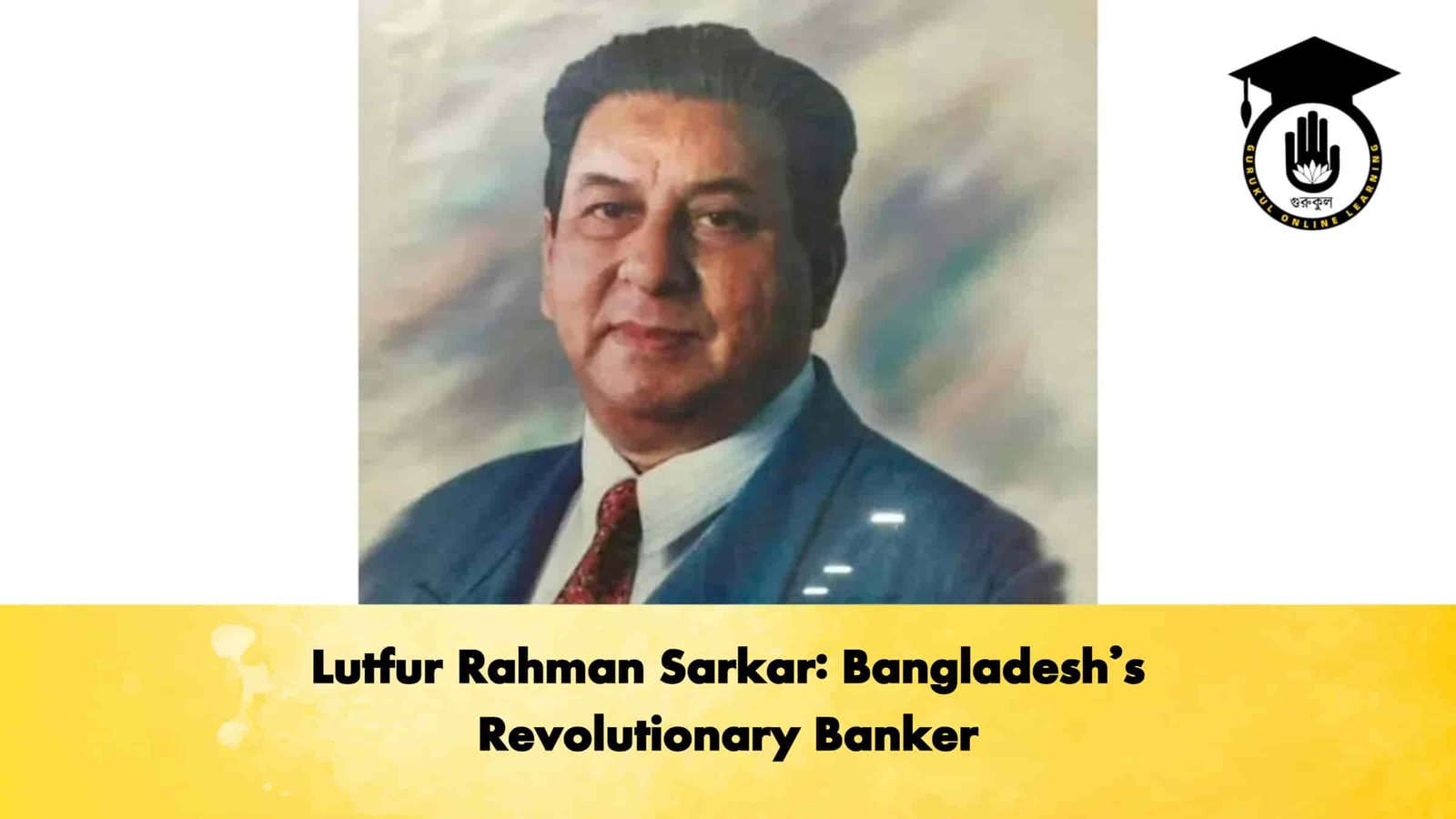
Today, 1 February, marks the 93rd birth anniversary of one of Bangladesh’s most illustrious banking figures, Lutfur Rahman Sarkar. He was far more than a skilled banker; he was a visionary reformer, a staunch advocate for justice, and a tireless leader dedicated to the welfare of ordinary citizens.
Born in 1934 in Phulkot village, Amrul Union, Shahjahanpur, Bogura, Sarkar embodied integrity, courage, and innovative thinking. Central to his banking philosophy was the belief that “our banking system should not merely serve the affluent; it must empower the disadvantaged.” Guided by this principle, he initiated programmes to equip students and young people with the skills and resources necessary to achieve self-reliance.
Sarkar’s professional career was remarkably diverse. He served as Governor of Bangladesh Bank, Managing Director of Sonali Bank, and founded the “Bikalpo” employment project to create alternative job opportunities for university students. Beyond banking, he lectured part-time on finance and banking at Dhaka University, contributed to literature, and co-founded the National Poetry Council.
His pioneering initiatives and social welfare projects can be summarised as follows:
| Year | Milestone | Institution/Project | Role & Contribution |
|---|---|---|---|
| 1934 | Birth | Phulkot, Bogura | – |
| 1955 | MA in Political Science | Dhaka University | Graduate |
| 1955–1960 | Early Career | Radio Pakistan & various banks | Banking & administration |
| 1980s | “Bikalpo” Employment Project | Sonali Bank | Founder & innovator |
| 1996–1998 | Governor | Bangladesh Bank | Institutional reforms & public welfare policies |
| 2013 | Death | Apollo Hospital, Dhaka | Age 80 |
Sarkar revolutionised student finance and small enterprise support through education loans, collateral-free microloans, and part-time employment schemes, enabling thousands of unemployed graduates to become entrepreneurs. These initiatives laid the foundation for Bangladesh’s modern small and medium enterprise (SME) sector and student loan programmes.
A man of unwavering courage, he once refused to name a project after the military regime, resulting in brief imprisonment, but was later released due to student protests. Throughout his life, he fought corruption and tirelessly promoted policies serving the public good.
Outside banking, Sarkar significantly contributed to literature, culture, and healthcare development. His support for modern medical institutions and the training of skilled health professionals had a transformative impact on the sector.
Lutfur Rahman Sarkar passed away on 24 June 2013. Yet, his humanistic, inclusive, and principled approach to banking continues to inspire Bangladesh’s financial and social welfare landscape. Truly, he remains the nation’s “revolutionary banker,” a guiding light for future generations of bankers, reformers, and citizens alike.